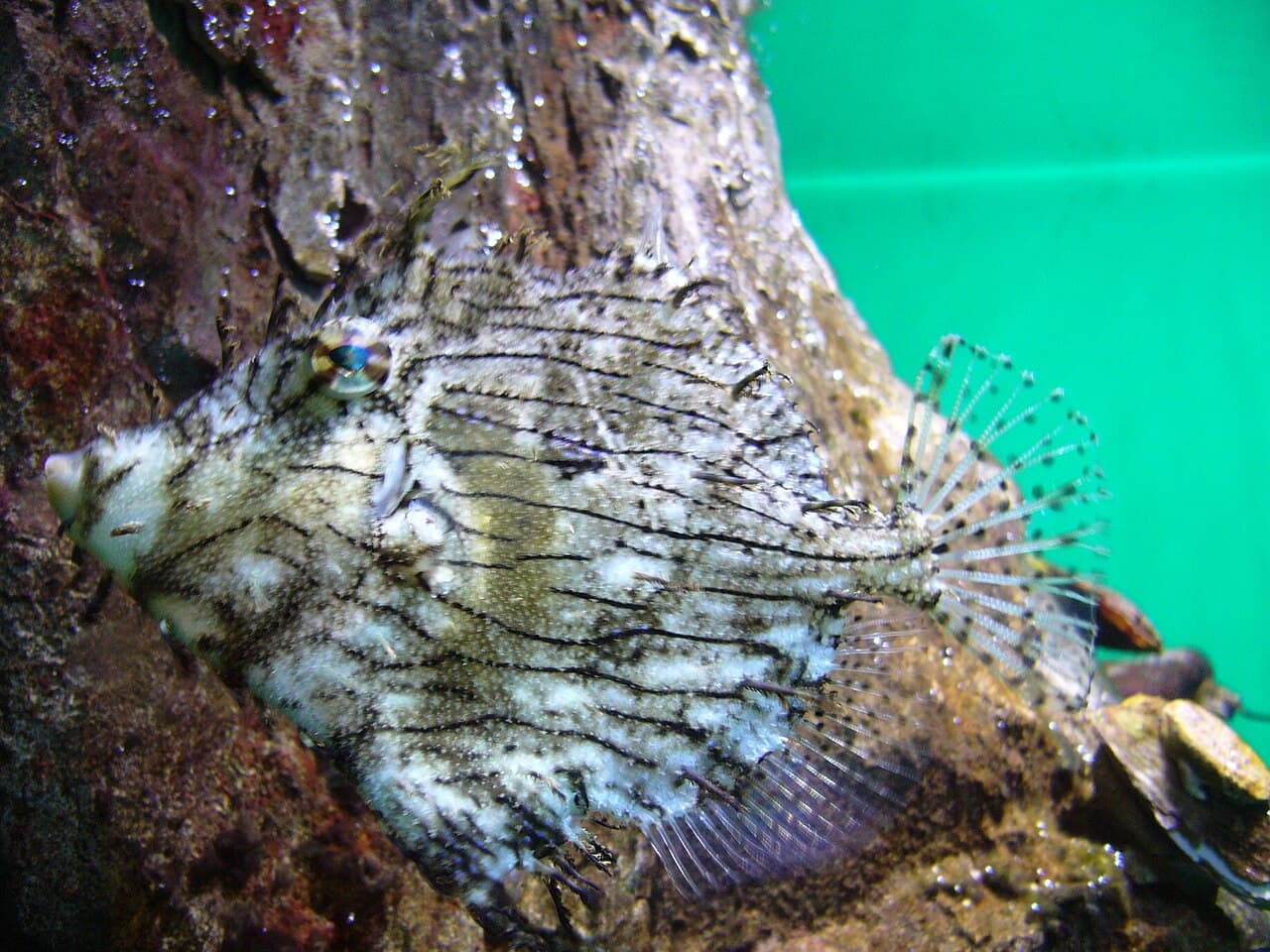
A leafy filefish can look more like a piece of underwater vegetation than a swimming animal. Fleshy tassels interrupt its outline, making its body difficult to trace among weeds.
Its disguise is built into the skin.
One fish with several names
The leafy filefish, Chaetodermis penicilligerus, is also known as the tasselled leatherjacket or weedy filefish.
Its body is flattened from side to side and covered with small, branching appendages. Brownish coloring, irregular lines, and bluish marks add to the effect.
Fishes of Australia, hosted by Museums Victoria, describes its appearance and coastal Indo-Pacific distribution.
Look for the outline
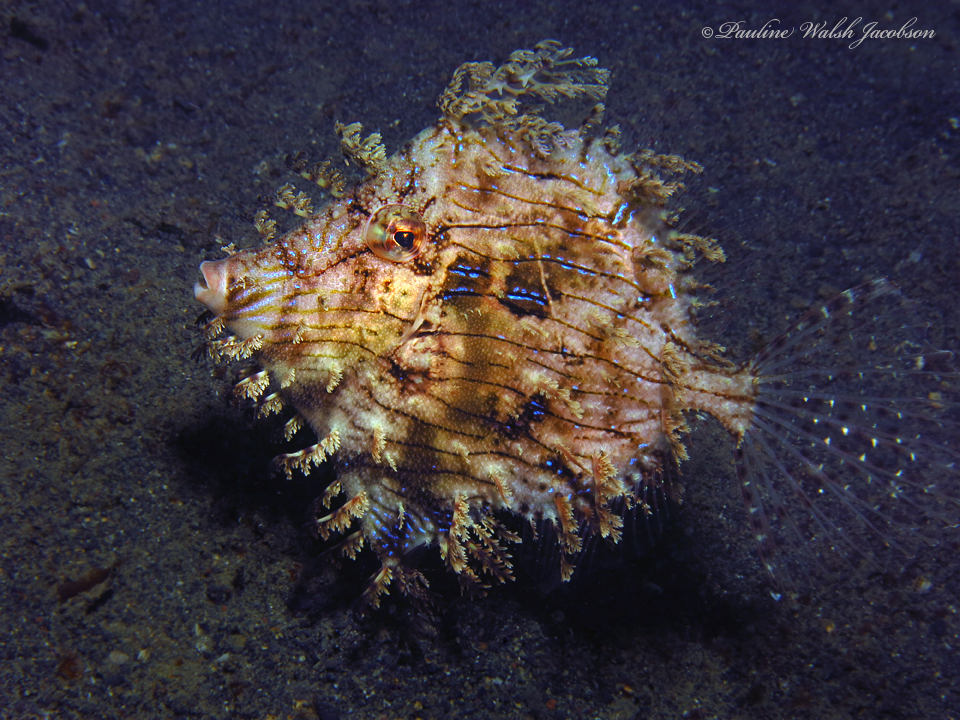
In weedy coastal habitats, a clean, smooth outline can give an animal away. The leafy filefish's tassels make that boundary much less obvious.
Its fins and tail still reveal that it is a fish, but the surrounding texture can make the whole animal appear plant-like. A photograph against a plain background shows details that would be far harder to notice among vegetation.
It is a filefish, not a seadragon, despite the decorative flaps.
A habitat full of hiding places
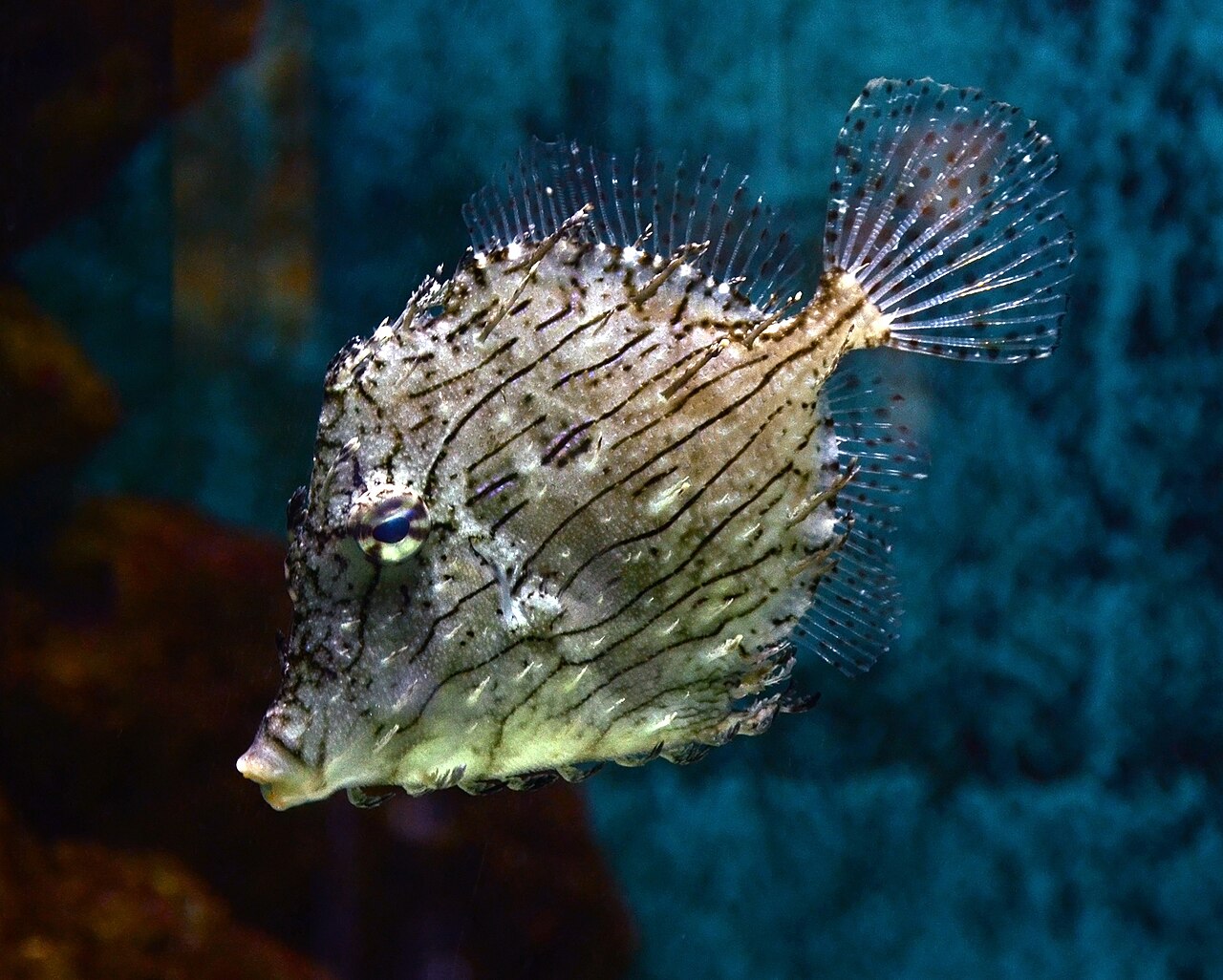
Weedy areas and coastal reefs are living spaces, not empty patches between more impressive sights. They provide the setting in which a disguise like this becomes useful.
The best way to appreciate such camouflage is to observe without moving animals or clearing vegetation for a better view.
The leafy filefish rewards patience. Follow a tassel, find an eye, and a scrap of apparent seaweed gradually becomes one of the coast's most remarkable fish.
Photo credits
Featured image: Chaetodermis penicilligerus.401 - Aquarium Finisterrae.jpg — Fernando Losada Rodríguez; CC BY-SA 4.0.

Body image 1: Chaetodermis penicilligerus 313814560.jpg — Pauline Walsh Jacobson; CC BY 4.0.

Body image 2: Chaetodermis penicilligerus Aquarium Liège 30012016 1.jpg — Vassil; CC0.

Photographs resized for web display where available.