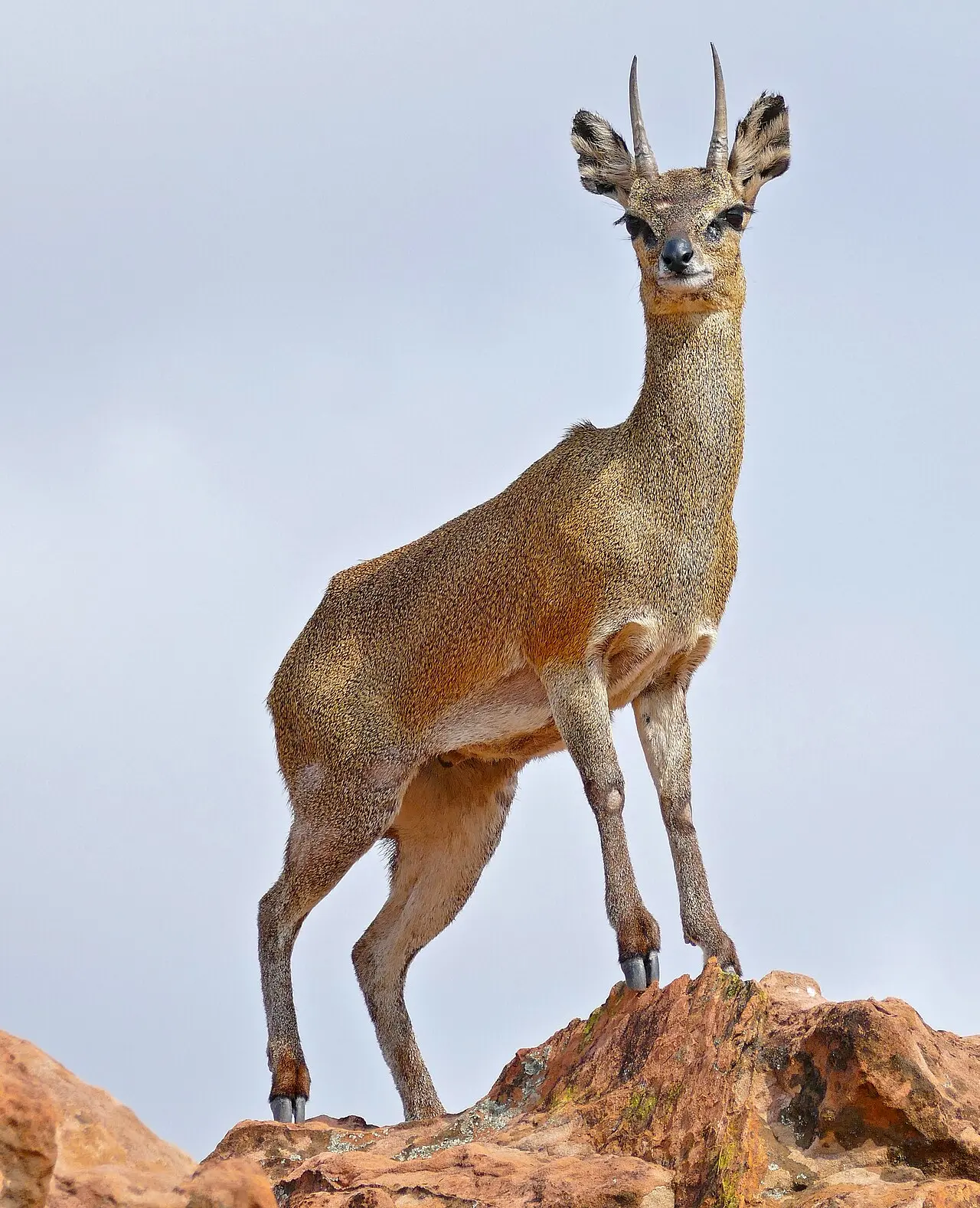
A klipspringer can look as though it is standing on tiptoe. Its small, specialized hooves let this compact antelope balance on rocky surfaces that appear far too narrow for comfort.
Oreotragus oreotragus lives in rocky parts of Africa. Even its name points to its way of life: klipspringer means “rock jumper.”
Small feet, demanding terrain
San Diego Zoo Wildlife Alliance describes hooves adapted for traction on rock. Their small contact areas help the animal use tiny landing places.
Powerful hindquarters add to its ability to move between rocks. There is no need to repeat exaggerated claims about towering vertical leaps; ordinary movement across uneven stone is impressive enough.
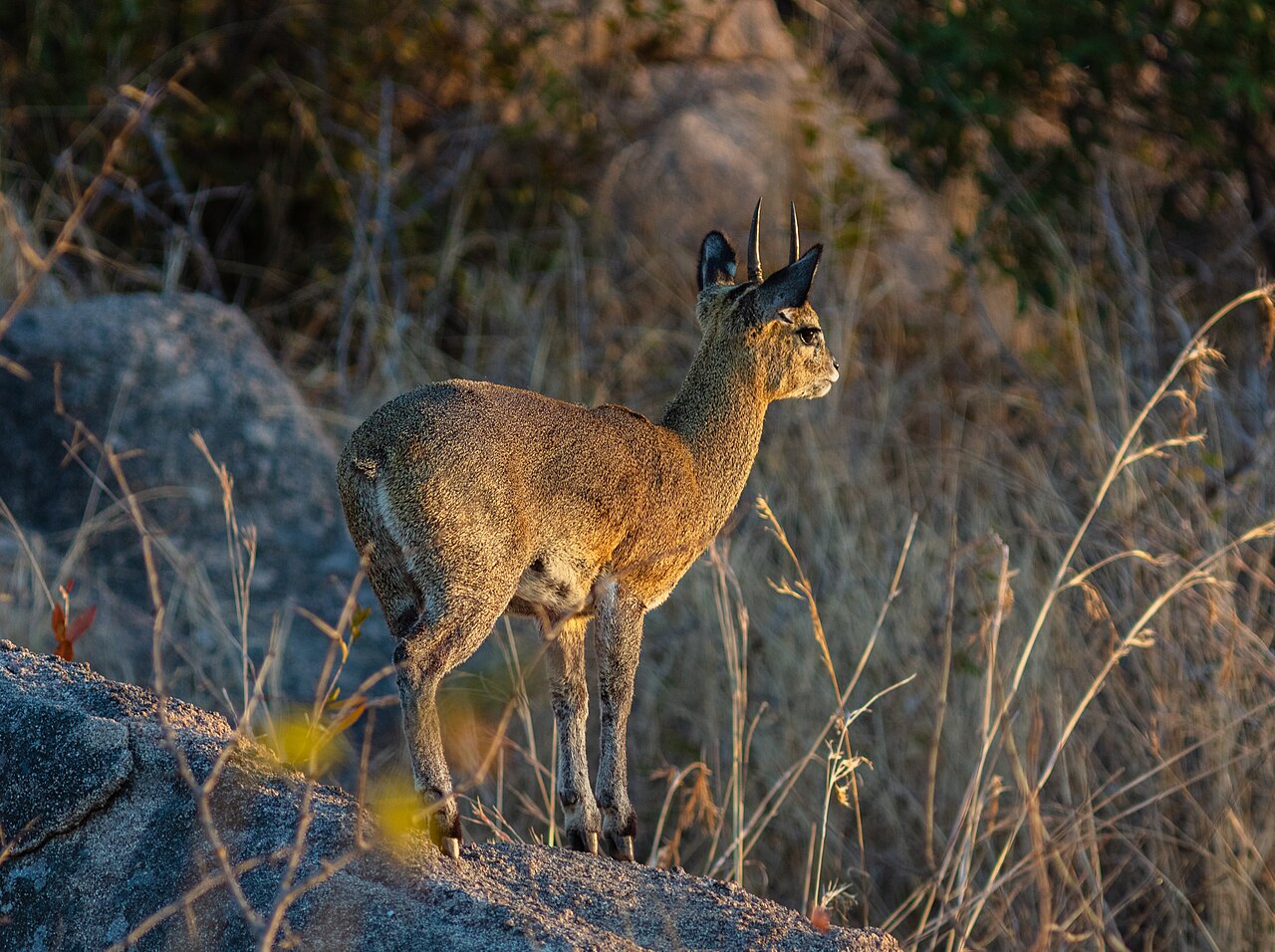
A home above the surrounding plains
Rocky outcrops, hills, riverbeds, and mountain terrain can provide habitat. In savanna landscapes, isolated rock formations known as kopjes offer shelter and lookout points.
Klipspringers browse leaves, flowers, fruit, and lichens. They often feed during the cooler parts of the day and rest through the hottest hours.
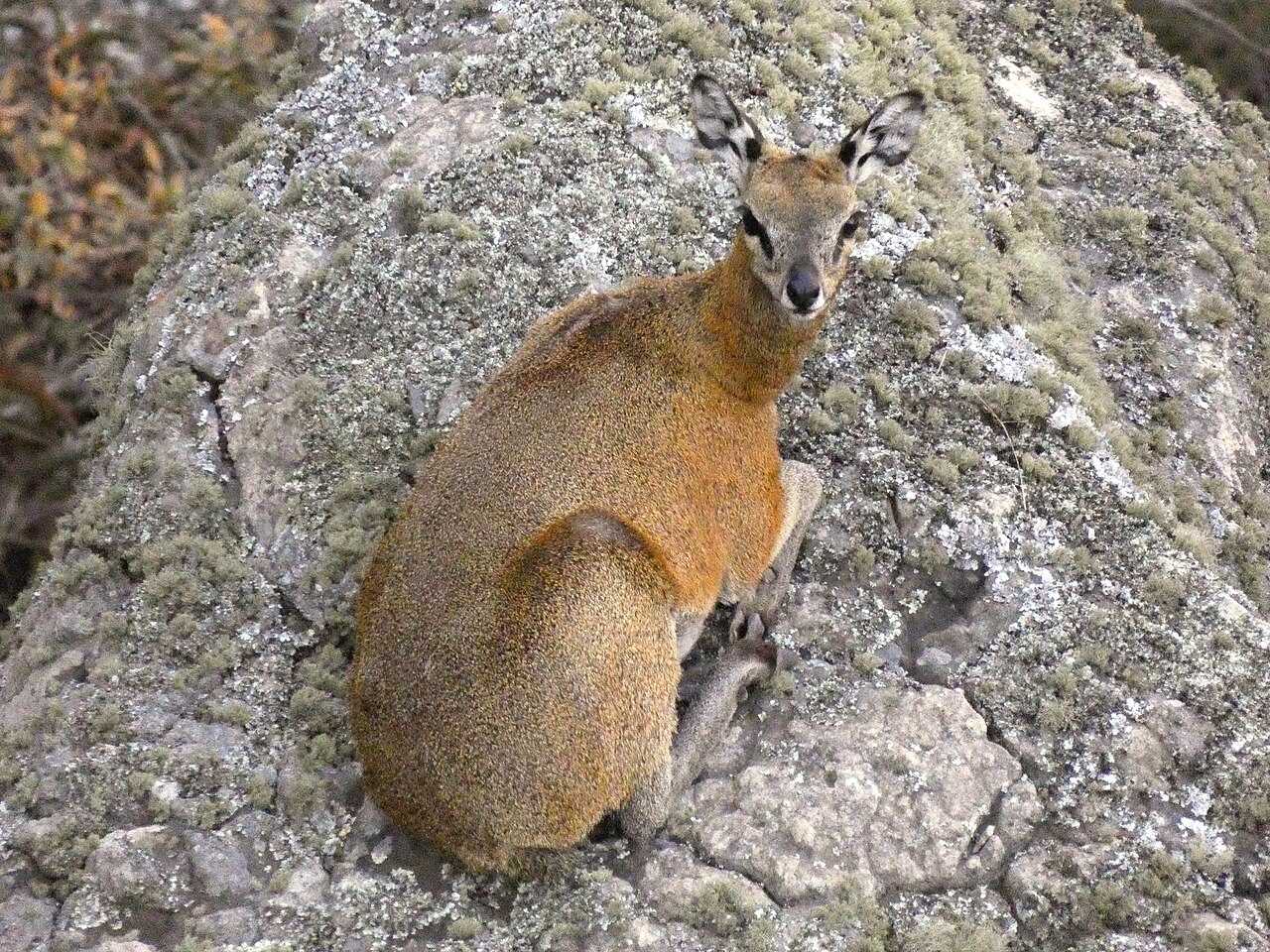
Watching together
Pairs can take turns feeding and watching for danger. Alarm whistles and scent marks provide ways to communicate.
Keeping rocky habitats and their surrounding vegetation intact protects more than a place to stand. It preserves food, shelter, and routes between outcrops.
A klipspringer paused on a boulder turns a simple rock into a stage. Its delicate-looking feet reveal an animal thoroughly at home in a landscape that challenges almost every step.
Photo credits
Featured image: Klipspringer (Oreotragus oreotragus) male (33106309596).jpg — Bernard DUPONT from FRANCE; CC BY-SA 2.0.

Body image 1: Saltarrocas (Oreotragus oreotragus), parque nacional Kruger, Sudáfrica, 2018-07-25, DD 59.jpg — Diego Delso; CC BY-SA 4.0.

Body image 2: Oreotragus oreotragus 230673529.jpg — Jens N. Lallensack; CC BY 4.0.

Photographs resized for web display where available. Captive animals and contextual habitat photographs are identified in their captions.