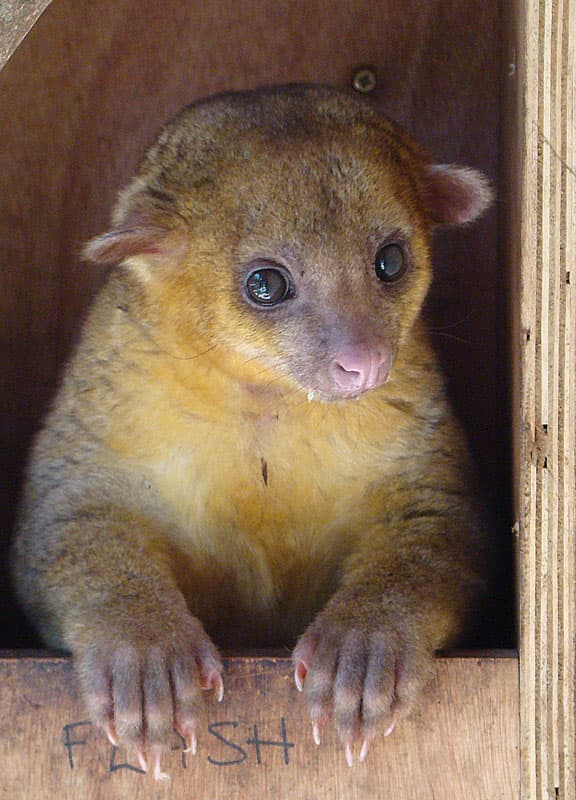
A kinkajou can use its tail to hold a branch while reaching for fruit. The extra support makes a difficult meal easier to collect high above the forest floor.
Its shape may suggest a monkey, but this tropical mammal belongs to the raccoon family.
A night-active canopy mammal
The kinkajou is Potos flavus. It lives in forests across parts of Central and South America.
San Diego Zoo Wildlife Alliance describes its climbing feet, flexible body, and mostly nocturnal routine.
Dense fur and large eyes help create its soft-looking appearance. The animal's biology, however, is shaped by the practical demands of finding food and shelter among branches.
A tail with a grip
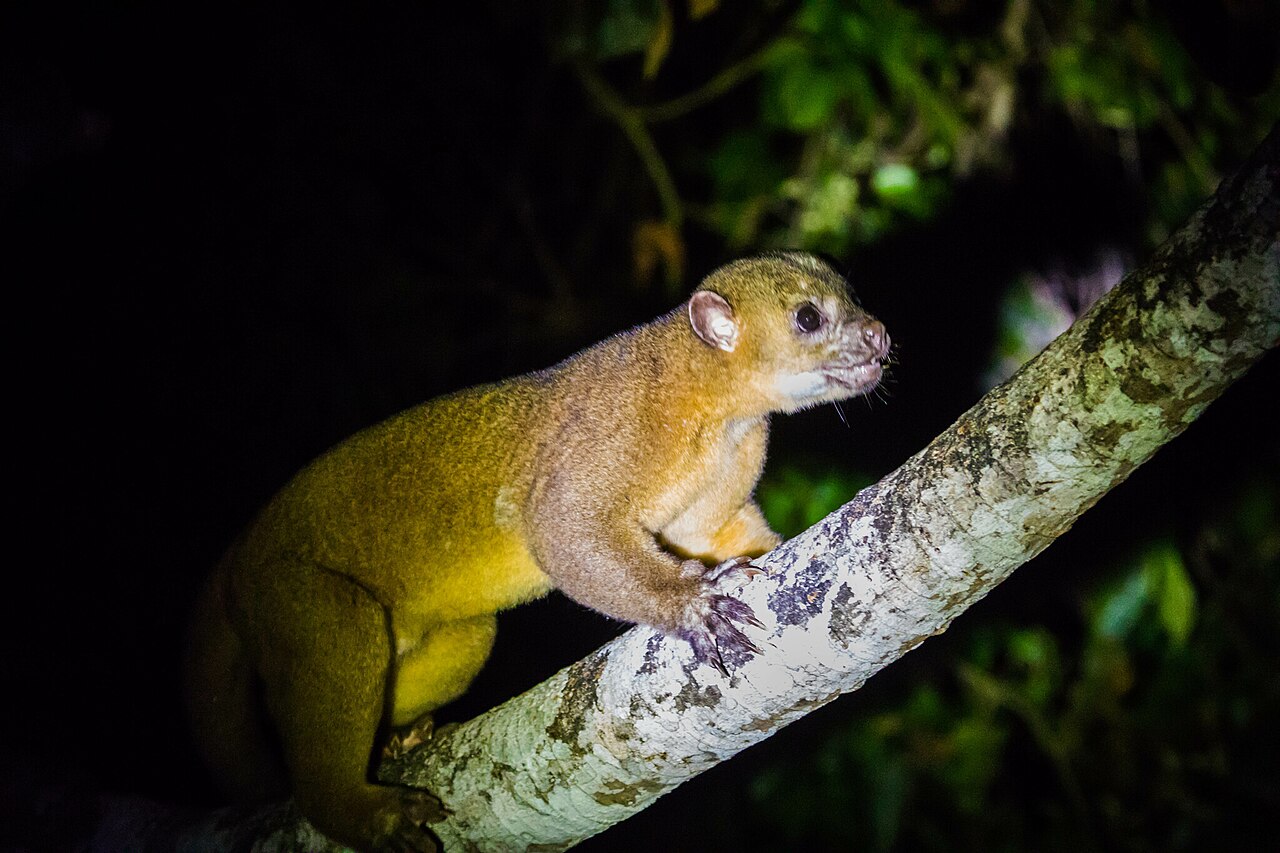
A prehensile tail can grasp supports. For a kinkajou, that gives balance and security while it shifts position.
The tail is not a spare leg with fingers, but its ability to hold a branch opens useful feeding positions.
This is an example of a body part performing several jobs: helping movement, supporting feeding, and contributing to a curled resting posture.
Fruit, flowers, and connections
Kinkajous eat a large amount of fruit and also visit flowers for nectar. Moving between feeding sites can connect the animal to seed and pollen movement.
Its membership in the order Carnivora should not be mistaken for a meat-only menu.
Animal Diversity Web provides further natural-history context for the species.
A forest animal behind the cute face
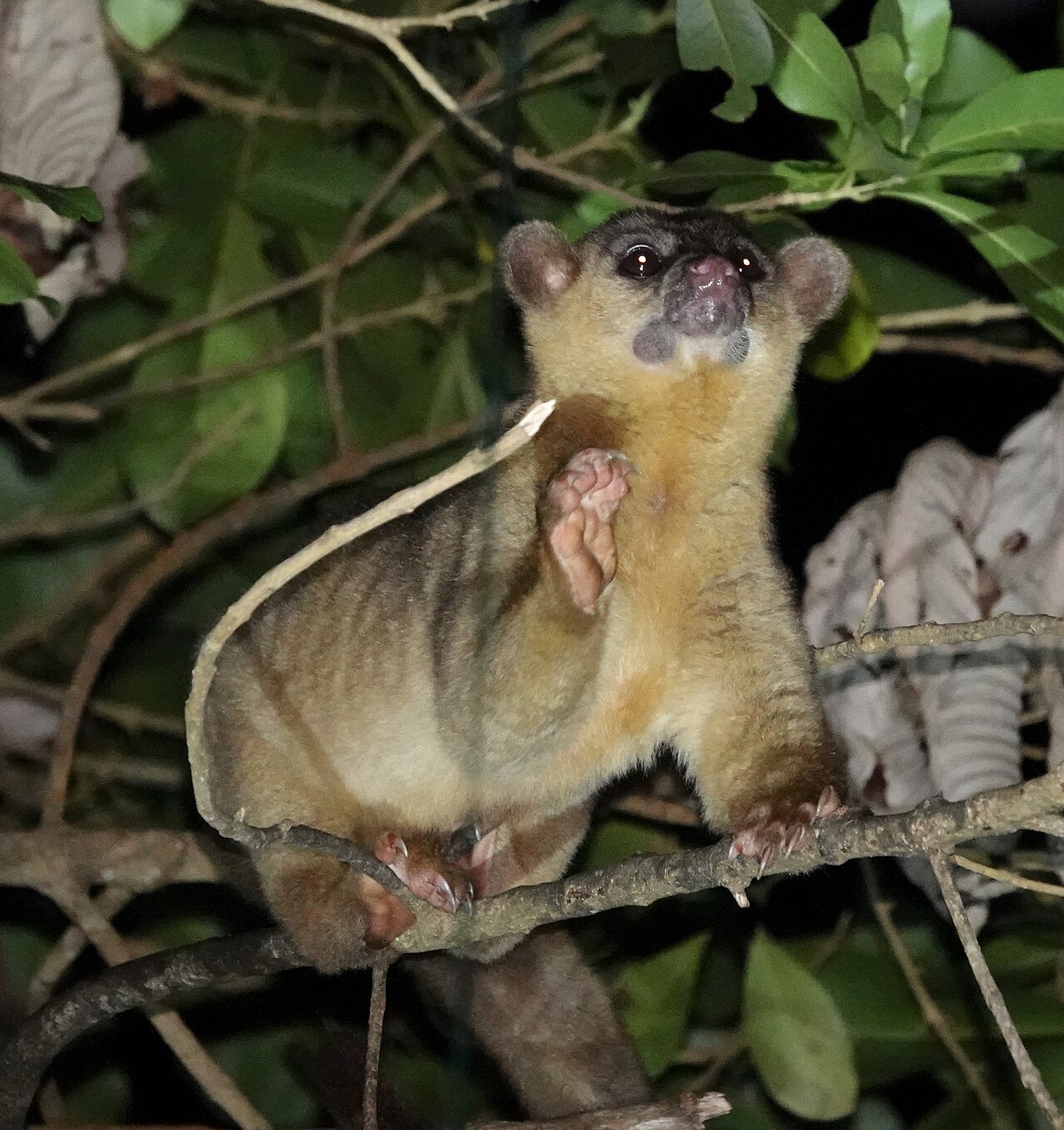
Daytime shelter and connected feeding trees are important parts of its habitat. A petlike portrait does not show the full space and behavioral needs of a wild mammal.
The kinkajou's tail makes a memorable detail, but its greater achievement is living in a three-dimensional forest. A fruit beyond reach for one animal becomes a meal for another with the right grip.
Photo credits
Featured image: Dick Culbert from Gibsons, B.C., Canada; Source; CC BY 2.0. Resized for web display.

Body image 1: Melissa McMasters; Source; CC BY 4.0. Resized for web display.

Body image 2: desertnaturalist; Source; CC BY 4.0. Resized for web display.
