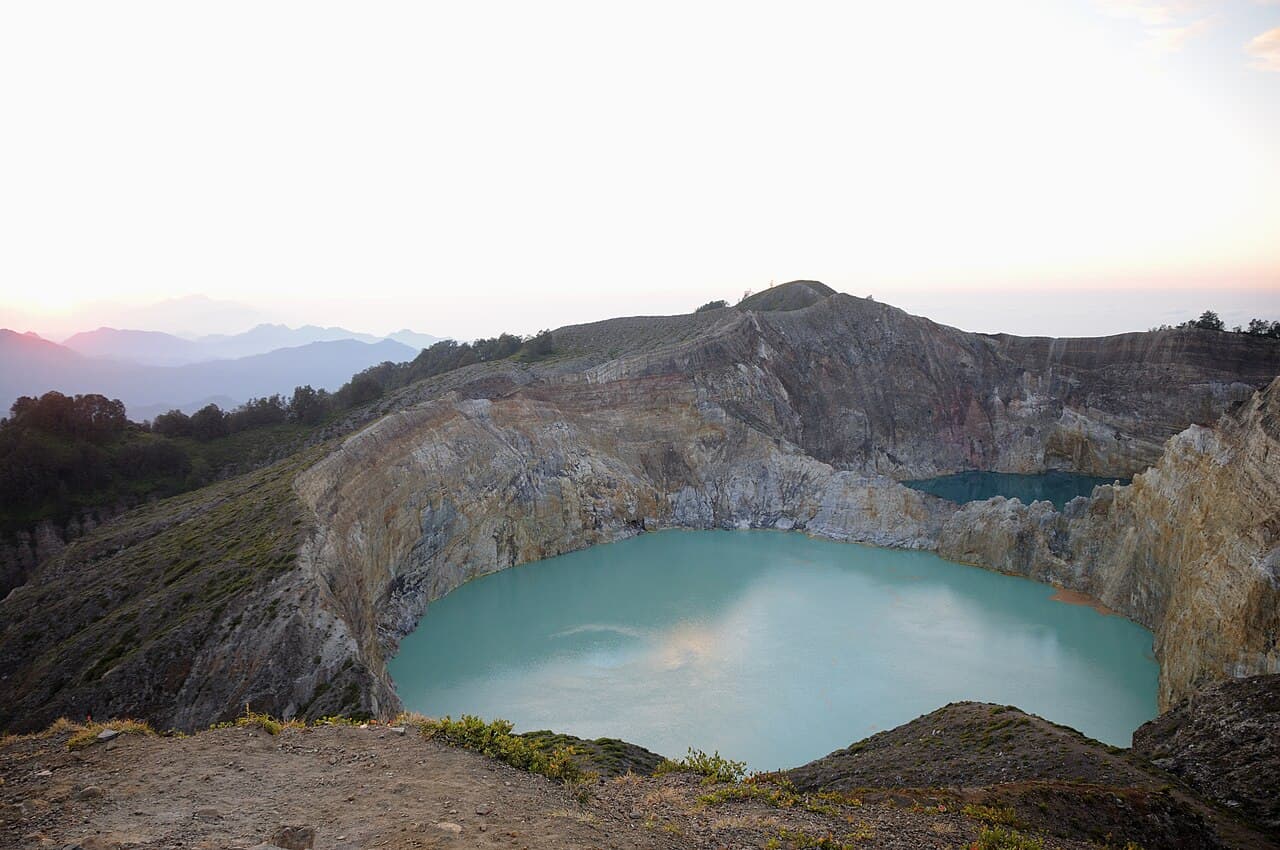
Three lakes sit close together at the summit of Kelimutu, yet they can display strikingly different colors. Even more surprising, those colors can change.
The Indonesian volcano is a reminder that a lake's appearance can reveal activity beneath the surface.
Three lakes, different conditions
Kelimutu is on the island of Flores. Its summit craters hold separate bodies of water, so neighboring lakes do not necessarily share identical chemistry.
The Smithsonian's Global Volcanism Program describes the volcano and records observations of its lakes.
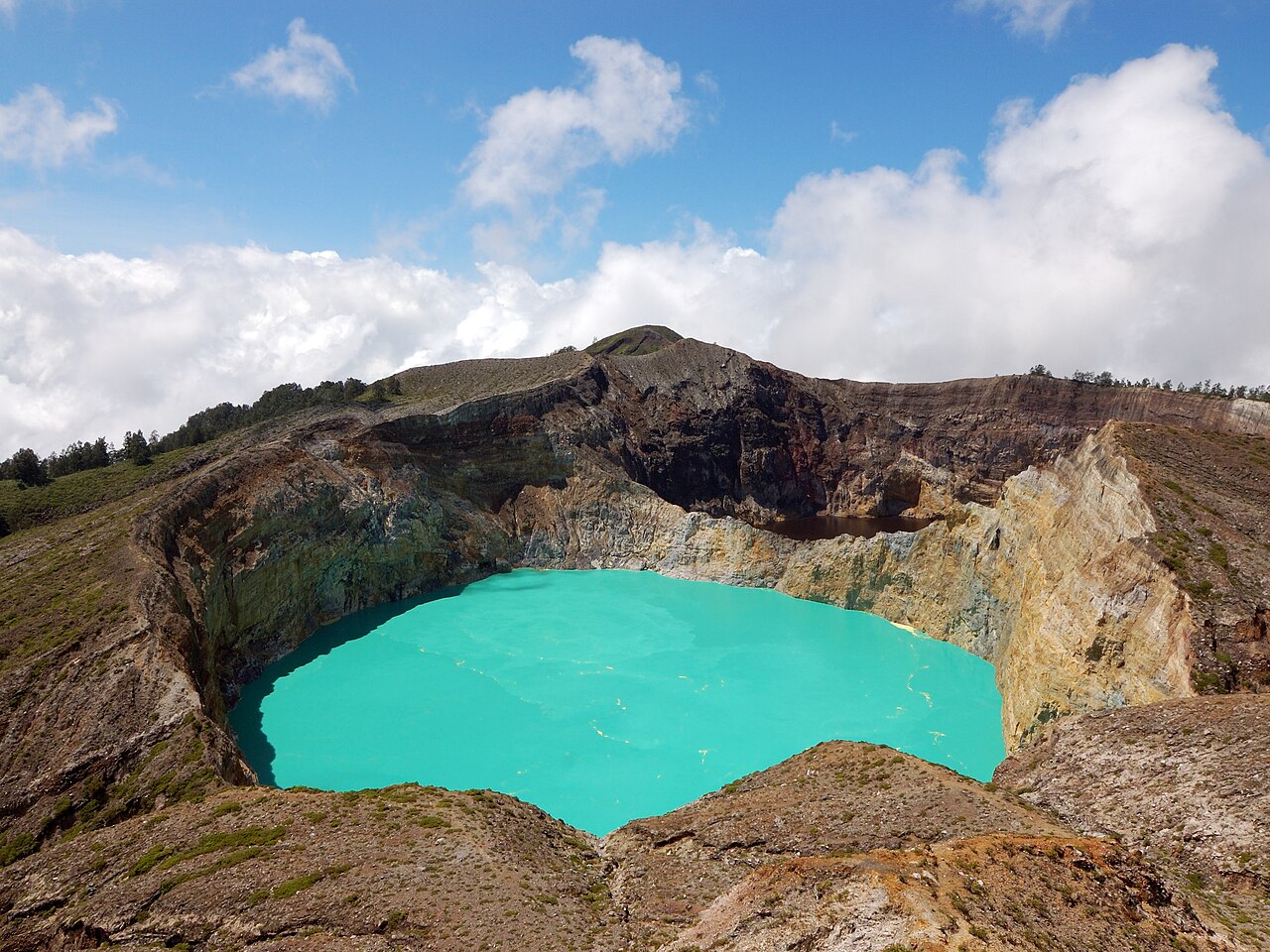
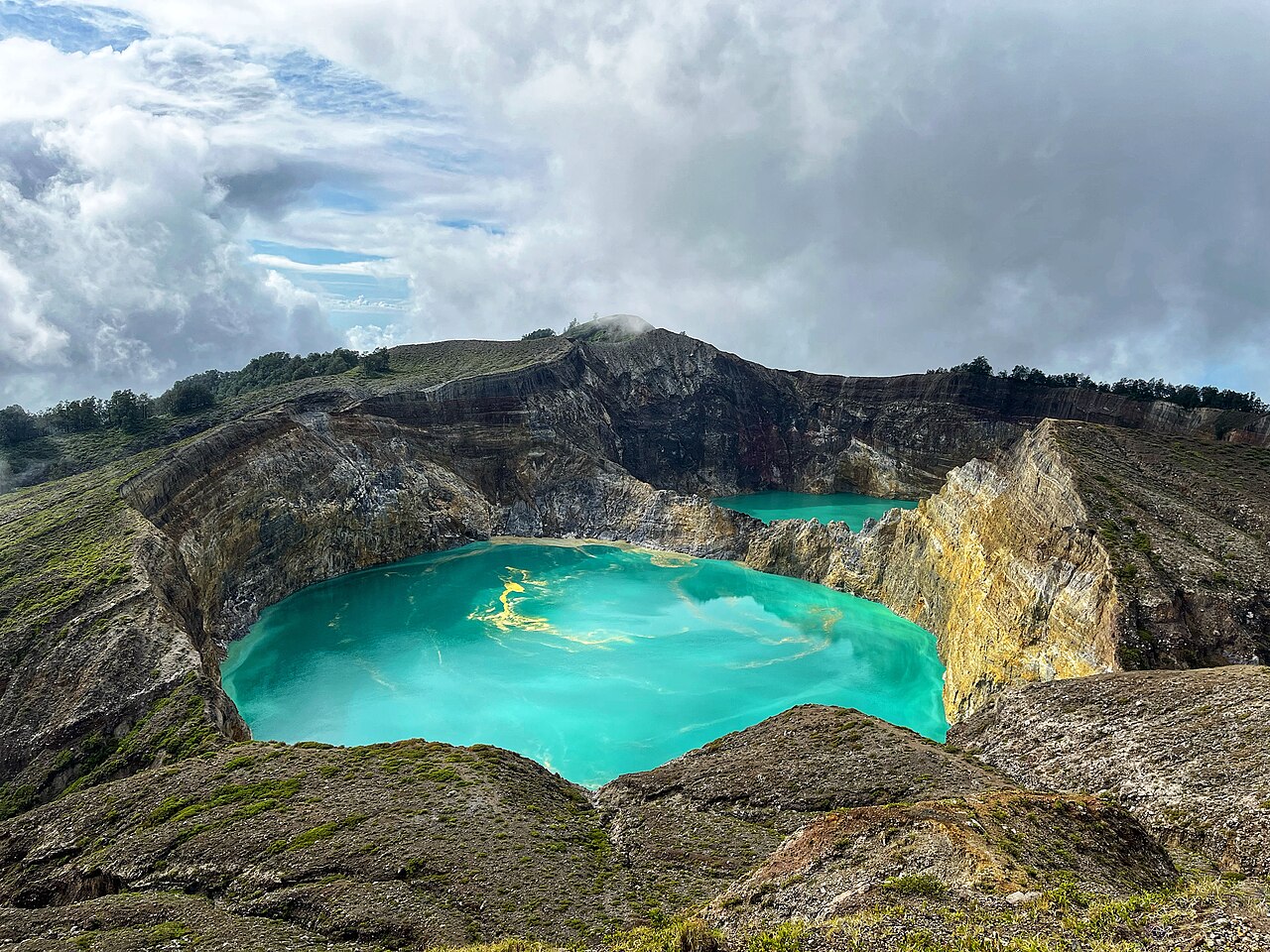
A photograph captures one set of colors at one time. It should not be used as a permanent key assigning each crater a fixed shade.
Chemistry creates the palette
Volcanic gases and fluids interact with lake water and rock. Changes in the supply of gases, oxidation, and dissolved materials can influence the colors.
NASA Earth Observatory explains the role of volcanic vents, known as fumaroles, in this system.
That makes Kelimutu different from lakes whose color is mainly associated with a bloom of pigmented microorganisms. Similar-looking water can have very different causes.
Scientists watch more than color
Changes in appearance can be useful observations, but color alone is not a complete forecast of volcanic behavior.
Monitoring can also include temperature, gas activity, and other measurements. The Smithsonian's reports show why observations are considered together and over time.
The lakes are part of an active volcanic setting, not decorative pools disconnected from the mountain.
A landscape that keeps changing
Kelimutu also has deep cultural meaning for local communities. Respect for the place includes respect for both its natural processes and the people connected to it.
Official local guidance should determine access around an active volcano; photographs do not establish current conditions.
The lakes' changing shades make their beauty especially powerful. Nature has not chosen one final palette here. It continues to mix water, minerals, and volcanic chemistry beneath the sky.
Photo credits
Featured image: Josep M. Gracia; Wikimedia Commons source; CC BY-SA 4.0. Resized for web display.

Body image 1: Rosino; Wikimedia Commons source; CC BY-SA 2.0. Resized for web display.

Body image 2: LukeTriton; Wikimedia Commons source; CC BY-SA 4.0. Resized for web display.
