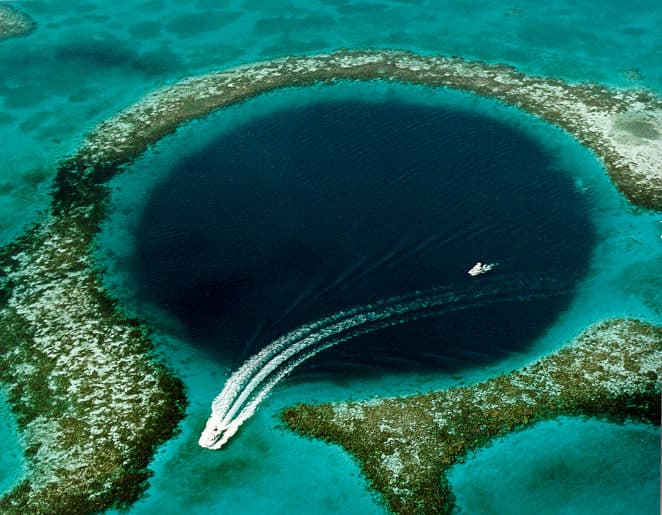
Below the blue surface of Belize's Great Blue Hole are formations that grew in air. Submerged stalactites preserve evidence of a time when this ocean landmark was a dry cave.
The familiar dark circle is therefore more than a striking shape. It is a window into changing sea levels.
A hole within a reef
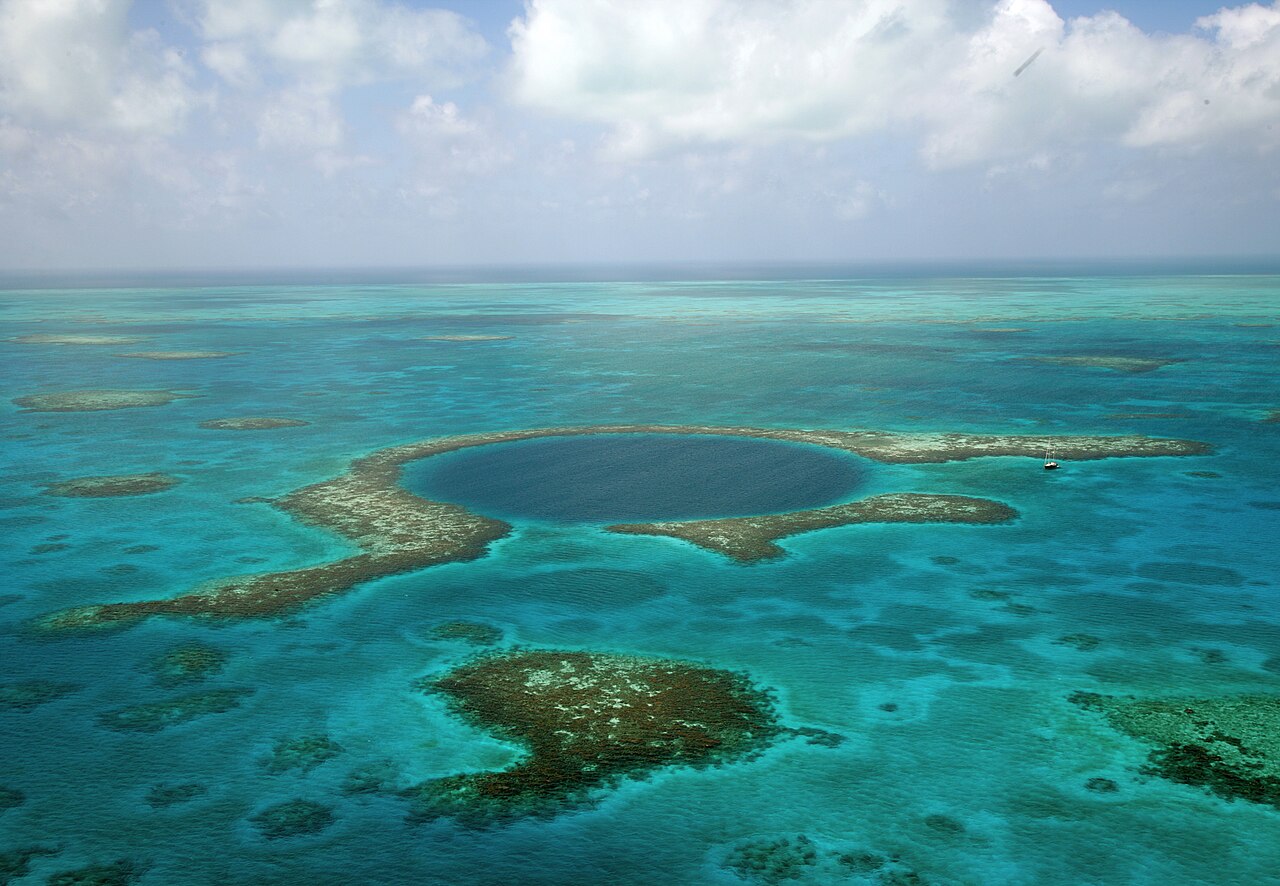
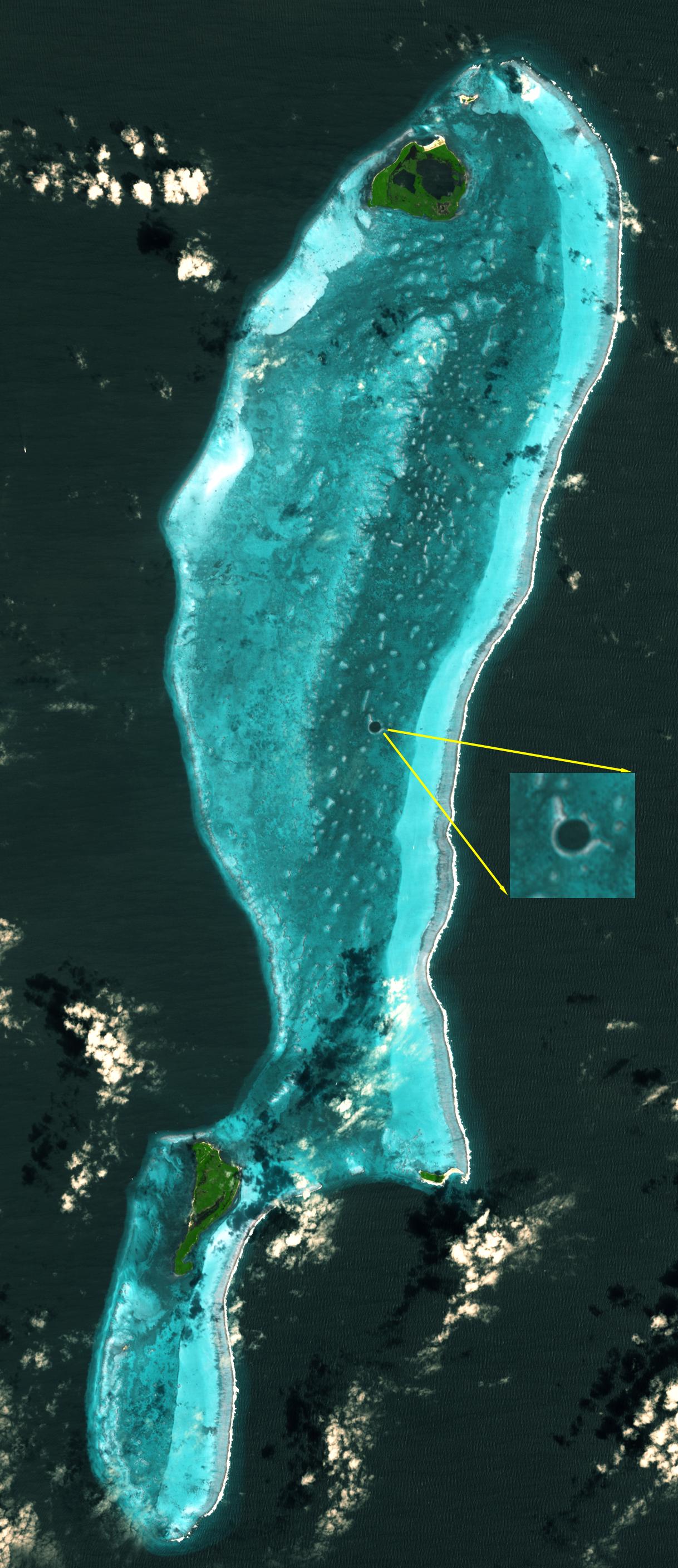
The Great Blue Hole lies in Lighthouse Reef, offshore from mainland Belize. From above, deep water contrasts with the paler surrounding reef.
NASA Earth Observatory describes it as a vertical cave and explains the history beneath the surface.
Its near-circular outline makes it unusually easy to recognize in aerial views. The surrounding reef is part of the story, rather than an empty border around the hole.
Stalactites tell us what changed
Stalactites form when mineral-rich water drips into an air-filled space and leaves deposits. Their presence underwater shows that conditions were once different.
When sea levels were lower, parts of the cave system were exposed. Rising seas later flooded the spaces and preserved the rock formations below the surface.
NASA's wider view of Lighthouse Reef places this history within the larger Belize reef setting.
The photograph is only the surface
An overhead image shows the contrast between shallow and deep water. It does not show every cave passage or reveal underwater conditions.
The dark color should not be read as a mysterious substance filling the hole. Water depth and the way light interacts with the setting explain much of the contrast.
Protect the reef around the circle
The Great Blue Hole sits within a living marine landscape. Care for the wider reef supports the habitats that surround this geological feature.
Its greatest surprise may be the quiet evidence below: dripping water built formations in an ancient cave, and the sea later covered them. The beautiful circle holds a history of a shoreline that did not stay still.
Photo credits
Featured image: U.S. Geological Survey (USGS); Wikimedia Commons source; Public domain. Resized for web display.

Body image 1: The TerraMar Project; Wikimedia Commons source; CC BY 2.0. Resized for web display.

Body image 2: NASA/METI/AIST/Japan Space Systems, and U.S./Japan ASTER Science Team; Wikimedia Commons source; Public domain. Resized for web display.
