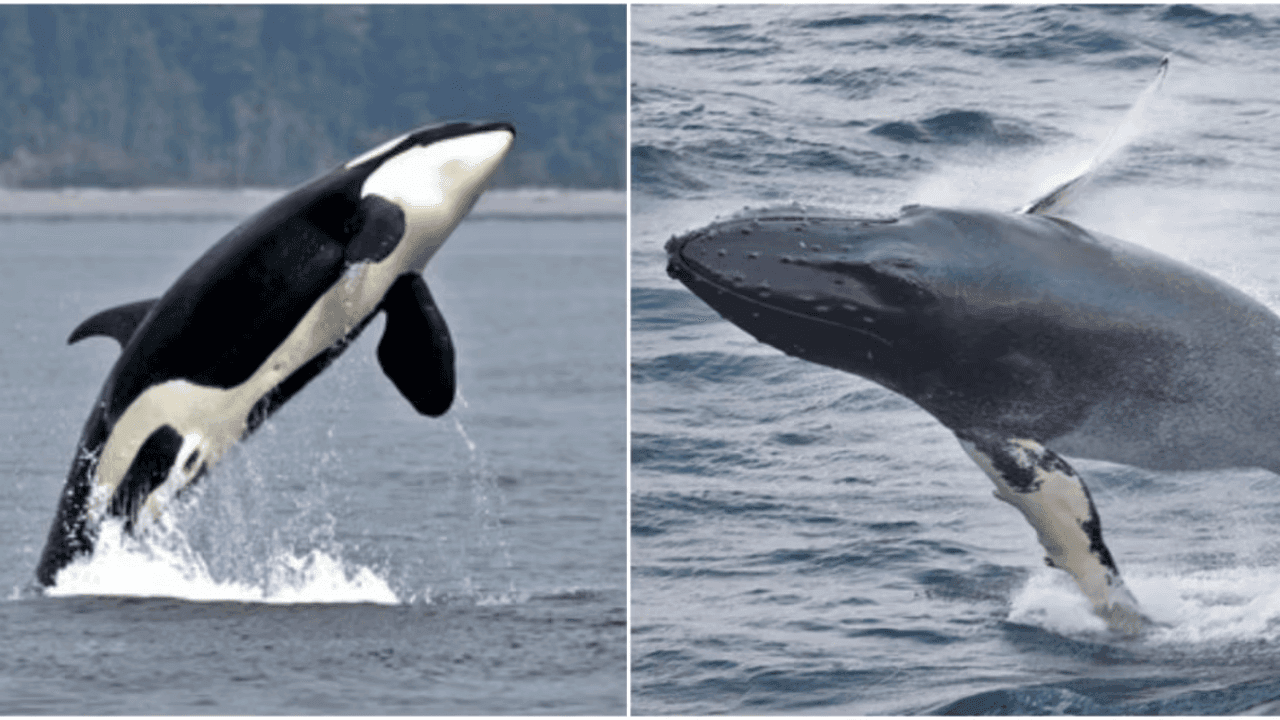
In the vast depths of the ocean, where survival is a daily struggle, humpback whales display a remarkable behavior that has captivated scientists and onlookers alike. These gentle giants, known for their haunting songs and majestic breaches, have been seen intervening during hunting episodes involving orcas, or killer whales.
On countless occasions, researchers have documented the awe-inspiring sight of humpbacks charging toward orcas as they hunt seals and sea lions, often engaging in what scientists call ‘altruistic mobbing.’ This peculiar behavior is not mere coincidence; it appears to be a deliberate act of intervention.
Imagine the scene: a pod of orcas hunts their prey, the waves churning as panic ensues among the seals. Suddenly, a humpback whale emerges from the depths, thrashing its massive tail and slapping its pectoral fins in the water. The chaos created affords the seals a crucial chance to escape, while the risk for the humpback is significant — a direct encounter with an orca can lead to serious injury or even death.
Why would these whales take such dangerous risks for animals unrelated to them? This altruistic behavior might stem from their instinct to protect their own calves from predators. However, the actions of the humpbacks suggest a deeper level of empathy and social coordination within the marine environment.
Endlessly swimming through the ocean, the humpbacks exhibit a sense of community that challenges everything we know about animal behavior. Scientists speculate that the roots of altruism in the animal kingdom could mirror those observed in humans: a recognition of kinship and interdependence. Theories suggest that by disrupting the orcas, humpbacks help not only other marine mammals but also themselves, driving predators away from areas they may inhabit.
Throughout their migration routes, these incredible interactions remind us of the intricate relationships that exist beneath the waves. Each encounter fuels a narrative of bravery and sacrifice in the face of dangerous predators. This peculiar twist of nature forces us to ponder: What drives these magnificent creatures to risk it all for others?
With each whistle and splash, stories of these heroic acts spread among diverse marine populations, shaping a legacy of protective behavior. Though the exact motivations remain uncertain, the reactions of these gentle giants throughout the generations offer hope in a world that often seems lacking in empathy.
The aftermath of these courageous interventions continues to unfold. As scientists dive deeper into their research, the enigmatic behavior sheds light on the complexities of animal interactions. Can these acts of kindness lead to a greater understanding of our own behaviors? Or will the altruism displayed by humpbacks redirect our perceptions of intelligence and empathy in the wild?
As we turn our gaze towards the horizon, the ocean’s whispers may remind us of our shared existence. We cannot help but ask ourselves: In what ways can we expand our own ability to empathize and protect those around us, regardless of our differences?