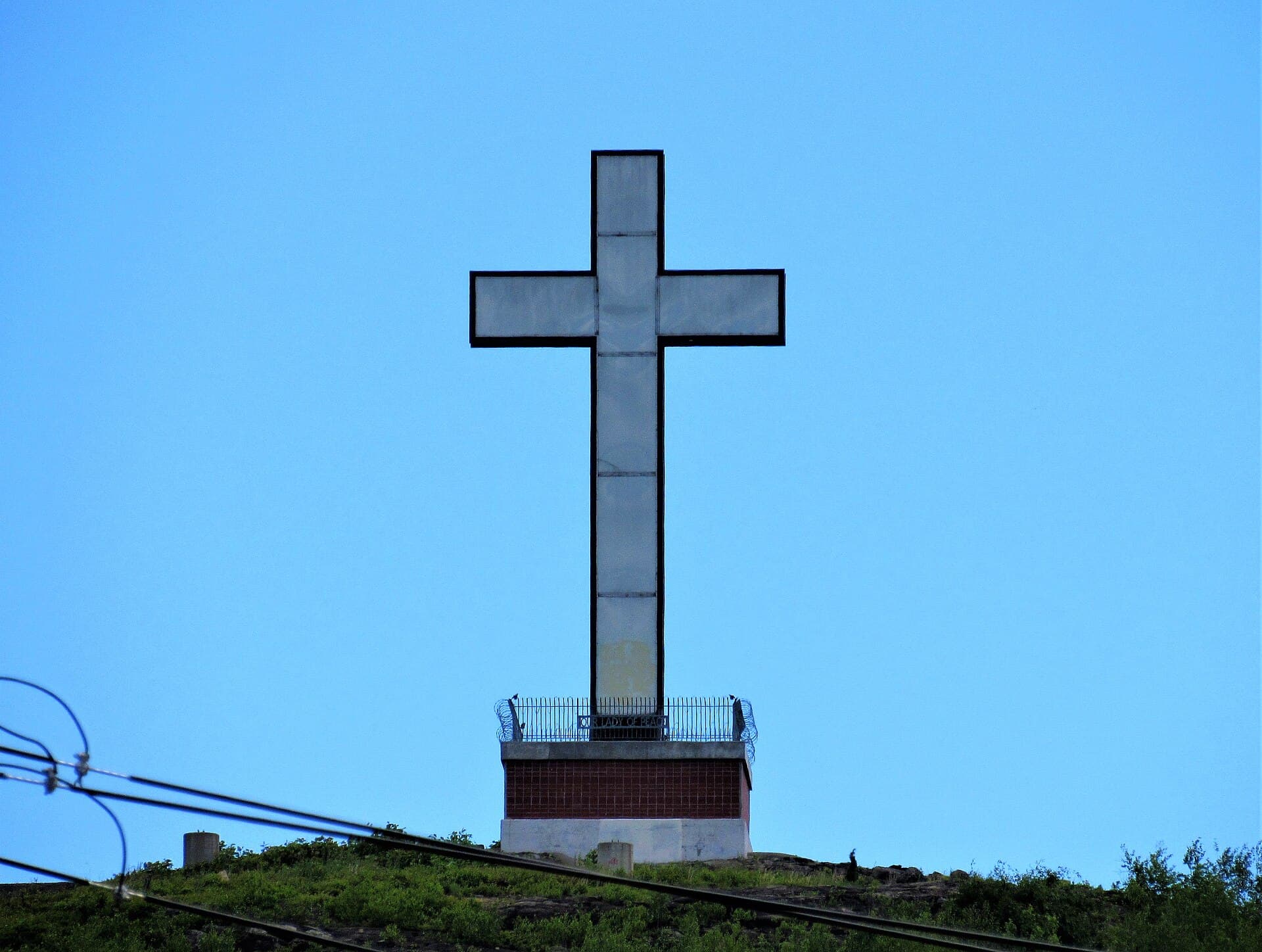
Above Waterbury, a glowing cross marks a place whose story did not end when its attractions closed.
Holy Land USA is a religious landscape on Pine Hill in Waterbury, Connecticut. It began as John Baptist Greco's biblical attraction, fell into disrepair after closing in 1984, and has since become the focus of renewed care. The site welcomes visitors during daylight hours, although restoration can affect individual features.
Calling it an abandoned theme park tells only one chapter. Its present-day purpose includes prayer, remembrance, and community work.
Why John Greco built Holy Land USA
Greco was a local attorney with an ambitious idea: make scenes from the Bible visible in a landscape people could walk through. The site's official history describes a place intended to bring the community together peacefully.
The hillside setting mattered. Rather than presenting a collection inside a museum, Greco arranged an outdoor environment whose paths and structures invited visitors to move from one scene to another. Familiar religious stories gained a physical setting.
The project developed in the 1950s. Its handmade character distinguished it from a polished commercial amusement park. Understanding that difference helps explain why it attracts the interest of both religious visitors and people who study unusual art environments.
A miniature world made from ordinary materials
The SPACES Archives collection entry documents miniature versions of Bethlehem and Jerusalem, with more than 200 structures. Materials included concrete, wood, wire, plastic, scrap metal, and reused objects.
That list is revealing. Much of the creativity lay in turning readily available materials into recognizable settings. A small wall, a figure, or an arrangement of buildings could carry a story far larger than its physical size.
The archival postcard below shows how the attraction presented itself: a hillside sign, a prominent cross, and a landscape arranged for visitors. It records an earlier appearance, not the exact arrangement someone should expect now.
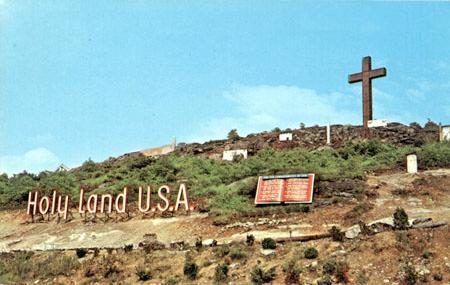
When studying a site like this, small details matter as much as the skyline. The attraction's meaning came from the relationship between miniature scenes, walking routes, and the larger religious symbol above them.
Closure did not erase its meaning
Greco closed Holy Land in 1984, intending improvements. He died in 1986 before the hoped-for renewal could be realized. Atlas Obscura's history traces the closure and subsequent deterioration.
An outdoor environment requires constant attention. Vegetation spreads, surfaces weather, and small handmade structures can deteriorate quickly. Vandalism added further damage during the years of decline.
The loss of the creator also removed the person who had supplied the original vision. That is a familiar problem for deeply personal projects: keeping the place alive requires other people to decide what to preserve, repair, or reinterpret.
Yet Holy Land remained part of Waterbury's identity. Its skyline presence and the memories associated with it gave later supporters reasons to return. An attraction can stop operating without disappearing from a city's emotional geography.
The cross and the effort to bring people back
The cross has changed over time. The official history records a replacement in 2008 and a color-changing LED version in 2013. Its visibility helps explain why so many people recognize Holy Land without having walked its grounds.
The Archdiocese of Hartford's magazine describes the 2013 purchase by Neil O'Leary and Fred Blasius and the renewed religious activity that followed. Community involvement helped move the site beyond the period of neglect.
Revival does not mean recreating every lost object exactly as it was. It can also mean returning a place to meaningful public use while caring for the pieces that remain.
In July 2026, NBC Connecticut reported on work to restore the Stations of the Cross. The report described a planned completion date, which should not be confused with independent confirmation that all work finished. Check the site's latest notices before expecting a particular route or display to be ready.
Visiting a living religious site
The official website gives the location as 60 Slocum Street, Waterbury, and welcomes visitors during daylight. After-dark access is not permitted.
Its frequently asked questions explain that events need approval and that the cross's colors reflect religious seasons and selected observances. The organization relies on community support.
Wear shoes suitable for hillside paths, follow barriers around work areas, and treat devotional objects respectfully. A photograph should not interrupt someone praying or require climbing on a display.
Holy Land USA rewards a visit that holds its different chapters together. Greco's imagination, the damage of neglect, and the labor of restoration all belong to the same hillside. The illuminated cross is the most visible feature, but the quieter act of caring for the grounds may tell the most hopeful part of its story.
Frequently asked questions
Is Holy Land USA still abandoned?
No. Although many old features deteriorated, the site has active stewardship, religious use, and restoration work.
Can the public visit?
Yes, the official website permits daylight visits. Follow current notices about work areas and access.
Who created Holy Land USA?
Waterbury attorney John Baptist Greco developed the biblical landscape with help from supporters.
Can you visit at night to photograph the cross?
The cross can be seen from outside the property, but the grounds are closed after dark. Do not enter for nighttime photographs.
Image credits
Body image: Unknown creator, Public domain.

Featured image: Farragutful, CC BY-SA 4.0.
