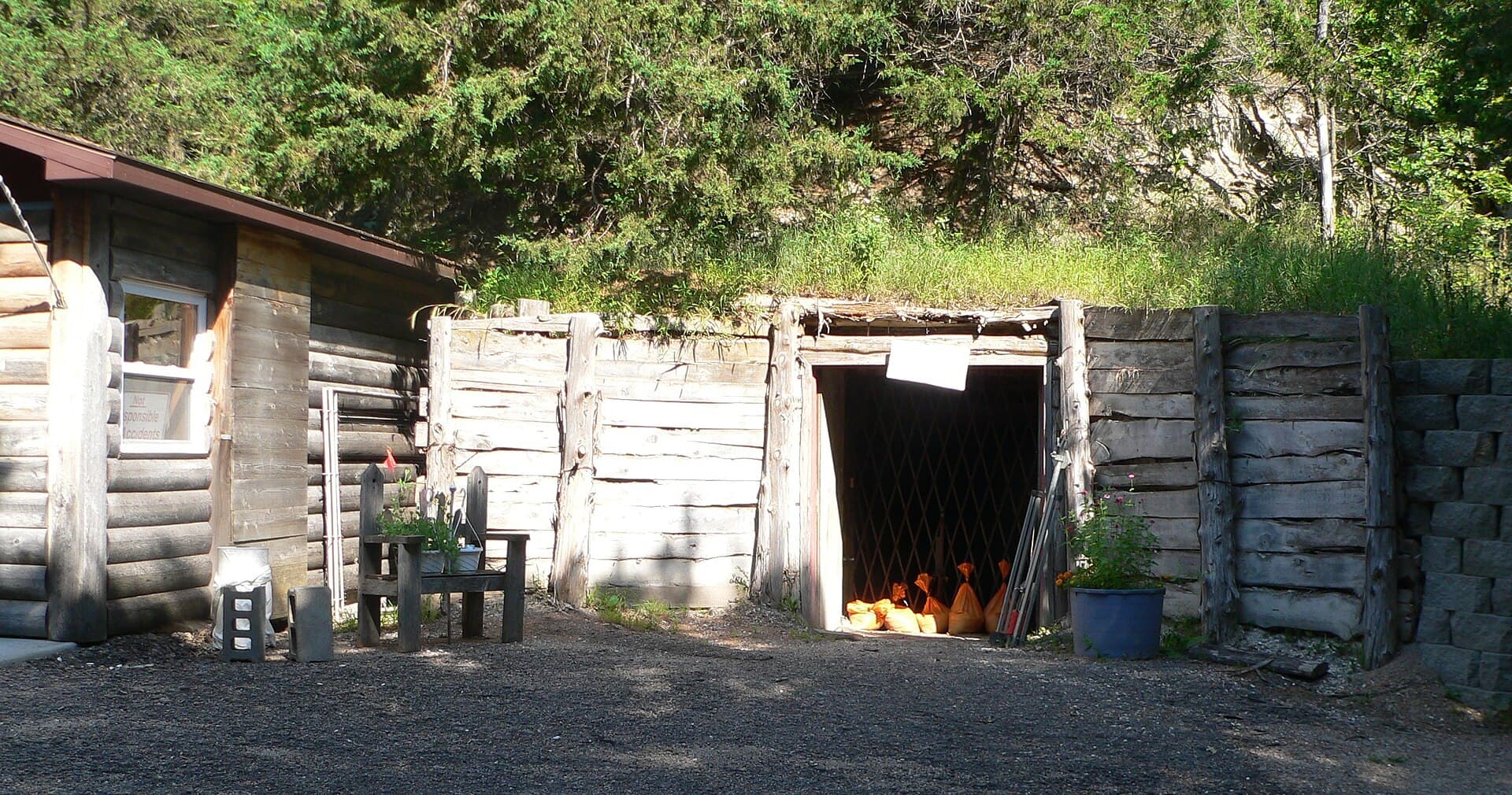
The most surprising tunnels in this Nebraska mine were dug millions of years before people arrived.
Happy Jack Chalk Mine, near Scotia, Nebraska, is a former commercial mine now visited on guided tours. Its pale underground walls preserve both human excavation and much older animal burrows. Despite the name, the rock is not ordinary classroom chalk, and its story begins in an ancient lake environment.
This is a place where a small local industry opens a window onto deep time. The two histories are visible together, sometimes on the same wall.
How Happy Jack Chalk Mine began
The Nebraska historical marker identifies Ed Wright's mining activity in 1877. The site takes its name from Happy Jack Swearengen, a local trapper and guide associated with the area in the early 1870s.
The pale material proved useful. It supplied building blocks, including those used for a local general store in 1887. Later, an Omaha company used material from the mine in products such as paint, polish, and other commercial mixtures.
That practical history matters. The underground spaces were not created as a tourist attraction. Workers removed something they could sell, leaving openings supported by portions of rock kept in place.
The name stuck because the material looked chalky. Familiar names often outlast the scientific explanation behind them, and Happy Jack is a particularly good example.
The rock is a record of ancient lakes
Research from the University of Nebraska–Lincoln identifies the deposit as calcareous diatomite. In plain language, it is pale rock containing material from microscopic organisms associated with ancient lake deposits.
That distinction corrects a common shortcut. Describing the mine as an old seabed misses the lake history documented by researchers. The scientific story is interesting enough without substituting a more familiar one.
The most remarkable features are preserved burrows made by ancient rodents roughly five million years ago. Researchers studied their shapes and patterns to learn about the animals and the environment they inhabited.
A fossil does not have to be a bone. A tunnel, track, or other trace can record behavior. At Happy Jack, the form of an animal's underground home survived long after the animal itself disappeared.
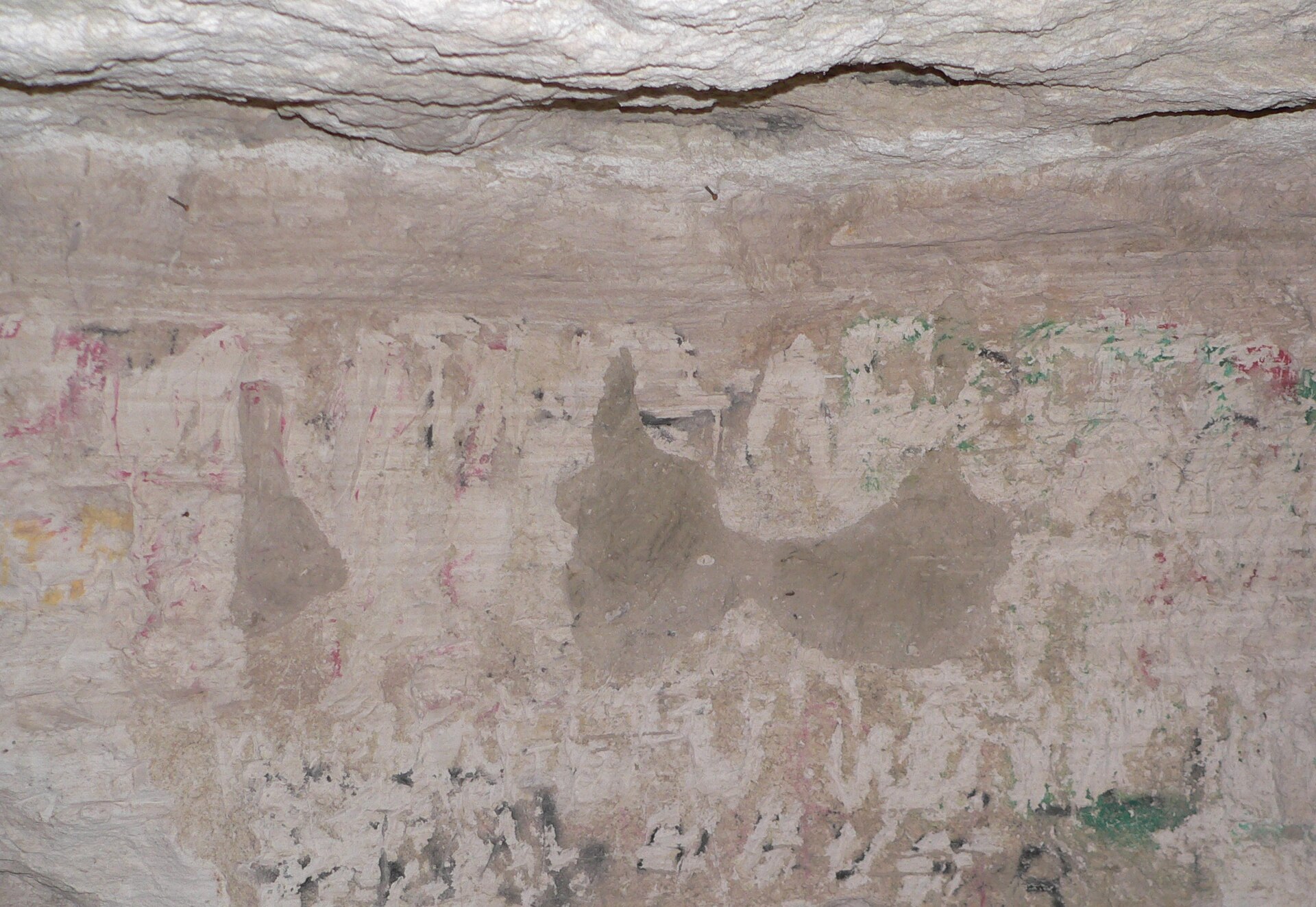
Reading two sets of underground marks
A Nebraska Public Media report describes how the burrows helped researchers examine the Great Plains' past. Features that might look like ordinary stains or irregular patches can carry evidence about earlier landscapes.
That makes a guided visit more rewarding than a quick glance at a wall. A guide can help distinguish the mine's larger excavated spaces from geological features that predate mining by an almost unimaginable span.
The contrast is a useful way to approach the whole site. Human workers followed a market for useful rock. Ancient animals followed the requirements of shelter and survival. Both left spaces behind, but for entirely different reasons.
Look carefully without touching or scraping. A surface that seems unremarkable may contain information that only becomes meaningful when studied alongside other examples.
From disused workings to a community attraction
Commercial mining eventually ended. The site's later history included closure, repairs, and renewed public interest. Atlas Obscura's account describes an entrance collapse in 1978 and restoration leading to reopening in 1997.
The mine did not simply turn into a visitor attraction by itself. It needed people willing to clear, maintain, interpret, and supervise it.
A 2026 report by 10/11 News highlights the local effort behind its continued operation, including volunteer work and ongoing improvements. That present-day activity makes the word abandoned a poor description of the visitor experience.
The extraction industry is gone, but the site has another purpose. Its value now comes from helping people understand geology, work, and the persistence of a small community attraction.
Planning a guided visit
The Nebraska tourism listing places Happy Jack Peak and Chalk Mine at 80131 Highway 11, south of Scotia. It describes a summer tour season from Memorial Day through Labor Day, with off-season arrangements available by appointment.
Confirm directly before setting out. A listing's regular summer hours should not be treated as a promise of a walk-in tour in November or during poor weather.
Underground tours and access to the surrounding grounds are different activities. Ask about ticketing, the next available tour, footwear, and any mobility requirements. Do not enter unattended workings or bypass a closed gate.
Allow enough time to appreciate the hill as well as the mine, if conditions permit. The above-ground landscape gives scale to the hidden spaces below it.
Happy Jack's greatest surprise is not its size. It is the way a useful local rock preserved evidence of lives separated by millions of years. A short underground visit can make the familiar Nebraska landscape feel much older, and much less ordinary.
Frequently asked questions
Is Happy Jack Chalk Mine still operating commercially?
No. It is a former mine used for guided visits and interpretation.
Is the rock really chalk?
Researchers identify it as calcareous diatomite associated with ancient lake deposits. Chalk is the traditional local name.
What are the shapes in the walls?
Some are fossil burrows made by ancient animals. A guide can help identify them.
Can you tour the mine year-round?
Regular tours are seasonal. Contact the operator about off-season appointments and current availability before traveling.
Image credits
Body image: Ammodramus, CC0.

Featured image: Ammodramus, CC0.
