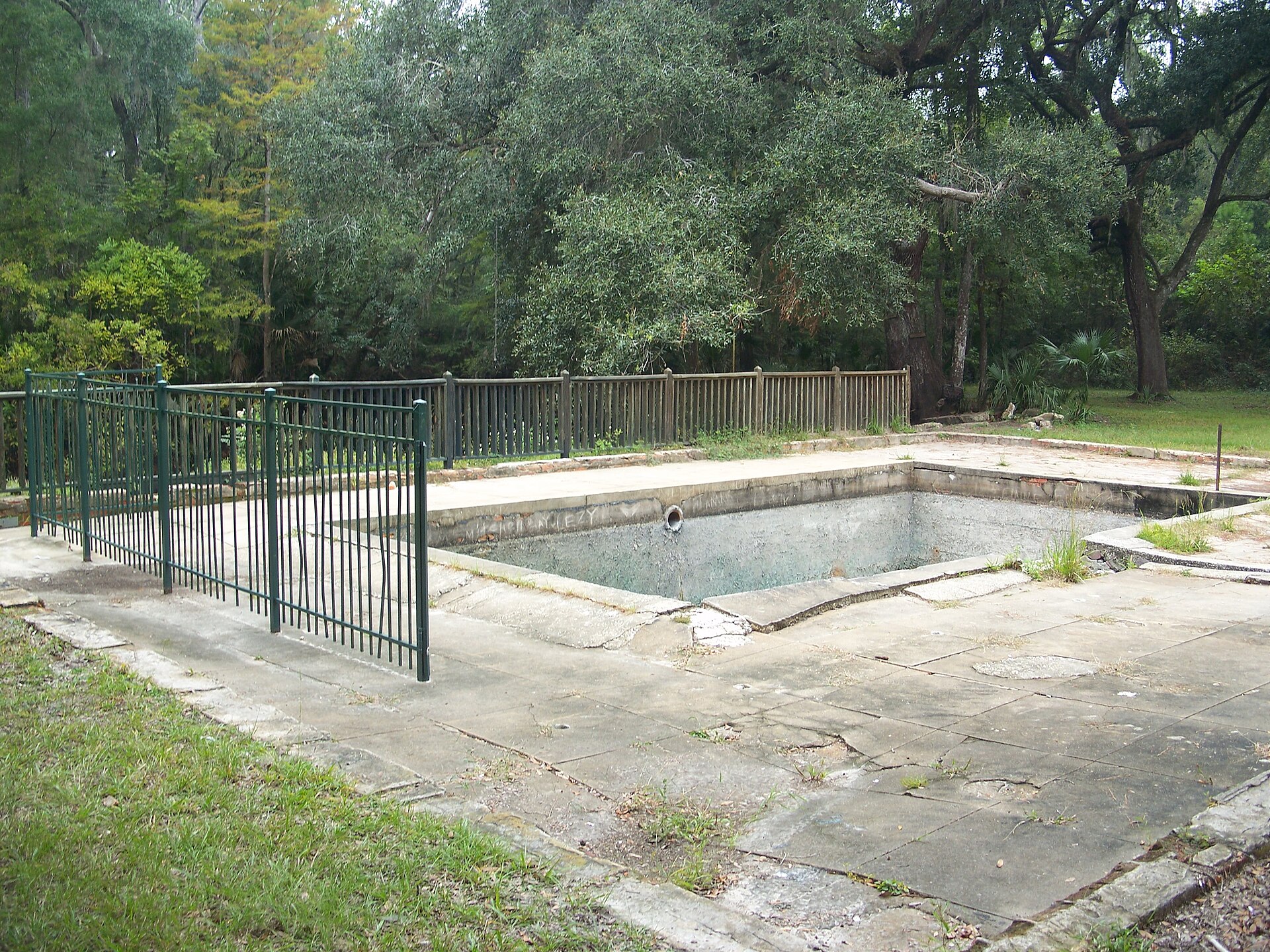
A quiet pool basin marks a Florida vacation destination that fire erased.
Hampton Springs Hotel Ruins lies near Perry in Taylor County, Florida. The hotel opened in 1908 and burned in 1954. Today, the former resort grounds preserve traces of a place that once drew visitors for spring water, recreation, and an extended stay away from everyday life.
This is a site of foundations and surviving landscape features, not a hotel building waiting to be entered. Understanding what has disappeared makes its modest remains far more interesting.
Hampton Springs Hotel Ruins began with water
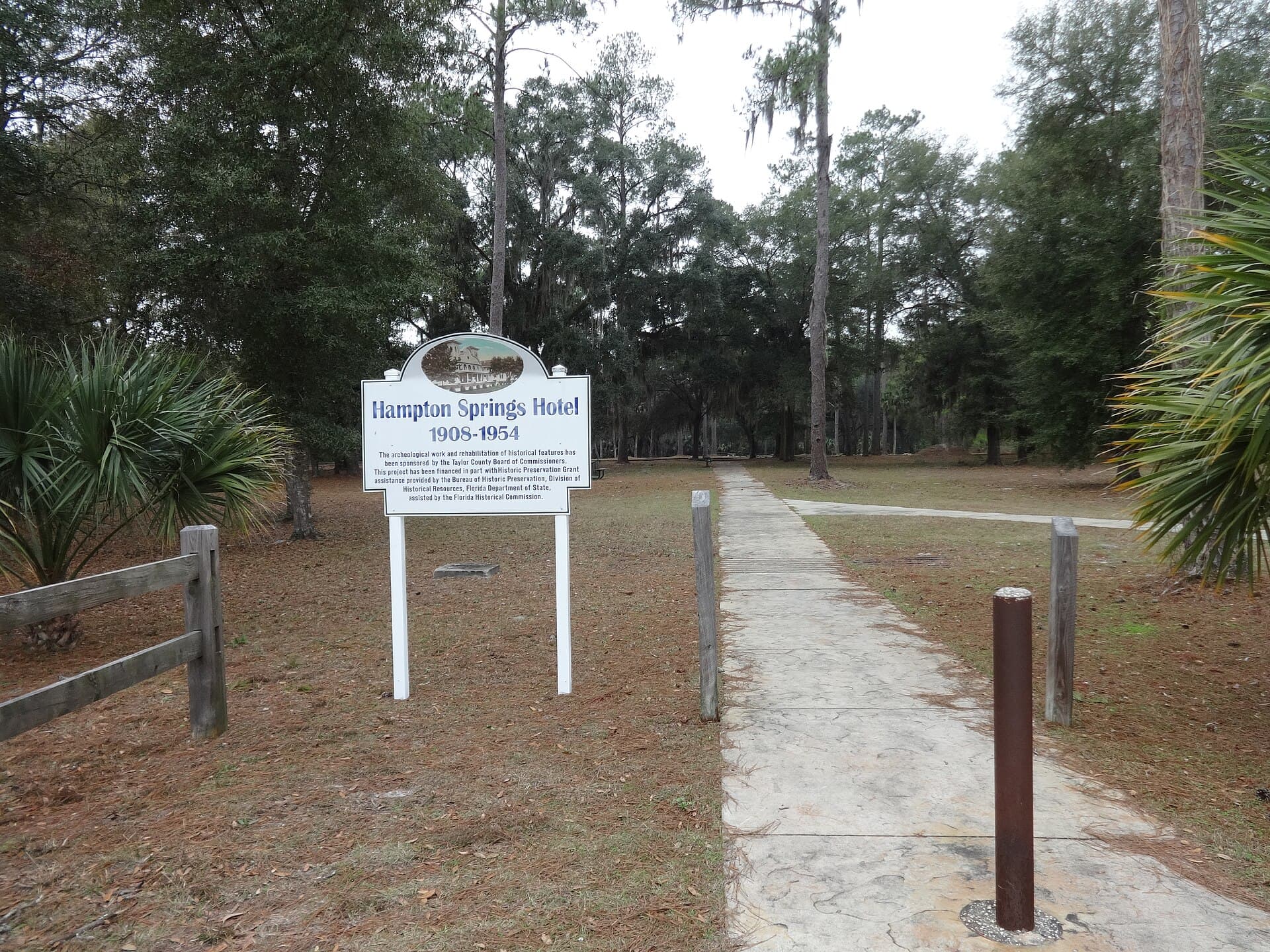
The Florida historical marker at the site describes a resort built around Hampton Springs. Guests came during an era when mineral waters were widely advertised as beneficial to health.
Those claims belong to the history of tourism. They are not modern evidence that the water treats illness, and they should not be taken as advice to drink it.
The hotel offered far more than a place to sleep. Its amenities included a covered pool, a footbath, tennis, a golf course, riding facilities, and spaces for dancing. A railroad depot helped connect the retreat to travelers from farther away.
Together, these features suggest a self-contained vacation world. A visitor could arrive, stay, eat, socialize, and find recreation without treating the spring as a brief roadside stop.
A resort connected to a larger travel story
Historian Rick Kilby's account of Hampton Springs and Florida's spring heritage places the hotel within the broader culture of taking the waters. As tastes changed, resorts also promoted outdoor recreation and leisure.
That transition helps explain Hampton Springs. Water gave the place its identity, but a successful resort needed reasons for people to remain there. Fishing, hunting, and other activities helped broaden the appeal beyond the original health-related marketing.
Picture the difference between arriving at a destination hotel and visiting the ruins today. The earlier traveler needed accommodation, meals, baggage handling, and entertainment. The modern visitor needs a map, enough daylight, and a willingness to read the landscape.
The change is visible in what survives. Paths still lead through the grounds, but they no longer connect a working hotel to a full schedule of activities. A rectangular pool can communicate the scale of a lost amenity more clearly than a paragraph of advertising.
The fire that ended the hotel
The hotel burned in 1954 and was not rebuilt. A local history published in The Front Porch recounts the destruction of the main building and the later loss of other structures.
Fire explains the hotel's abrupt disappearance, but it does not explain every later change to the grounds. Decades of weather, vegetation, maintenance choices, and public use shaped the remains that visitors encounter.
That is why a ruin should not be treated as a scene frozen on the day it closed. What is present now has passed through another history after the resort's final guests left.
Saving the pieces that remained
A later preservation effort supported archaeological work and interpretation at the site. The historical marker was installed in 2007, helping connect the visible remains to the resort's story.
The pool itself became the focus of a public debate. In 2018, concern about vandalism led to a proposal involving filling the feature; public opposition helped reverse the approach. The episode shows how easily an effort to manage a difficult site can become a dispute over what deserves protection.
A 2019 Front Porch feature also follows a surviving fountain from the resort to Rosehead Park in Perry. Relocated in 2016, it demonstrates that a site's history can continue beyond its original boundaries.
A hotel may vanish while individual objects, documents, and community memories survive in different places. Looking for those connections gives Hampton Springs a richer story than simply calling it abandoned.
How to plan a visit
The grounds are Hampton Springs Park, near U.S. 98 west of Perry. Check local conditions and posted notices before traveling, particularly after severe weather. Older photographs cannot confirm which paths or features are accessible on a particular day.
Taylor County's park ordinance establishes sunrise-to-sunset hours unless the county authorizes otherwise. It prohibits damage to historic infrastructure, digging, removal of vegetation, and unauthorized overnight camping. Dogs must remain leashed.
Walk around the remains without climbing fences or fragile structures. Bring drinking water, use sturdy shoes, and keep children close near changes in ground level and water features. Do not assume that a former swimming pool is an approved swimming area.
The best way to experience Hampton Springs is slowly. Read the marker, study the pool, and notice how much of a resort can be suggested by a few surviving shapes. Its quiet setting gives the lost hotel room to become imaginable again.
Frequently asked questions
When did Hampton Springs Hotel operate?
The hotel opened in 1908 and burned in 1954, according to the site's historical marker.
Is the hotel building still standing?
No. The attraction is the former resort site and its surviving features, rather than an intact hotel.
Can you swim in the old pool?
Do not assume swimming is permitted or safe. Treat it as a historic feature and follow current county signs.
Can you visit after dark?
The county ordinance sets normal park hours from sunrise to sunset. Special extensions require county authorization.
Image credits
Body image: Ebyabe, CC BY-SA 3.0.

Featured image: Michael Rivera, CC BY-SA 4.0.
