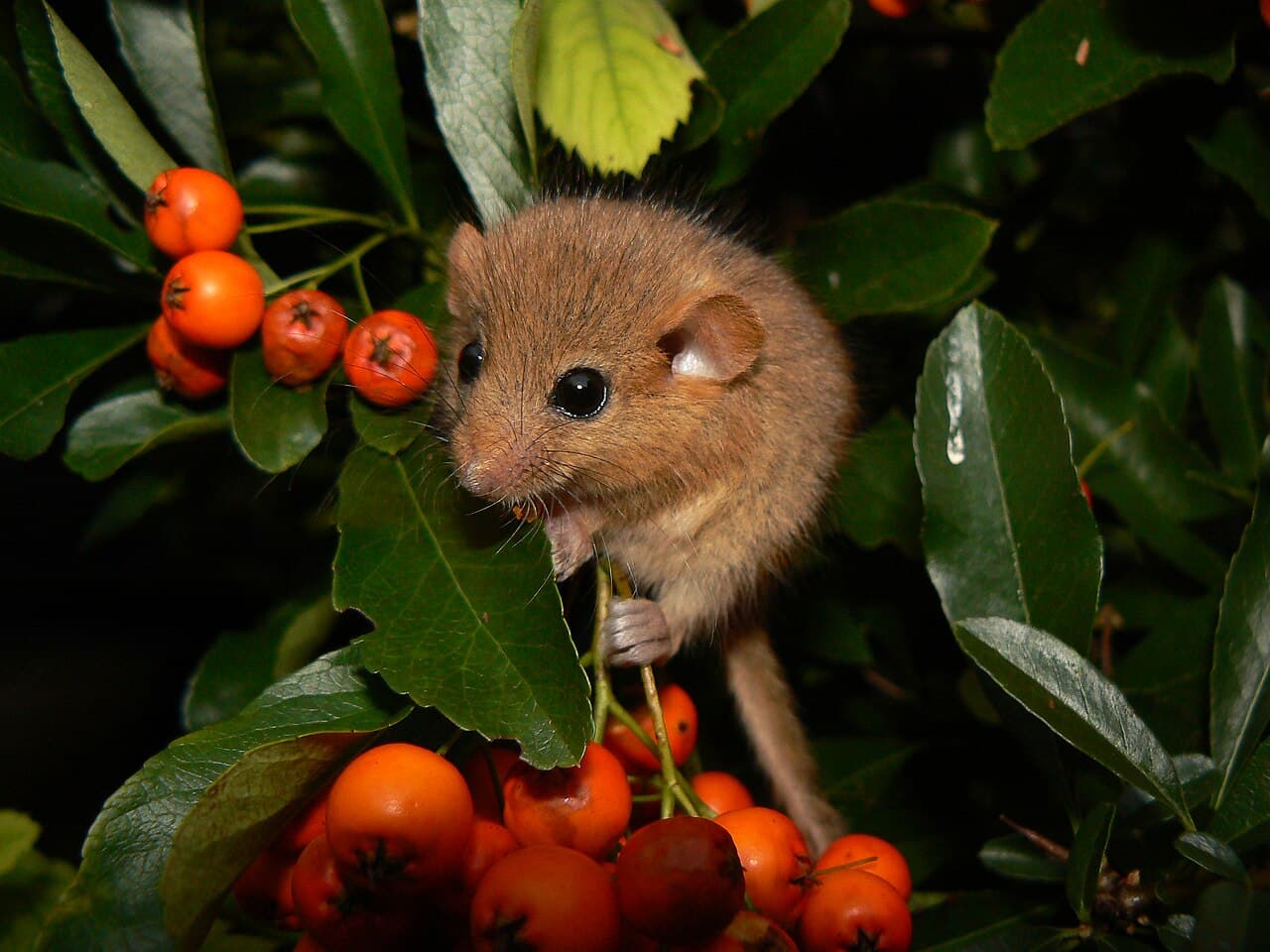
A hazel dormouse spends much of its active life among branches, but its winter hiding place may be down near the ground. That change of level is one of the most surprising parts of its year.
The tiny golden-brown mammal needs more than somewhere to curl up. It needs a landscape that works in different seasons.
A careful climber
The hazel dormouse, Muscardinus avellanarius, uses shrubs, trees, and tangled vegetation to move and feed.
The People's Trust for Endangered Species describes its seasonal life and varied diet. Flowers, fruits, nuts, and small animal foods can all contribute at different times.
The name “dormouse” may bring nuts to mind, but one food does not explain its whole year.
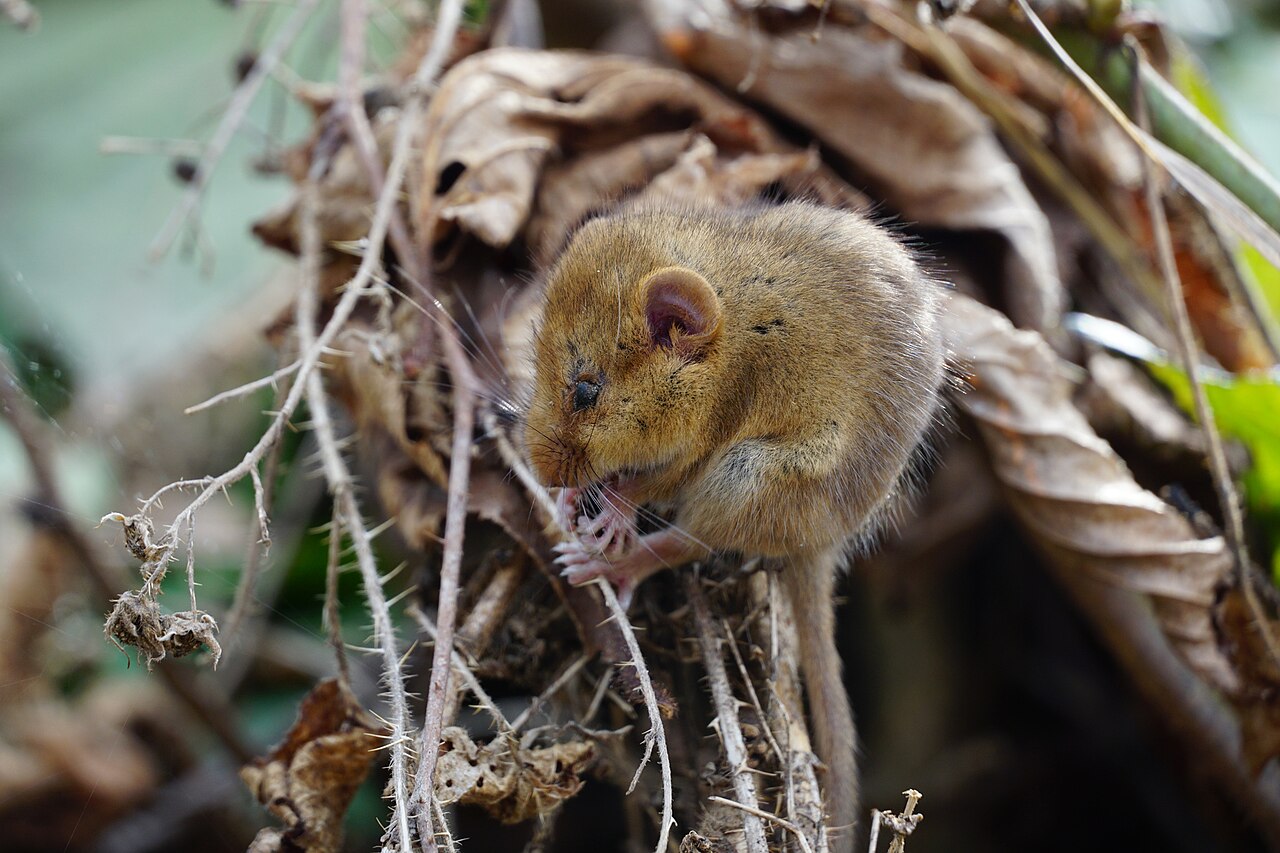
Winter happens in a different place
When a dormouse hibernates, its activity and energy use fall. Hibernation nests are typically near ground level, protected by surrounding vegetation and litter.
PTES research on winter nests helps show why the forest floor matters alongside the canopy.
Hibernation is a response to seasonal conditions. It is not ordinary nightly sleep, and exact timing varies.
A hedgerow can be a route
Connected shrubs and trees allow a small climbing animal to travel through cover. A gap may matter far more to a dormouse than it does to a person looking across a field.
PTES guidance on hedgerow management explains why structure and continuity are important to its habitat.
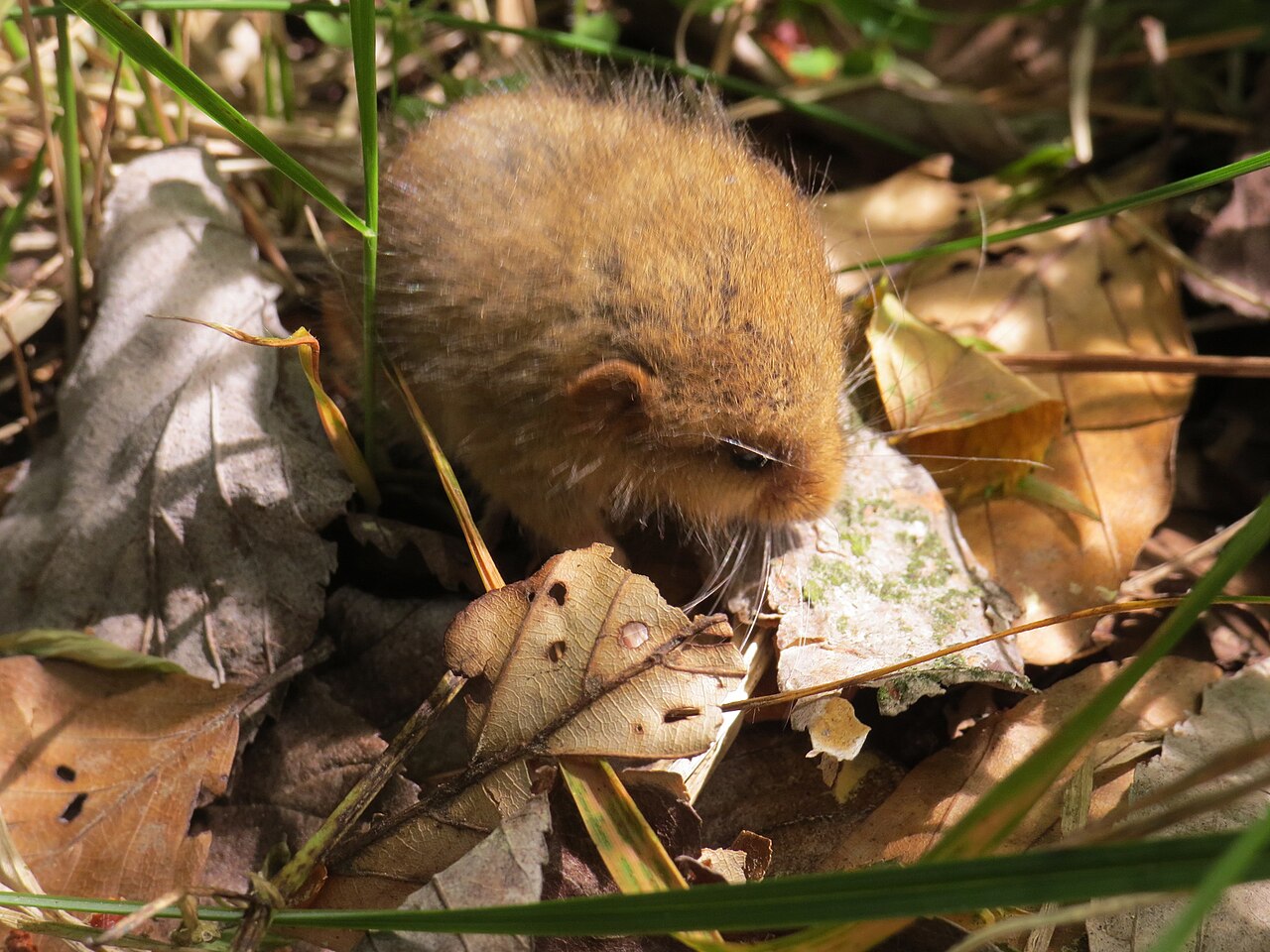
Think beyond one nest
Protecting hazel dormice means considering feeding places, travel routes, summer nests, and winter shelter together.
Its small size makes it easy to overlook that network. A hedge, a patch of leaf litter, and a woodland edge may appear separate to us. For a dormouse, they can be connected parts of one home.
Photo credits
Featured image: Danielle Schwarz; Source; CC BY-SA 3.0. Resized for web display.

Body image 1: xulescu_g; Source; CC BY-SA 4.0. Resized for web display.

Body image 2: Yves Bas; Source; CC BY 4.0. Resized for web display.
