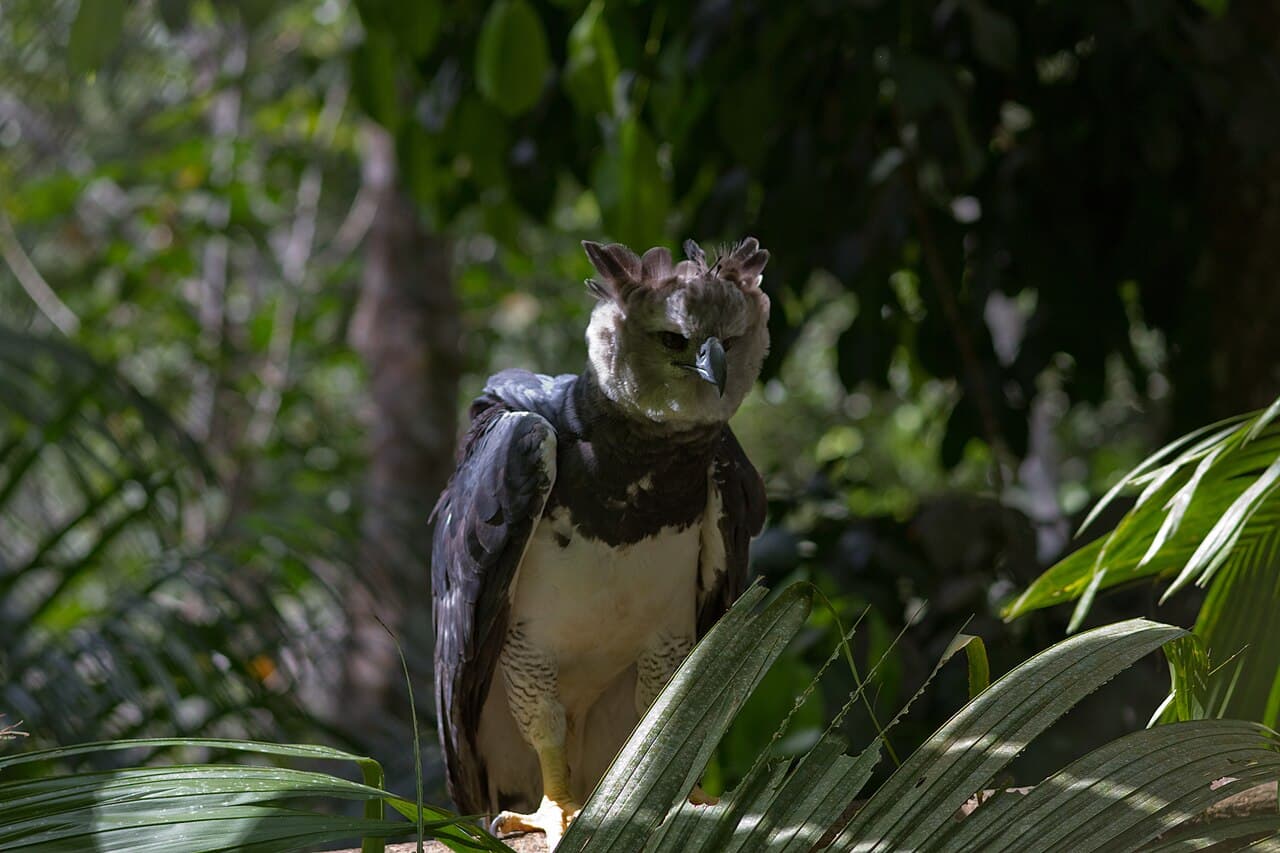
A harpy eagle's powerful feet can grip prey high in a tropical forest. Its dark breast band and raised crown feathers add to the presence of an already formidable bird.
Harpia harpyja is one of the largest forest eagles in the Americas. Females are substantially larger than males.
Power suited to a forest
American Bird Conservancy's harpy-eagle feature describes hunting within forest rather than constant soaring over open ground.
Sloths and monkeys are among its prey. Strong feet and large talons are tools for that demanding work.
The crest is easy to admire in a portrait. The feeding task explains more about the animal carrying it.
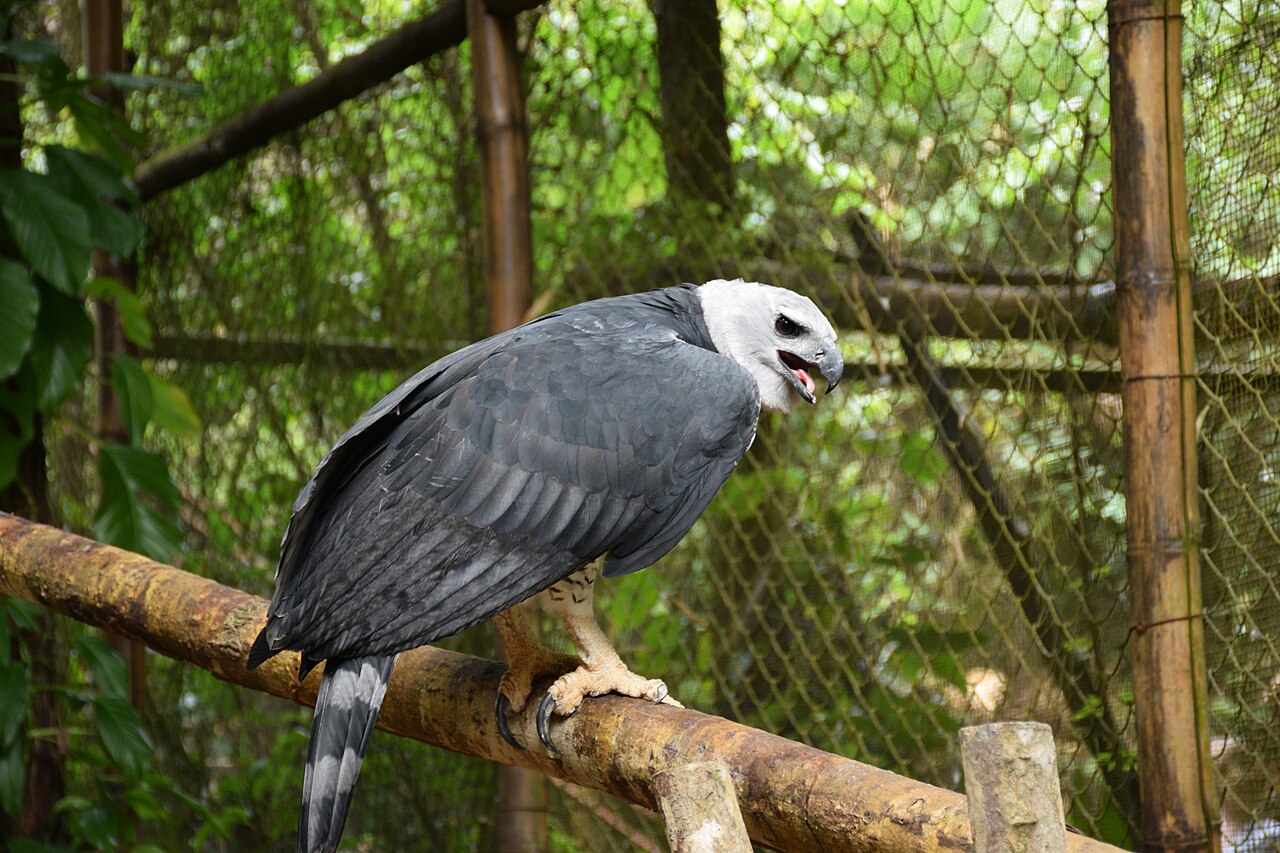
A tree can hold a long family story
Harpy eagles nest in large trees. Raising a youngster requires a sustained food supply and parental care.
ABC's account of a monitored nest shows how cameras can reveal the slow progress of a chick into a flying juvenile.
A nesting tree is therefore more than an isolated perch.
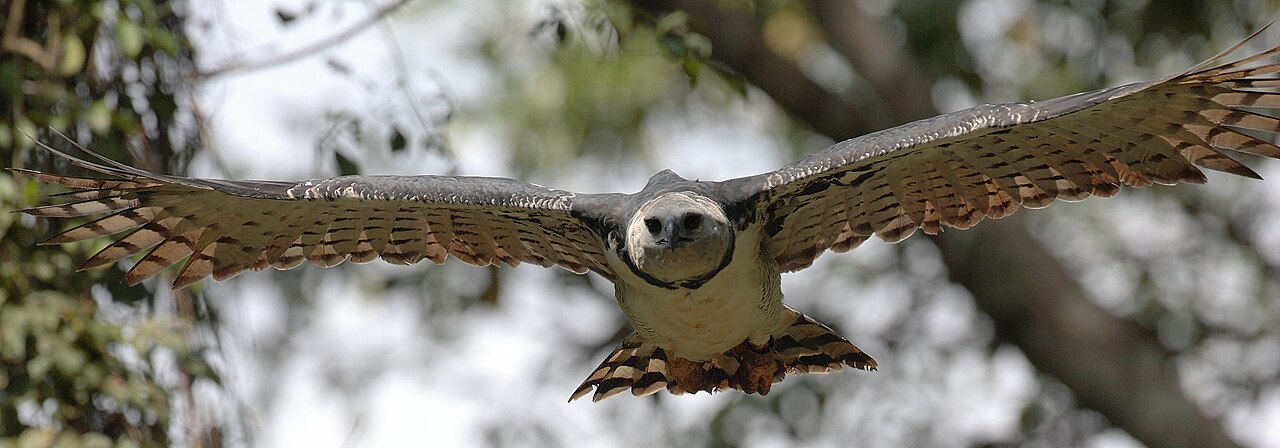
A broad map can hide a fragmented reality
Forest clearance and hunting threaten harpy eagles. A species may appear widespread on a map while suitable habitat within that outline becomes patchy.
Protecting mature forest supports both nesting places and the prey around them.
The harpy eagle's striking appearance invites awe. Its deeper story asks us to see the forest as a connected home, large enough to sustain a powerful predator and its young.
Photo credits
Featured image: Harpy Eagle (Harpia harpyja).jpg — Brian Gratwicke from DC, USA; CC BY 2.0.

Body image 1: Captive Harpia harpyja (Harpy Eagle) at Belize Zoo.jpg — Perryprog; CC BY-SA 4.0.

Body image 2: Harpia-harpyja-001.jpg — Mdf; CC BY-SA 3.0.

Photographs resized for web display where available.