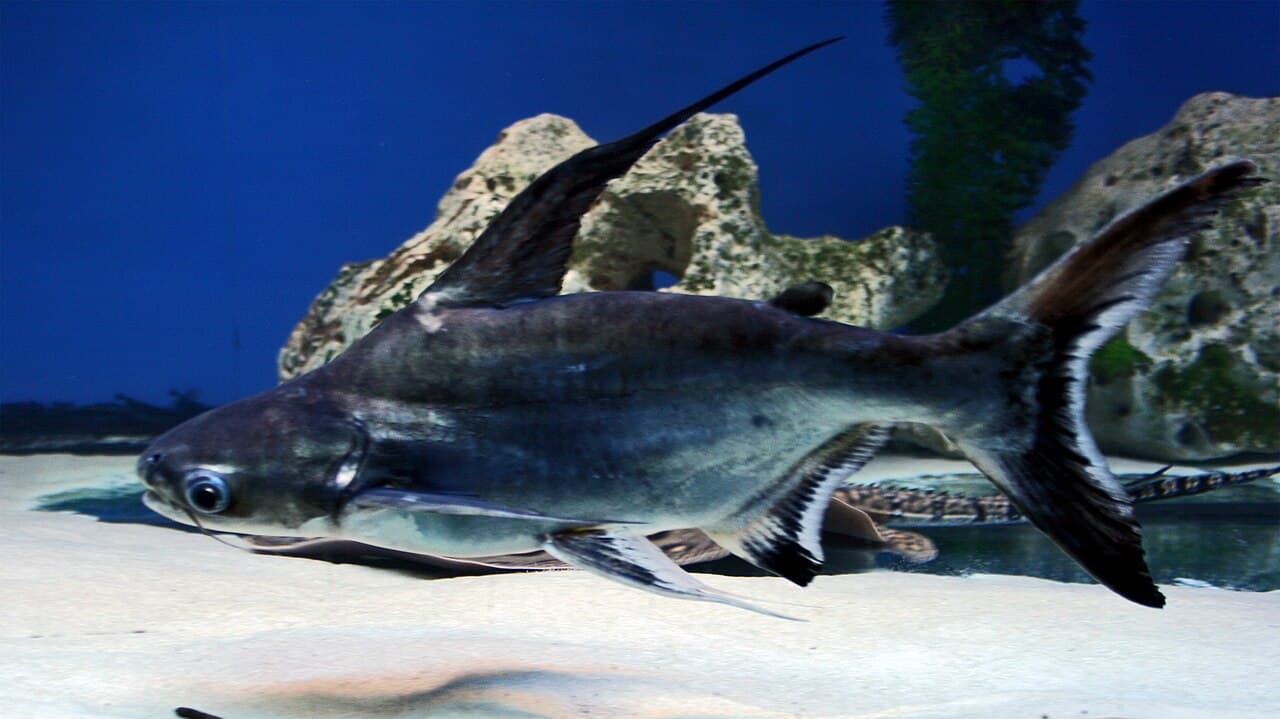
A tall fin rises above a powerful body, and a deeply forked tail drives the fish forward. At first glance, the giant pangasius can bring a shark to mind.
But this impressive animal is a freshwater catfish, with a story tied to the great rivers of Southeast Asia.
Meet the Giant Pangasius
Its scientific name is Pangasius sanitwongsei. It is also known as the Chao Phraya giant catfish and paroon shark.
That last name describes an appearance, not a true shark relationship. It belongs to the catfish family Pangasiidae.
The species is also distinct from the Mekong giant catfish, Pangasianodon gigas. Similar names can hide important differences between river giants.
Built on an Extraordinary Scale
A genome study in Scientific Data describes giant pangasius among the world's largest freshwater fishes, with reports exceeding three meters in length.
Such figures describe exceptional size, not every individual. Smaller fish and growing juveniles have a place in the species' story too.
The study also notes extended fin rays among its distinctive features. Its profile becomes even more striking once you know you are looking at a catfish.
A Life Connected to River Seasons
Giant pangasius inhabits the Mekong and Chao Phraya river basins.
Historical field surveys summarized by the Mekong River Commission describe seasonal movements linked to changing water levels. Patterns differed between river stretches, so one migration calendar should not be applied everywhere.
Deep pools provide important dry-season refuge. Adults feed on fish and other aquatic animals, and may take advantage of prey moving along the river.
A river is therefore more than water passing a fixed point. For this fish, connected places and changing seasons belong to the same life cycle.
Why a River Giant Needs Protection
The Scientific Data paper describes the species as Critically Endangered and identifies overfishing, pollution, habitat damage, and hydropower development among pressures on wild populations.
The researchers produced a detailed reference genome. This gives scientists a tool for studying genetic variation and informing conservation work.
A genetic resource is useful, but it does not replace a functioning river. Habitat and fish populations still need protection in the water itself.
Looking Beyond the Shark-Like Shape
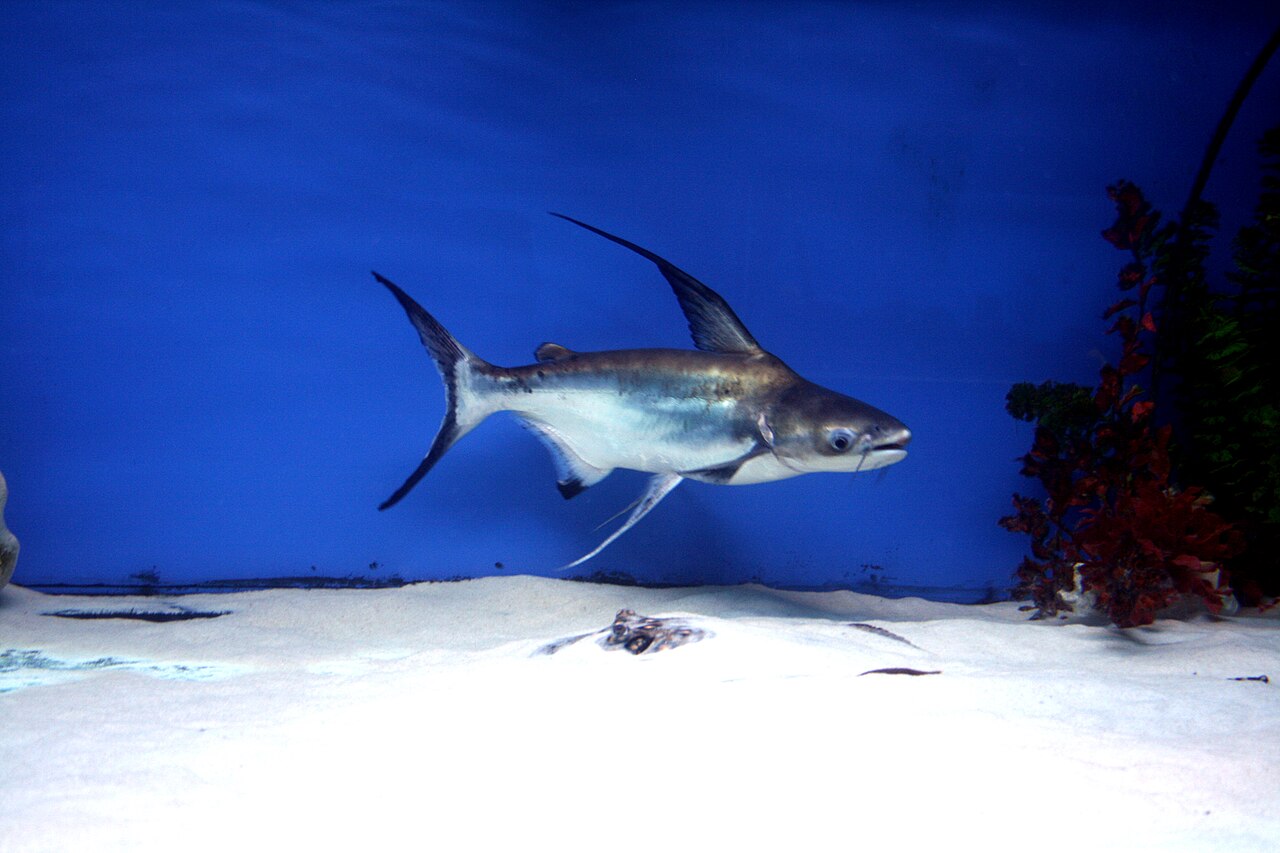
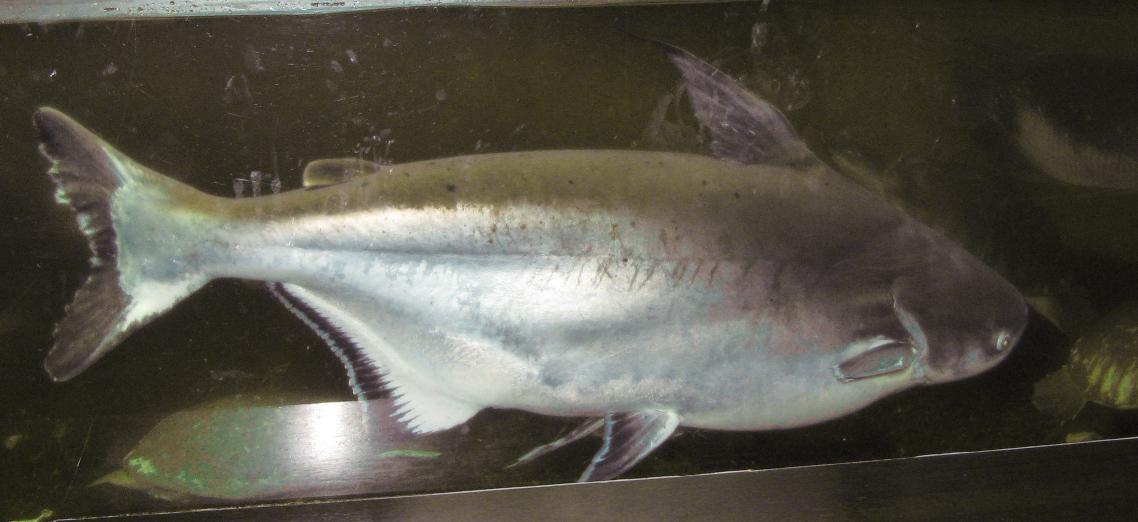
The photographs here show captive fish, clearly labeled as aquarium images. They help illustrate body shape without pretending to document a wild river encounter.
The giant pangasius earns our wonder through its own identity: a huge catfish moving through a seasonal freshwater world.
Protecting that world would help ensure that this extraordinary shape remains part of living rivers, as well as photographs and scientific collections.
Photograph Credits
Featured image: Karelj, public domain. Resized for display. Giant pangasius photographed in a Prague aquarium; captive fish.

Body image 1: Karelj, public domain. Resized for display. A second view of giant pangasius in the Prague aquarium; captive fish.

Body image 2: Cymothoa exigua, CC BY-SA 3.0. Resized for display. An adult giant pangasius; captive photograph.
