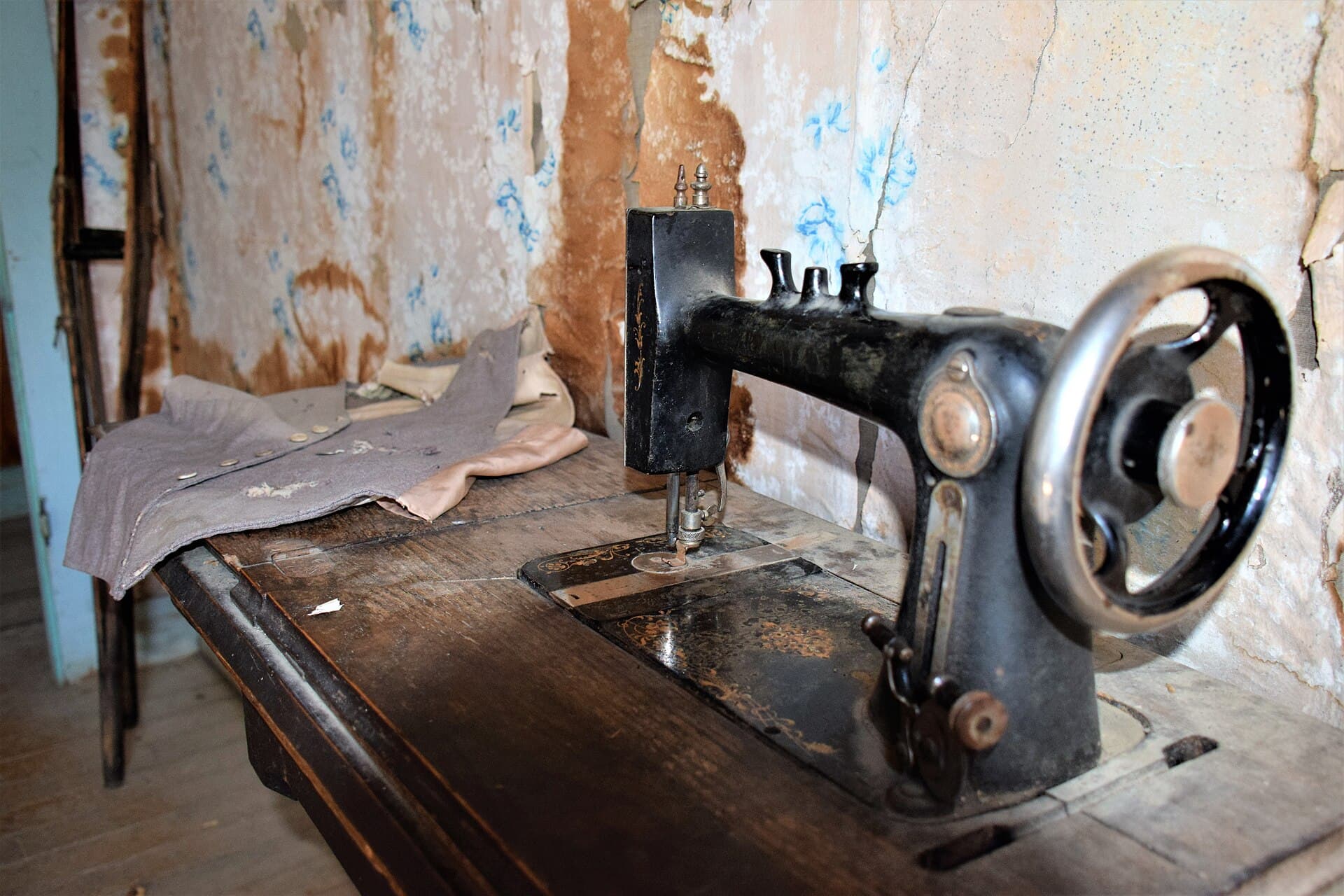
Garnet’s builders wanted the gold below their feet; their hurried wooden town became the treasure left above ground.
Garnet ghost town is a preserved former mining community in the mountains east of Missoula, Montana. It grew rapidly during the 1890s, declined as gold became harder to profitably extract, and experienced a brief later revival before fading again.
Today, the Bureau of Land Management and the Garnet Preservation Association help protect its buildings and interpret its history. The surviving hotel, shops, and cabins reveal a working community whose future once seemed tied to the next successful mine.
Why Garnet appeared in the mountains
The Garnet Preservation Association’s history explains that earlier placer mining gave way to work on gold-bearing quartz.
A stamp mill built by Dr. Armistead Mitchell in 1895 helped establish the settlement. It was first called Mitchell, then became known as Garnet in 1897.
The name came from the reddish mineral found in the area, but gold drove the boom. That distinction is easy to miss when encountering the town for the first time.
By early 1898, the association records nearly 1,000 residents. Stores, hotels, a school, and saloons served the population.
The speed of construction mattered. Many buildings lacked substantial foundations because their builders were focused on immediate opportunity. The town was useful before it was durable.
The Wells Hotel reveals a bigger ambition
The Wells Hotel offers a particularly human way into Garnet’s history.
BLM’s illustrated book, The Road to Garnet’s Gold, describes Winifred Wells overseeing its construction in late 1897 and early 1898.
The design included decorative woodwork and stained glass. Less expensive accommodation upstairs offered space for miners with bedrolls.
Those details show different levels of comfort within the same building. A mining town could contain both ambition and economy, elaborate finishes and practical sleeping arrangements.
The hotel also broadens the story beyond extraction. Hospitality, food, and lodging were businesses in their own right, shaped by the flow of workers and visitors.
Looking at an empty hotel, it is worth asking who made it function. The people managing rooms and meals were part of the mining economy even when they never went underground.
Garnet’s decline happened in stages
Gold became more difficult to obtain profitably, and the population shrank. A fire in 1912 destroyed part of the commercial district.
The town later experienced renewed mining activity during the 1930s, before World War II drew people away again.
The preservation association’s account makes clear that Garnet did not simply empty once and remain unchanged. It went through repeated periods of use, decline, and return.
That pattern explains why a ghost town can resist a single abandonment date. A store might remain active after most neighbors left, or a cabin might find a new occupant during a later revival.
The history is more interesting when those uneven endings remain visible. They show people adapting to changing opportunities rather than obeying one dramatic turning point.
What survives is only part of the town
The BLM visitor page describes Garnet as one of Montana’s best-preserved ghost towns, at roughly 6,000 feet in the Garnet Range.
That does not mean every structure or object survived intact. The passage of time, fire, removal, and weather shaped the remains.
Notice how close the buildings sit to one another and how the mountain setting surrounds them. The arrangement helps explain a settlement built quickly around work.
Historical photographs can reveal what the present view leaves out. Compare rooflines, entrances, and open spaces rather than assuming the current townsite is a complete snapshot of its peak.
A preserved place is valuable partly because it allows those comparisons. Its gaps are part of the evidence.
Preservation is an ongoing job
Garnet’s future depends on maintenance as much as public interest.
In its 2024 announcement about entrance fees, BLM explained that revenue supports stabilization, interpretation, staffing, and trail improvements.
That gives an admission payment a practical meaning. It helps keep a fragile place accessible without letting heavy use erase the qualities people came to see.
The agency and preservation association have also used Garnet Day to interpret the mining heritage. Check current schedules rather than treating a past event announcement as a future booking.
Do not remove artifacts or lean on fragile surfaces. Small losses accumulate, especially when thousands of people make the same assumption that one object will not matter.
Planning a visit to Garnet ghost town
As checked on November 2, 2026, BLM lists admission at $10 per person, with visitors under 16 admitted free. Its page explains applicable federal-pass coverage.
The recommended approach is from Montana Highway 200 via Garnet Range Road. BLM warns against alternative approaches that are steep, narrow, or rough.
Season matters. The visitor center usually operates from May through September, depending on conditions. From January through April, the road is closed to wheeled motor vehicles.
Winter access and cabin stays involve separate planning. Follow current official guidance rather than treating the town as a conventional year-round drive.
Bring layers, water, and time to explore slowly. Read the buildings as evidence of daily life, not just attractive ruins.
Garnet’s lasting power lies in a reversal its first builders could hardly have planned. The gold brought people here, but the ordinary places they built are now what people come to see.
Frequently asked questions
Was Garnet built to mine garnets?
Its name refers to the local mineral, but gold mining drove the town’s growth.
Can you visit Garnet today?
Yes. It is a managed historic site, with seasonal access and current admission information published by BLM.
Can you drive to Garnet in winter?
Not during the January-to-April closure to wheeled motor vehicles. Follow official winter-access guidance.
Who preserves Garnet ghost town?
BLM and the Garnet Preservation Association work to protect and interpret the site, supported by fees, volunteers, and other contributions.
Featured photograph: John Manard. Original image and details. CC BY-SA 2.0. Photograph predates this article; it is not a real-time view.
