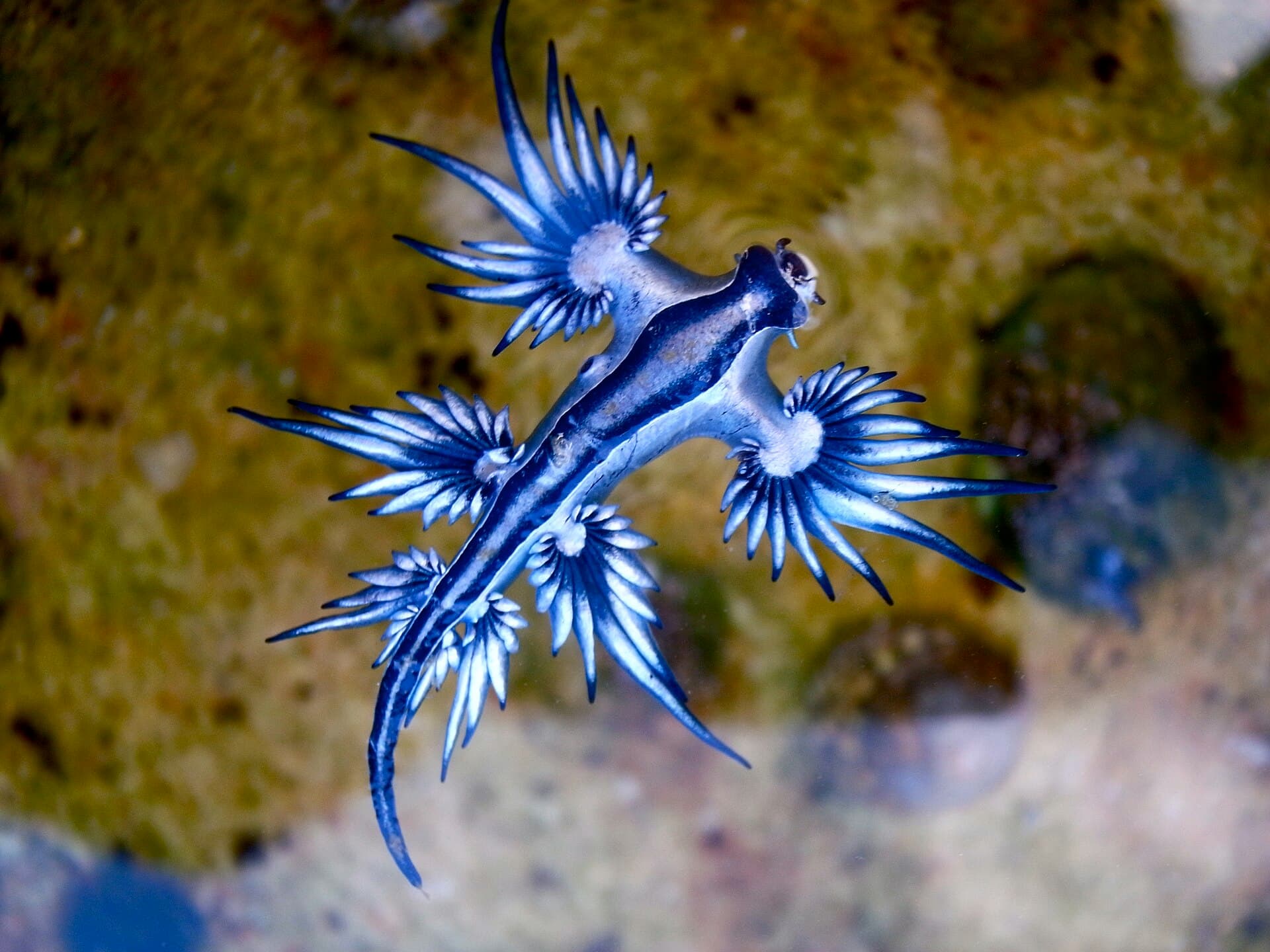
A sea creature small enough to overlook can carry weapons taken from its own food. The blue dragon sea slug feeds on stinging animals and stores some of their stinging capsules for defense.
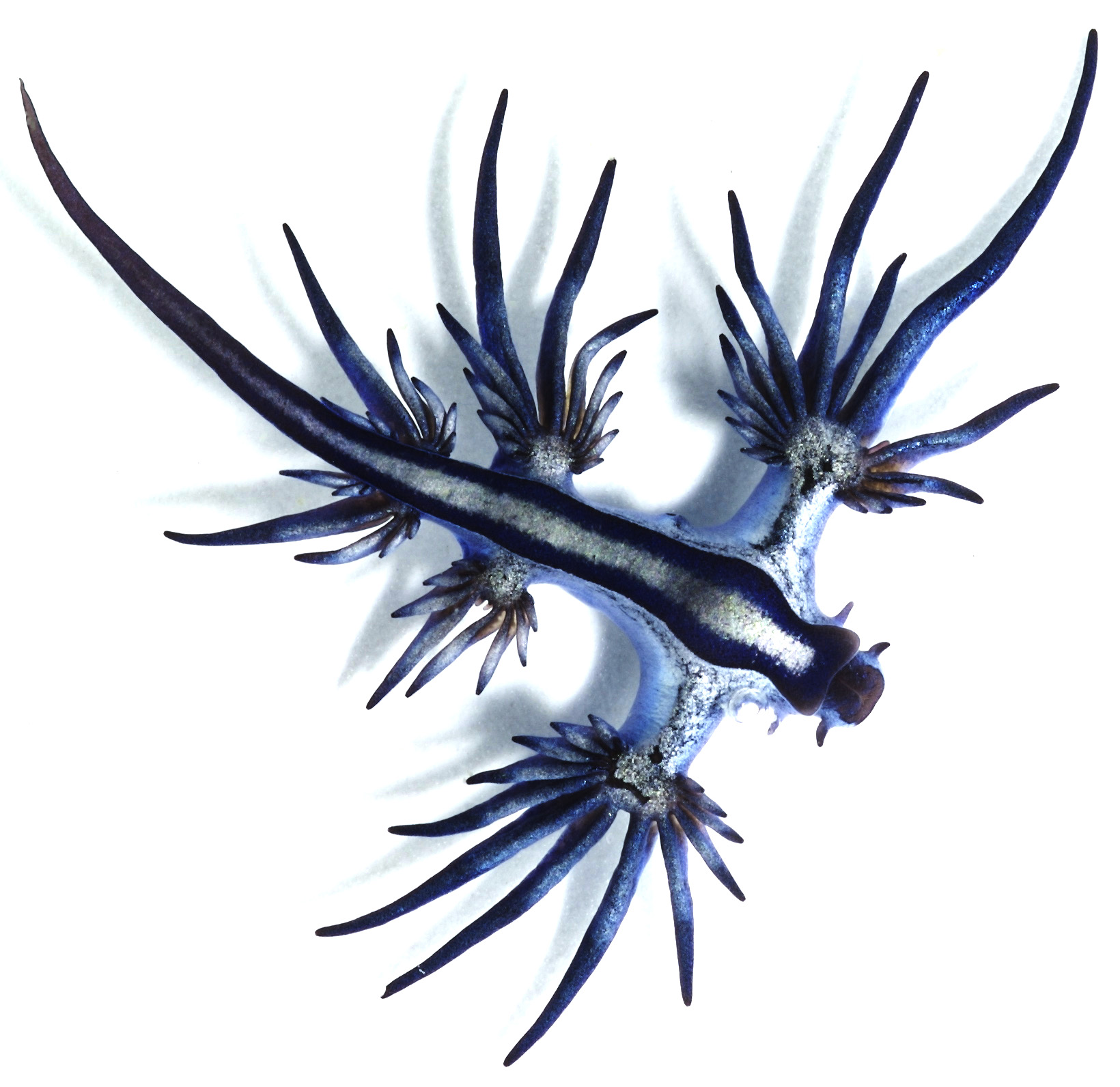
Its branching blue body looks almost imaginary. Yet Glaucus atlanticus is a real mollusk, sharing a broad family connection with the snails many of us see after rain.
A dragon riding the ocean surface
Also called the blue glaucus or sea swallow, this nudibranch spends much of its life floating upside down. An air bubble in its stomach helps keep it at the surface.
Oceana describes it as a small inhabitant of tropical and subtropical waters in the Atlantic, Pacific, and Indian oceans. Its blue and silvery coloring helps disguise it from different viewing directions.
That makes its beauty useful. The animal lives at a boundary where predators might approach from the air or the water.
How does it borrow a sting?
Some sea slugs can eat animals armed with nematocysts: tiny stinging capsules that can fire a thread into another animal.
As the Smithsonian Ocean explains, certain aeolid nudibranchs retain unfired capsules rather than digesting all of them. The capsules pass into special storage structures in their body projections.
The blue dragon uses this remarkable defense. The World Register of Marine Species notes that it feeds on surface-dwelling animals including Physalia, the Portuguese man-of-war, and can deliver a painful sting from capsules acquired through its prey.
It is more precise to describe this as storing stinging capsules than simply saying the slug “steals venom.” The delivery equipment matters too.
Admire it without picking it up
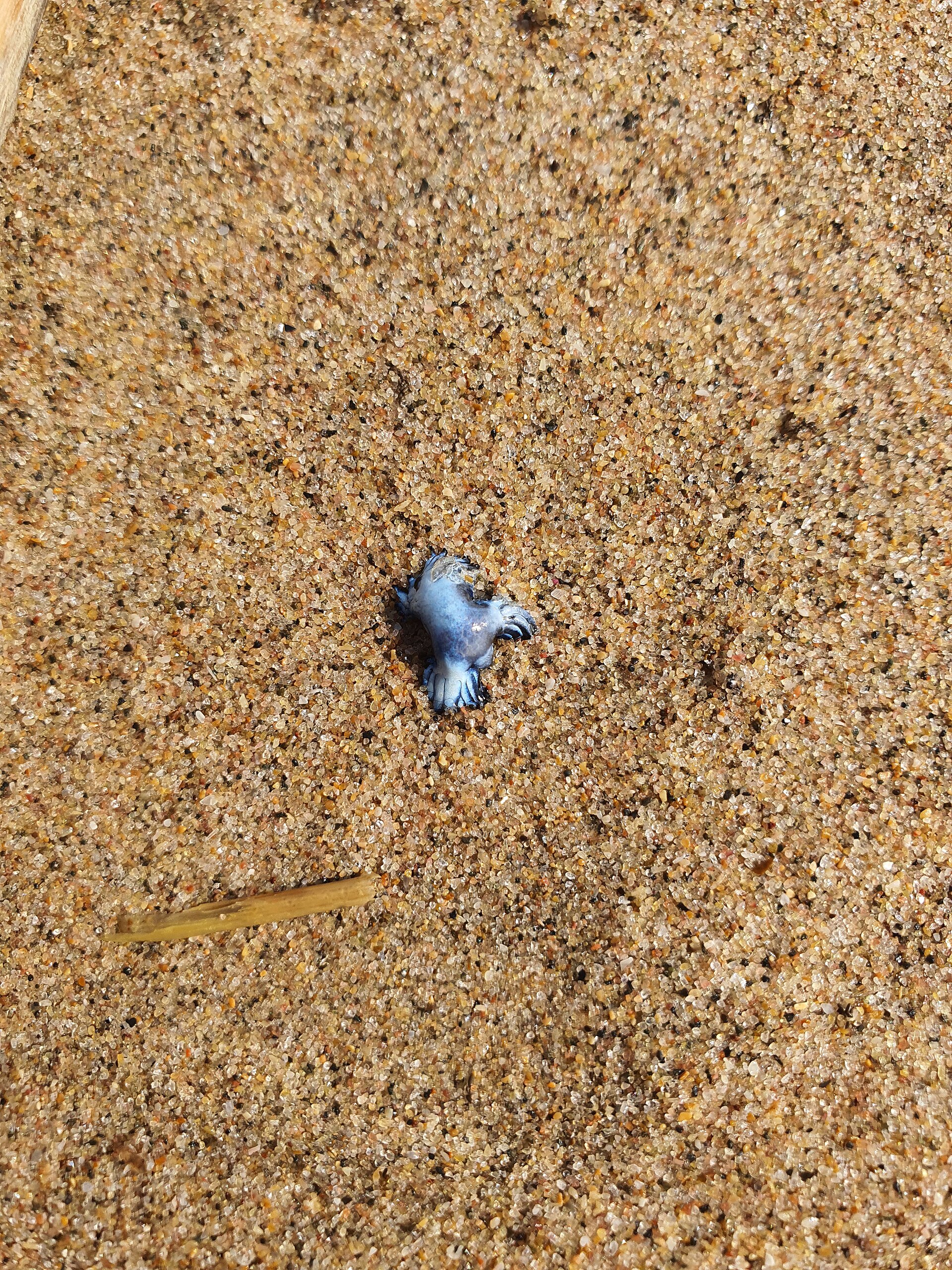
A blue dragon on a beach may seem like a tiny ornament, but its color is no invitation to handle it. Observe it without touching, and follow local beach guidance.
The photographs here show individual animals documented on beaches. They do not establish that a new stranding is happening today.
Small enough to miss, extraordinary enough to remember
The blue dragon turns a meal into a defense system while drifting through the open ocean. Its story is a reminder that nature’s most surprising survival tools can belong to its smallest animals.
Sometimes a closer look changes everything—as long as that look leaves the animal undisturbed.
Photo credits
Featured image: Sylke Rohrlach from Sydney — CC BY-SA 2.0.

Body image 1: Taro Taylor from Sydney, Australia — CC BY 2.0.

Body image 2: PuellaMarina — CC BY-SA 4.0.

Photographs are illustrative. Image adaptations remain under their respective source licenses.