The guns are gone, but their concrete rooms still face the entrance to Puget Sound.
Fort Worden in Port Townsend, Washington, is a former Army post now preserved as a state park. Visitors can explore approved trails, historic grounds, and accessible battery areas. Its weathered defenses remain, but the wider campus supports recreation, education, and cultural activities.
Calling the whole place abandoned misses its most surprising feature: Fort Worden has repeatedly found new uses without losing the outlines of its military past.
Why Fort Worden was built here
Admiralty Inlet forms a gateway into Puget Sound. In the late nineteenth century, defending that waterway meant preparing for hostile ships before they reached important ports farther inland.
Congress authorized new defenses in 1896. Work at Fort Worden began in July 1897, and the post became active on May 14, 1902. Its name honored John L. Worden, commander of the Union ironclad USS Monitor.
By 1904, the post had become a headquarters for the harbor defenses. Washington State Parks records that its 41 guns never fired at an enemy. The park’s historical account presents a place built around readiness rather than a famous battle.
That distinction matters when looking at the empty batteries. Their scale records what planners feared could happen, not destruction that actually occurred here.
Three forts watched the same water
Fort Worden worked with Fort Casey and Fort Flagler in a defensive arrangement often called the Triangle of Fire. Their positions helped cover the approaches to Puget Sound from different sides.
The Washington State Parks Foundation connects the surviving batteries with the Coast Artillery Museum and the wider harbor-defense story. Studying a map before walking helps make those relationships visible.
A gun position can seem isolated when trees hide the water. Place it beside the other forts on a map, and it becomes part of a coordinated system.
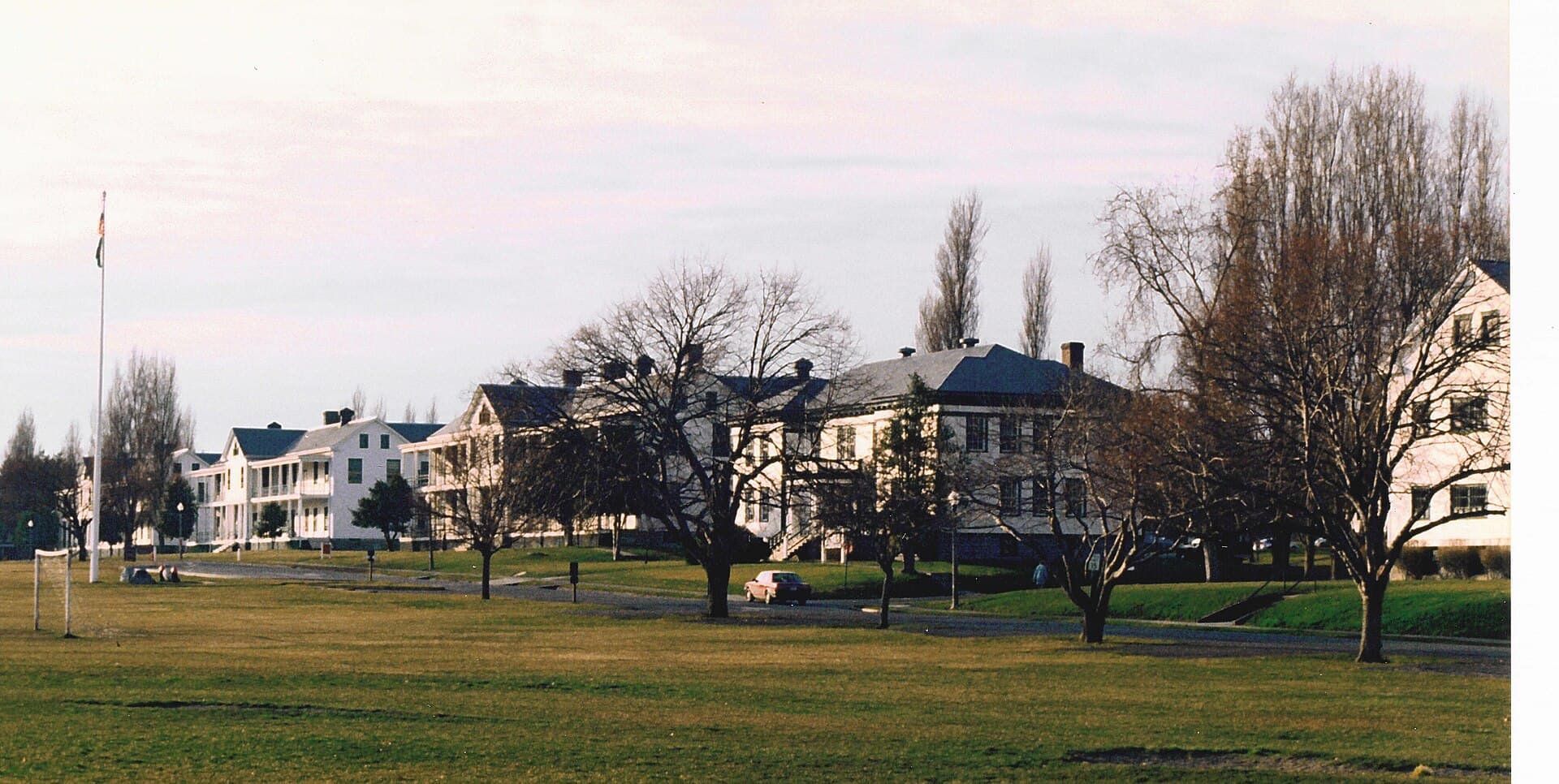
The preserved quarters offer a different perspective. Their porches, regular spacing, and broad parade ground show the domestic order of an Army post. They remind visitors that defending a coastline also meant housing people and organizing daily life.
A military landscape kept changing
Artillery was only one chapter. A balloon company arrived in 1920, but local weather made its work difficult. The unit was later disbanded, and its large hangar eventually found a new purpose as McCurdy Pavilion.
That building captures a recurring pattern at Fort Worden: a specialized military structure can outlive the job that created it.
The Army deactivated the post on June 30, 1953. Washington acquired it in 1957 and operated a juvenile treatment center there. The land transferred to State Parks in 1971, and the public park opened in 1973.
The state’s 2024 strategic plan places these transitions within a longer history. It also recognizes Indigenous connections to the Salish Sea landscape that predate the fort.
The military period is therefore one important layer, rather than the beginning of the place’s story.
What survives in the park
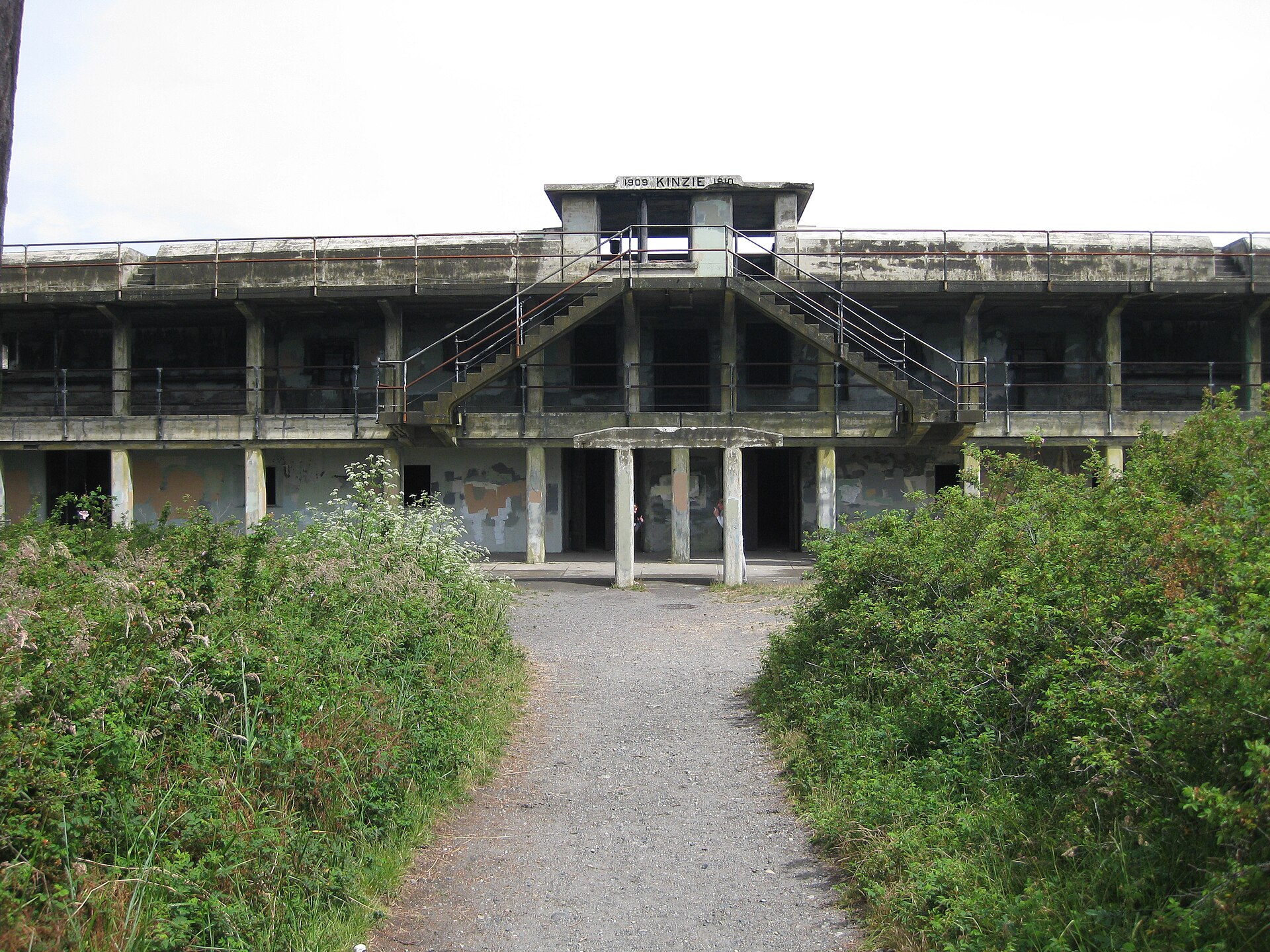
Visitors encounter two very different kinds of architecture. The upper campus has historic buildings arranged around open space. The batteries use heavy concrete, protective earth, narrow passages, and steep changes in level.
The accompanying photograph shows Battery Kinzie in 2010. Its stairs and walls illustrate the functional character of these defenses. Historical images help document the structures, but they do not establish which rooms are open today.
The official park page describes a broader landscape of beaches, woodland, camping, museums, and cultural activity. A visit can combine military history with a shoreline walk rather than focusing only on empty rooms.
Follow signs at each battery. Darkness, damp surfaces, and drops can make a concrete structure more demanding than it looks from outside.
A recent transition worth knowing about
Fort Worden’s public use continues to evolve. After hospitality operations stopped in January 2025 and the development authority’s lease ended the following month, Washington State Parks resumed management of the historic campus.
The agency announced a return of lodging for the April through October 2026 season. Its January 2026 update also noted that campgrounds had remained open through the transition.
That announcement should not be read as a promise of year-round room availability. Check current reservations, tenant schedules, and park alerts for your dates.
Plan a visit around the whole landscape
Start with the official map and choose a manageable route between the campus, batteries, and shoreline. Bring layers for exposed waterfront sections and footwear with reliable grip.
Allow time to notice the contrast between the fort’s two faces. A row of white quarters can look almost residential. Nearby concrete positions reveal the defensive purpose behind that orderly settlement.
Check individual museum and program hours separately from general park access. Keep dogs leashed and respect any temporary closures.
Fort Worden’s strongest story is one of reuse. The military left, yet the place continued to serve people. Its silent batteries make that change visible without needing an invented mystery.
Frequently asked questions
Is Fort Worden abandoned?
The military post closed, but the site is an active historical state park with recreation, cultural programs, and preserved buildings.
Can you explore the batteries?
Visitors may use areas open under current park rules. Barriers and closure signs apply even when a nearby trail is open.
Did its guns see combat?
Washington State Parks says Fort Worden’s guns never fired at an enemy.
Can you stay overnight?
Camping is available subject to reservations and alerts. Historic lodging has a separate operating schedule, so confirm availability for your travel dates.
Image credits
Featured image: Joe Mabel, CC BY-SA 3.0. Body image: Mamabrooking, CC BY-SA 3.0.

