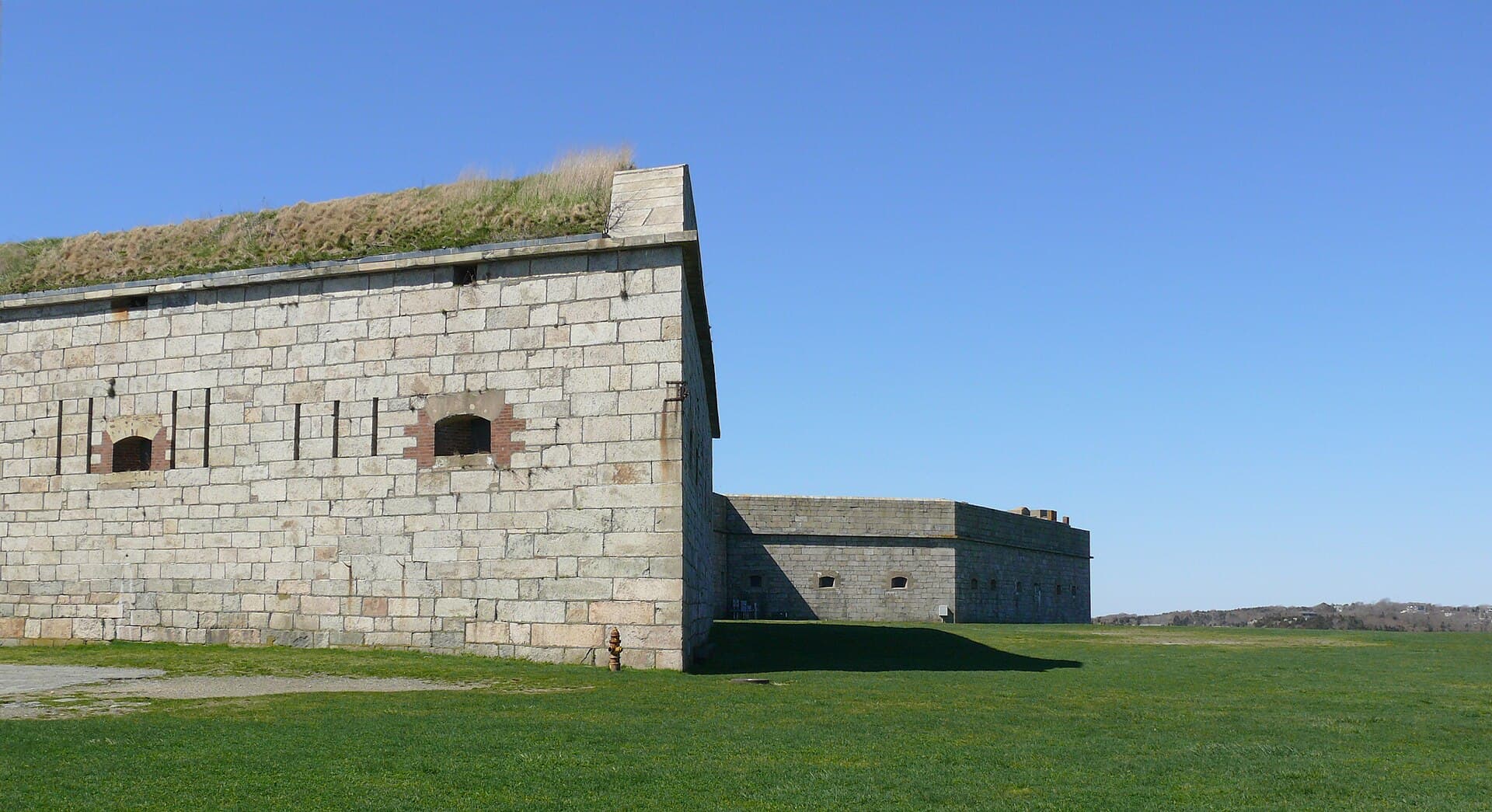
A fortress built for thousands of soldiers now watches sailboats cross Newport Harbor.
Fort Adams in Newport, Rhode Island, is a former coastal defense post that visitors can explore through organized tours. Its military role ended decades ago, and parts suffered years of neglect. Today, the fort stands inside an active state park while preservation work continues.
That mix makes it more interesting than a simple abandoned ruin. Behind the broad lawns and harbor views lies a vast structure designed around one question: how could an enemy be stopped before reaching Newport?
Why Fort Adams guarded this headland
The location explains the investment. Fort Adams overlooks Newport Harbor and the East Passage of Narragansett Bay. Across the water stands Fort Wetherill, another piece of the region’s coastal defenses.
Ships approaching this important waterway had to pass a landscape the military could watch and defend. Today, that same setting attracts sailors, walkers, and festival crowds. The view has stayed valuable even as its purpose has changed. Rhode Island State Parks describes the property’s transition from Army and Navy use to state ownership in 1965.
The peaceful waterfront can make the scale of the fort surprising. It belongs to an era when protecting a harbor meant building a permanent military community beside it.
A small fort became a giant undertaking
The first Fort Adams opened in 1799 and took its name from President John Adams. Construction of the much larger replacement began in 1824 and continued until 1857.
Designed to accommodate roughly 2,400 troops, the new fort was a long investment in coastal defense. Yet its guns never fought an enemy in battle. The Fort Adams Trust’s history traces this gap between enormous preparation and a combat test that never came.
The absence of a battle does not mean the place stood idle. Forts trained soldiers, stored supplies, and supported the military through changing threats.
Rhode Island’s survey of state-owned historic properties identifies engineer Joseph G. Totten with the granite fortress. Its protected rooms served several needs, including quarters, storage, and artillery positions.
During the Civil War, the site also accommodated Naval Academy classes. By 1896, it served as headquarters for the harbor defenses. These uses help explain why different parts can feel like a school, a warehouse, and a fighting machine at once.
Read the walls like a defensive plan
The repeated arches are among the fort’s most striking features. Beyond their visual rhythm, the walls and openings reveal carefully planned fields of fire.
Projecting bastions allowed defenders to cover the exterior walls. Narrow openings protected riflemen, while wider cannon openings gave gun crews room to aim. The large crown-shaped defensive work protected the landward side.
The Trust’s architecture guide explains these features in plain terms. It also describes countermine galleries, underground passages intended to intercept an enemy digging toward a fort.
Understanding those purposes changes the experience. A dark corridor becomes part of a defensive problem. A thick wall becomes a calculated response to artillery. Even the less dramatic spaces show how much effort went into preparing for an attack.
Neglect left another layer of history
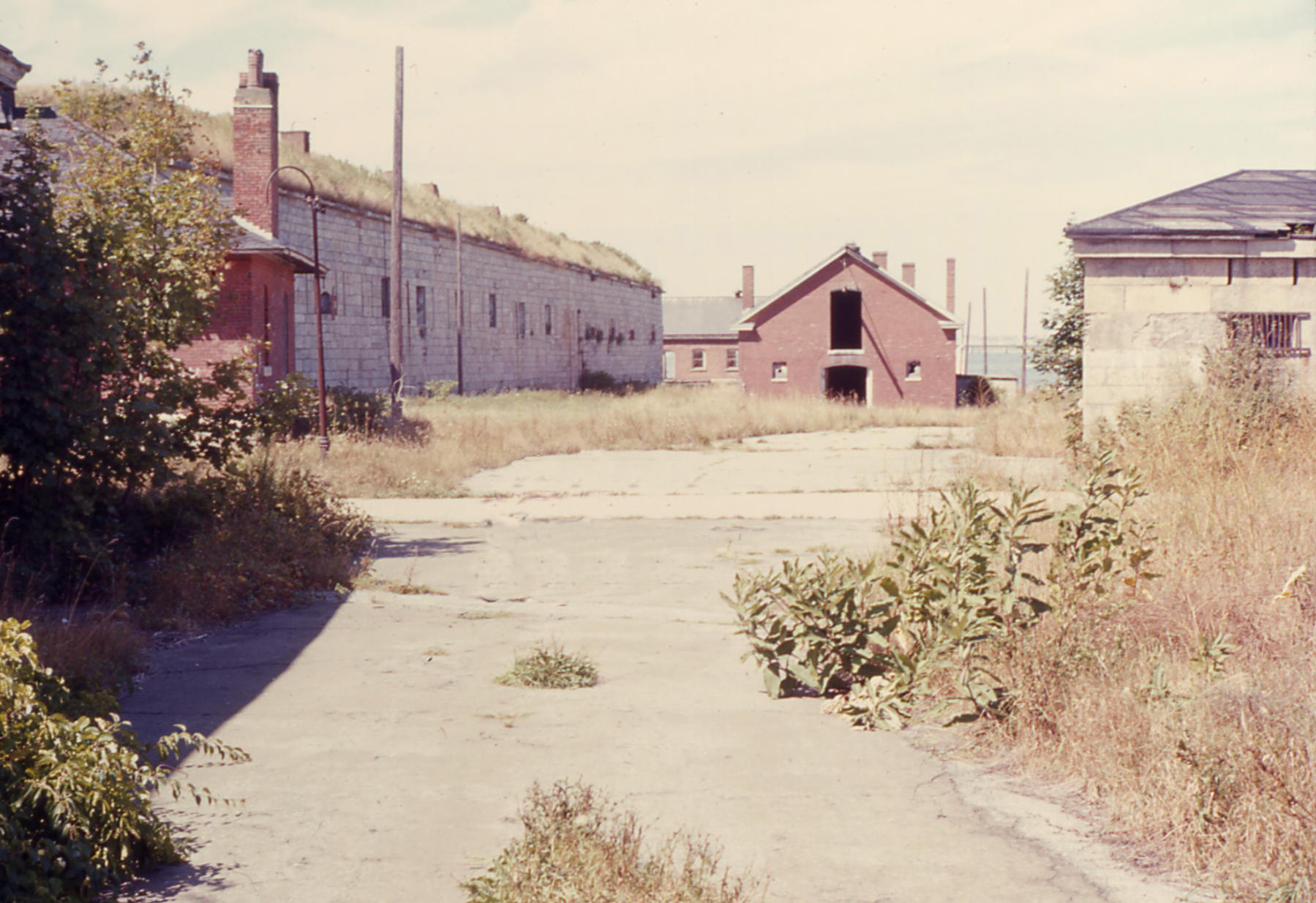
The military eventually moved on, but maintaining a huge masonry complex remained expensive. The archival photograph above, taken in 1968, records overgrowth and deterioration during the fort’s difficult transition.
The Fort Adams Trust formed in 1994, and public access expanded with its reopening in 1995. Restoration has continued rather than ending with that first reopening.
The Trust reports that substantial portions remain inaccessible. Recent work has addressed sections of the defensive walls and other historic fabric. Visitors should therefore expect a place under continuing care, with access shaped by condition and restoration needs.
That unfinished quality is part of the story. Preservation here means deciding how to keep a large, complicated structure standing while helping people understand it.
Visiting Fort Adams today
The official visitor page distinguishes guided tours from self-guided visits. Guided routes can include ramparts and underground passages; self-guided access covers a more limited selection of spaces.
Allow about 90 minutes for a guided visit. The Trust suggests roughly 60 to 75 minutes for a self-guided tour. Its regular visiting season runs from April through November, while the surrounding state park is open year-round.
Check the booking calendar before traveling. Weather, private events, and restoration work can affect access. Wear shoes suitable for uneven surfaces, and ask about stairs or tunnel alternatives if mobility or enclosed spaces are concerns.
Do not assume an unlocked-looking doorway belongs to the visitor route. Follow the marked areas and the guide’s directions.
Fort Adams rewards a slower visit. Look at the harbor first, then turn toward the walls. The relationship between them explains why this enormous place was built, and why saving it matters.
Frequently asked questions
Is Fort Adams abandoned?
Its original military mission has ended, but it is now a managed historic attraction within Fort Adams State Park. Some sections remain closed for preservation or safety reasons.
Did Fort Adams ever fight a battle?
The fortress never engaged an enemy in battle, according to the Fort Adams Trust.
Can visitors enter the tunnels?
Certain guided tours include underground passages. Check the current tour description, since self-guided admission does not provide the same access.
Is a park visit the same as a fort tour?
No. The surrounding park and the ticketed historic fort experience are separate. Confirm the tour schedule before making plans around interior access.
Image credits
Featured image: Ad Meskens, CC BY-SA 3.0. Body image: Father of JGKlein, Public domain.

