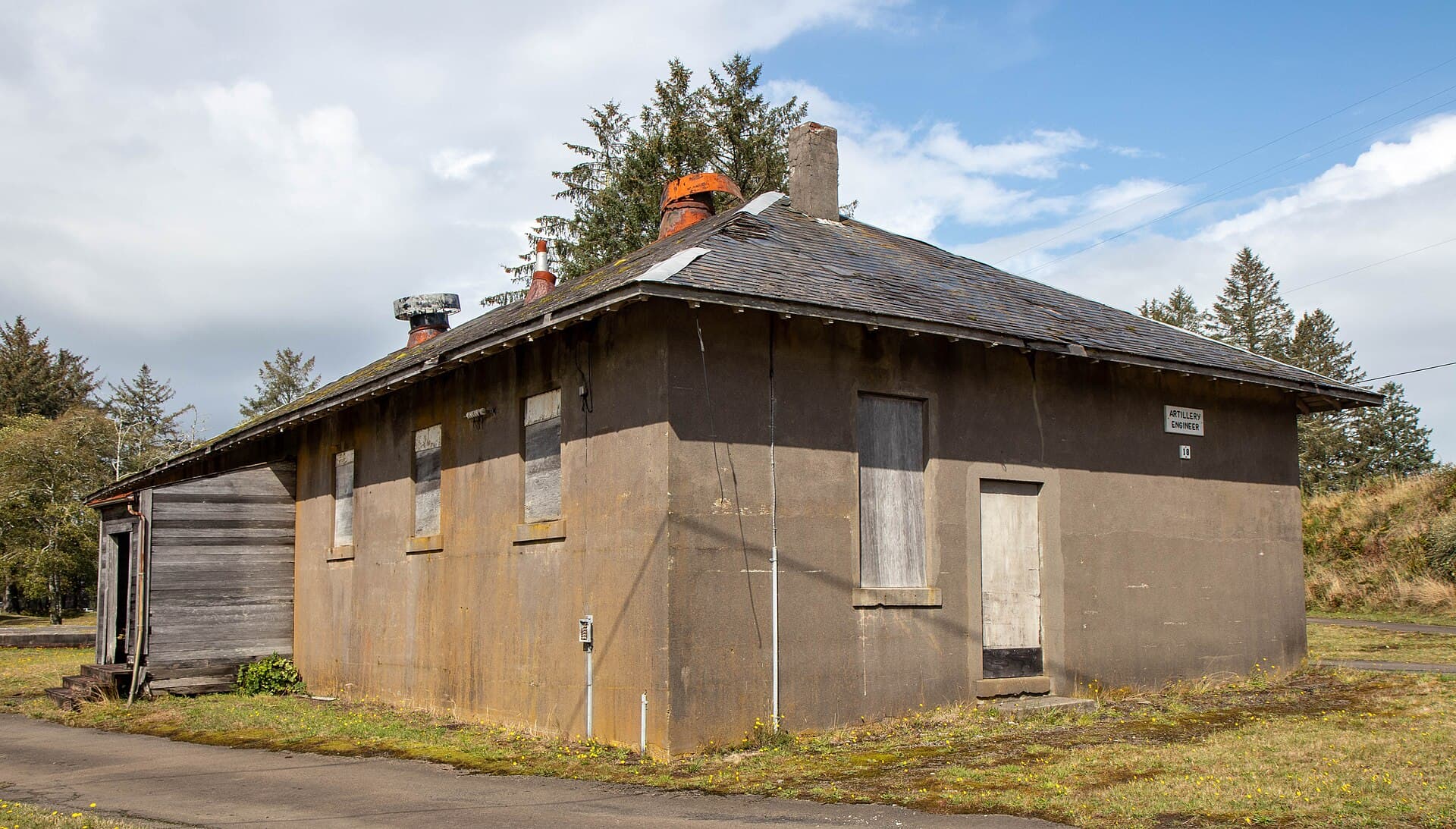
In June 1942, shells from a Japanese submarine landed around an Oregon coastal fort.
Fort Stevens, near the mouth of the Columbia River, is now a state park and historic site. Its surviving batteries recall decades of coastal defense, including a rare wartime attack on the contiguous United States. Visitors can explore designated public areas, but the park is much more than an abandoned military post.
The contrast is striking: a landscape now associated with camping, trails, and coastal outings once stood ready to defend a major river entrance.
Why Fort Stevens guarded the Columbia
The fort began during the Civil War. Its original earthwork defenses were completed in 1865, and it took its name from Isaac Stevens, a Union general and former Washington territorial governor.
At this location, ships could enter the Columbia River and continue toward important inland settlements and ports. Protecting that entrance gave the exposed coastal ground strategic value.
Oregon State Parks traces the fort’s service from the nineteenth century through World War II. The landscape changed as weapons, construction methods, and military concerns changed.
An earthwork could serve one generation of artillery. Later guns demanded concrete platforms, storage rooms, and new arrangements for moving ammunition. The remains visitors see today therefore belong to several periods rather than one single building campaign.
A defense system spread across the river mouth
Fort Stevens worked with Fort Canby and Fort Columbia on the Washington side of the river. Together, they guarded the approaches from multiple positions.
The state’s historic area guide describes Fort Stevens as headquarters for these defenses from 1898 to 1947. It also explains how changing weapons altered the site.
Mortars, disappearing guns, and later equipment each answered different military problems. Some defenses became outdated as ships moved faster and new forms of attack emerged.
The surviving concrete can appear repetitive at first. Look more closely at the stairs, gun positions, and protected spaces. Each part supported a chain of work involving observation, calculation, ammunition handling, and firing.
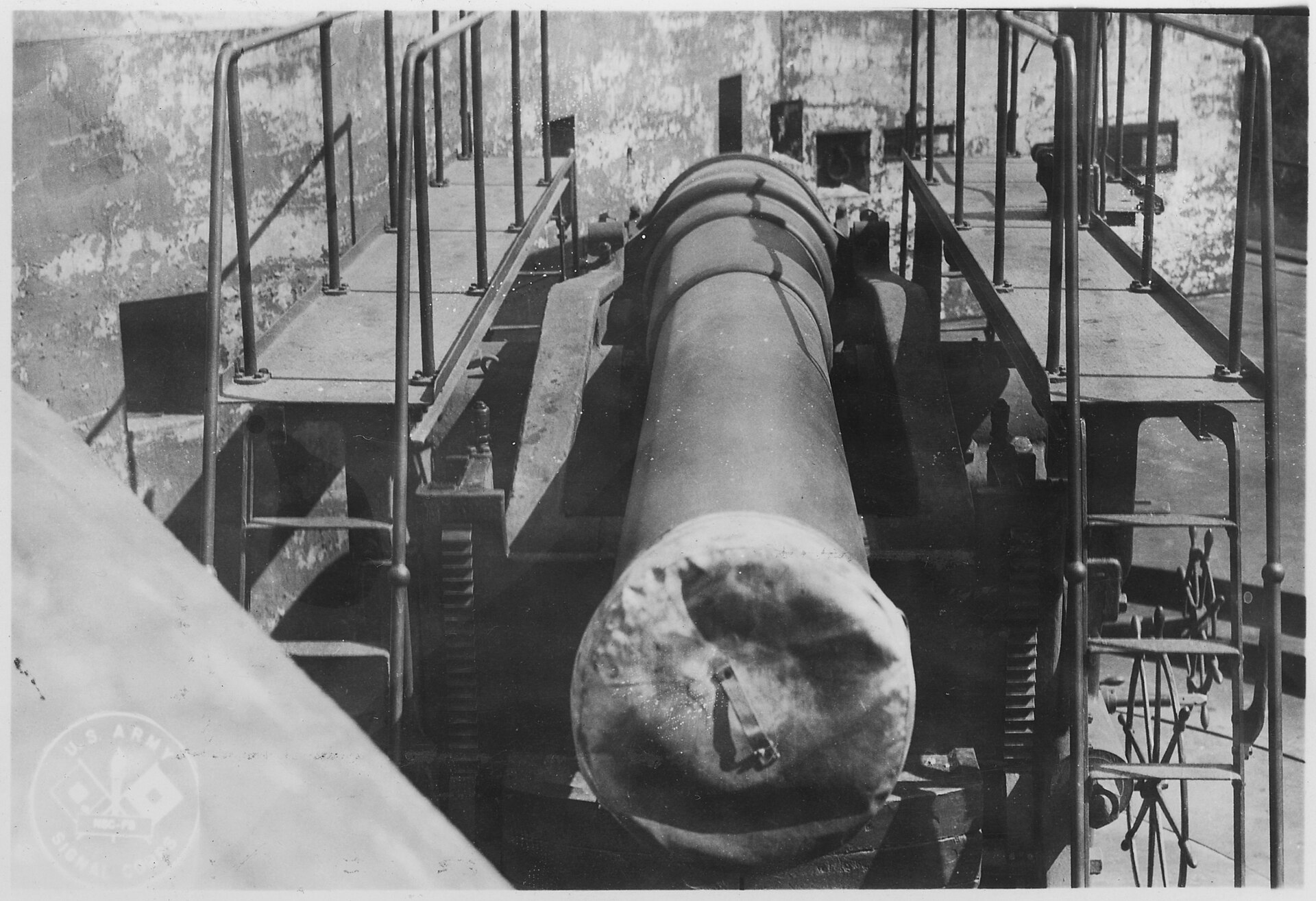
The archival photograph above shows a 10-inch gun at Battery Russell. It helps restore a sense of scale to an emplacement whose largest piece of equipment is no longer there.
The night a submarine opened fire
On June 21, 1942, the Japanese submarine I-25 fired 17 shells toward Fort Stevens. Its commander, Meiji Tagami, brought the Pacific war uncomfortably close to the Oregon coast.
Damage was limited. The fort did not return fire; accounts connect that decision to the belief that the submarine lay beyond the effective reach of the available guns.
The Oregon Encyclopedia’s history describes the attack and its aftermath. The event is significant without embellishment: a foreign submarine had shelled a military installation on the American mainland.
It is easy to imagine a large battle when hearing that headline. The documented event was smaller, but its psychological effect came from location. A remote ocean war had reached ground that many people considered far from the fighting.
New defenses followed, then the mission ended
The 1942 attack did not freeze Fort Stevens in time. Construction and adaptation continued as the United States strengthened coastal defenses.
A National Park Service study, Empires of the Turning Tide, documents work on newer batteries around the Columbia River entrance, including Battery 245 at Fort Stevens.
That later construction is a useful reminder when reading the ruins. A structure present today may postdate the submarine attack, even though both belong to the same wartime landscape.
The fort was decommissioned in 1947. Its role as a coastal artillery installation had ended, leaving behind buildings and gun positions designed for a military system that no longer needed them.
From closed post to public history
The property’s transfer into park use happened over time. Oregon State Parks records acquisitions between 1955 and 1974, including land donated by Clatsop County.
The National Park Service’s Fort Stevens overview places the historic area within the wider story of the Columbia River mouth. Today, interpretation helps visitors connect the surviving structures with the people and equipment once stationed there.
Preservation here involves both original remains and interpretation. Do not assume every visible feature is untouched from the nineteenth century. Restored or reconstructed elements help explain parts of the fort that would otherwise be difficult to picture.
The result is a landscape where a quiet walk can cross several generations of defense planning.
Visiting Fort Stevens today
Use the current state park map to locate the historic military area. The wider park covers many activities, so a camping reservation or a beach outing does not automatically include a guided historic program.
Check the official park page and the Friends of Old Fort Stevens for current visitor information and events. Tour availability can change with season and staffing.
Wear sturdy shoes, supervise children around stairs and edges, and stay outside closed rooms. Coastal rain can make concrete slippery, while exposed sections may feel colder than nearby sheltered areas.
Pause at an empty gun position before moving on. Compare its shape with the historical photograph. That simple exercise turns weathered concrete into a place where a crew once waited for instructions.
Frequently asked questions
Was Fort Stevens attacked during World War II?
Yes. Japanese submarine I-25 shelled the area on June 21, 1942. Damage was limited, and the fort did not return fire.
Is Fort Stevens abandoned?
Its military mission ended in 1947, but it is now part of a managed Oregon state park.
Can visitors enter every bunker?
No. Use only areas open to visitors and follow posted restrictions. Historic structures may contain unsafe or closed sections.
Is the historic area the whole park?
No. The military remains are one part of a much larger recreational landscape. Use the park map to plan a focused history visit.
Image credits
Featured image: runarut, CC BY 2.0. Body image: U.S. National Archives, catalog 299687, Public domain.

