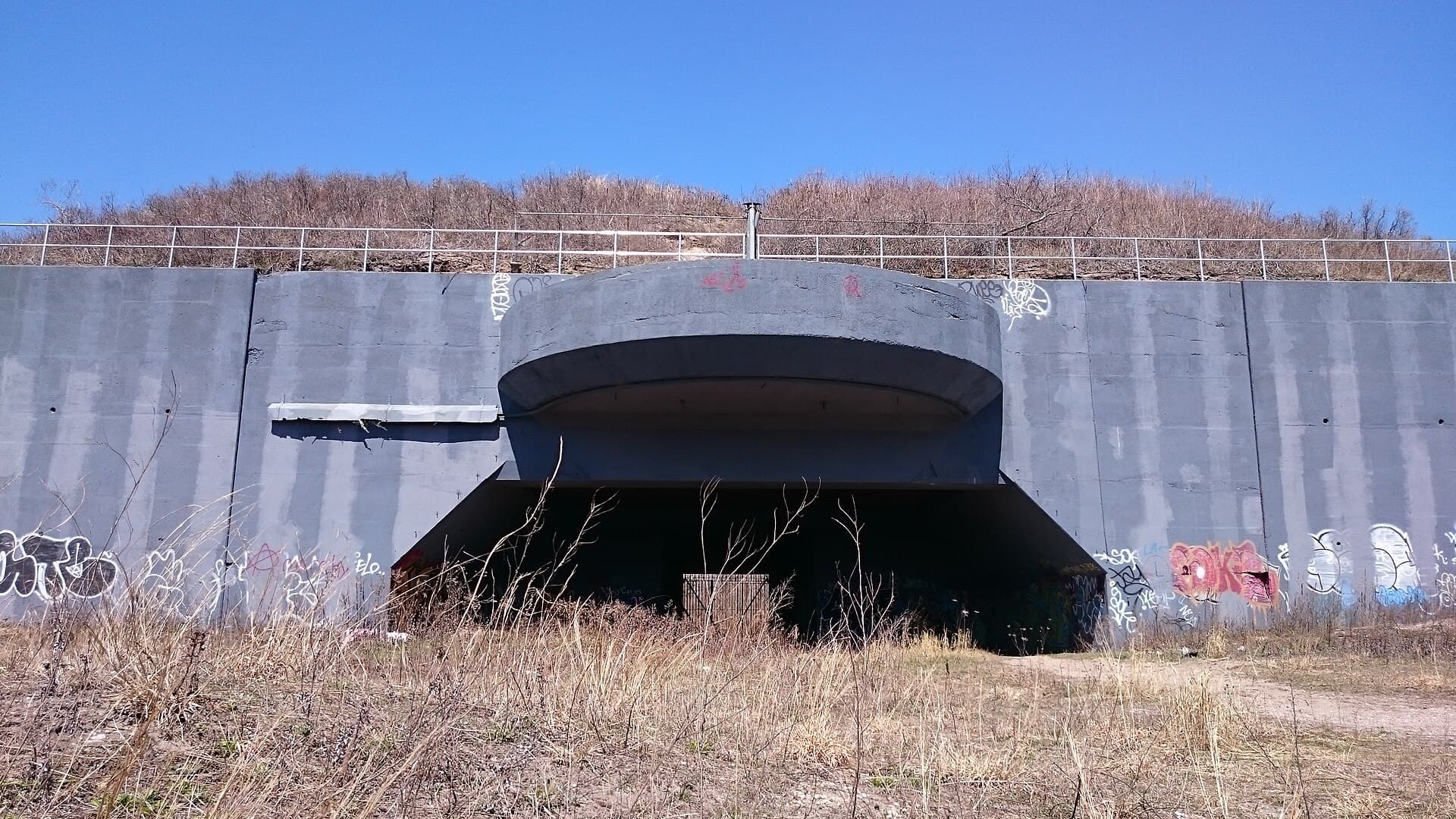
Beyond the city streets, concrete gun shelters sit among the dunes of the Rockaway Peninsula.
Fort Tilden in Queens, New York, is a former coastal defense post within Gateway National Recreation Area. Its military mission ended in 1974. Today, visitors come for trails, shoreline scenery, historic structures, and cultural activities rather than an operating base.
Some remains look abandoned, but the property is managed by the National Park Service. That distinction matters: public park access does not make every bunker, roof, or doorway open for exploration.
Why Fort Tilden faced the harbor
New York Harbor needed protection long before the modern fort existed. A blockhouse stood in this area during the War of 1812, when coastal attack was a serious concern.
The military returned to the site on a larger scale during World War I. Fort Tilden received its name on August 1, 1917, honoring former New York governor Samuel J. Tilden.
The National Park Service’s detailed history follows its changing role across the twentieth century. Between wars, reduced activity gave way to renewed construction and preparation.
Its location helps explain that persistence. From the Rockaway Peninsula, the military could watch approaches to a harbor central to trade, transport, and national defense. The modern skyline makes the same geography easy to appreciate.
Guns large enough to reshape the landscape
The first World War I defenses included six-inch guns. In 1924, Battery Harris added two much larger 16-inch weapons.
These were substantial machines requiring far more than a concrete firing platform. Ammunition had to be stored, moved, and handled within a protected system.
During World War II, the Army enclosed the Battery Harris guns in massive concrete casemates to improve protection against aerial attack. The NPS account of the 1917–1945 period describes ammunition weighing about a ton and ceiling-mounted equipment used to move it.
That information changes the way an empty chamber looks. The wide entrance and heavy overhead structure reflect the size of the work once done inside.
The featured photograph shows one of these enduring concrete forms. Its scale survives even after the machinery that gave it purpose has disappeared.
A surprising chapter of family housing
The end of World War II brought an unexpected use for the post. In 1946, 46 barracks were converted into roughly 350 apartments for veterans and their families.
A military landscape briefly became a response to a housing shortage. That chapter helps counter the idea that the fort only alternated between combat readiness and abandonment.
The arrangement did not last. As Cold War demands grew, families had to leave so the military could reuse the site.
The NPS Cold War history records the return of antiaircraft defenses and the arrival of Nike missiles. Nike Ajax installations appeared in the 1950s, followed by Nike Hercules in 1959.
The threat had changed from ships offshore to aircraft overhead, and the fort changed with it.
From harbor guns to missile defense
Nike installations used radar and guided missiles to intercept hostile aircraft. They belonged to a much wider defensive network around major American cities.
The National Park Service’s Nike missile history places Fort Tilden within that transition from traditional coastal artillery to Cold War air defense.
For visitors, the layers can be confusing. A concrete battery associated with enormous guns and an area once used for missiles may belong to different decades and different military systems.
Reading signs carefully is more useful than treating every structure as a generic bunker. The site records repeated attempts to solve a changing problem with new equipment.
Military operations ended in 1974, and Fort Tilden became part of Gateway National Recreation Area. The departure left substantial structures behind, but it also opened a new public chapter.
What the former fort offers now
The official Fort Tilden page describes a landscape of maritime vegetation, ponds, dunes, historic buildings, athletic fields, and cultural uses.
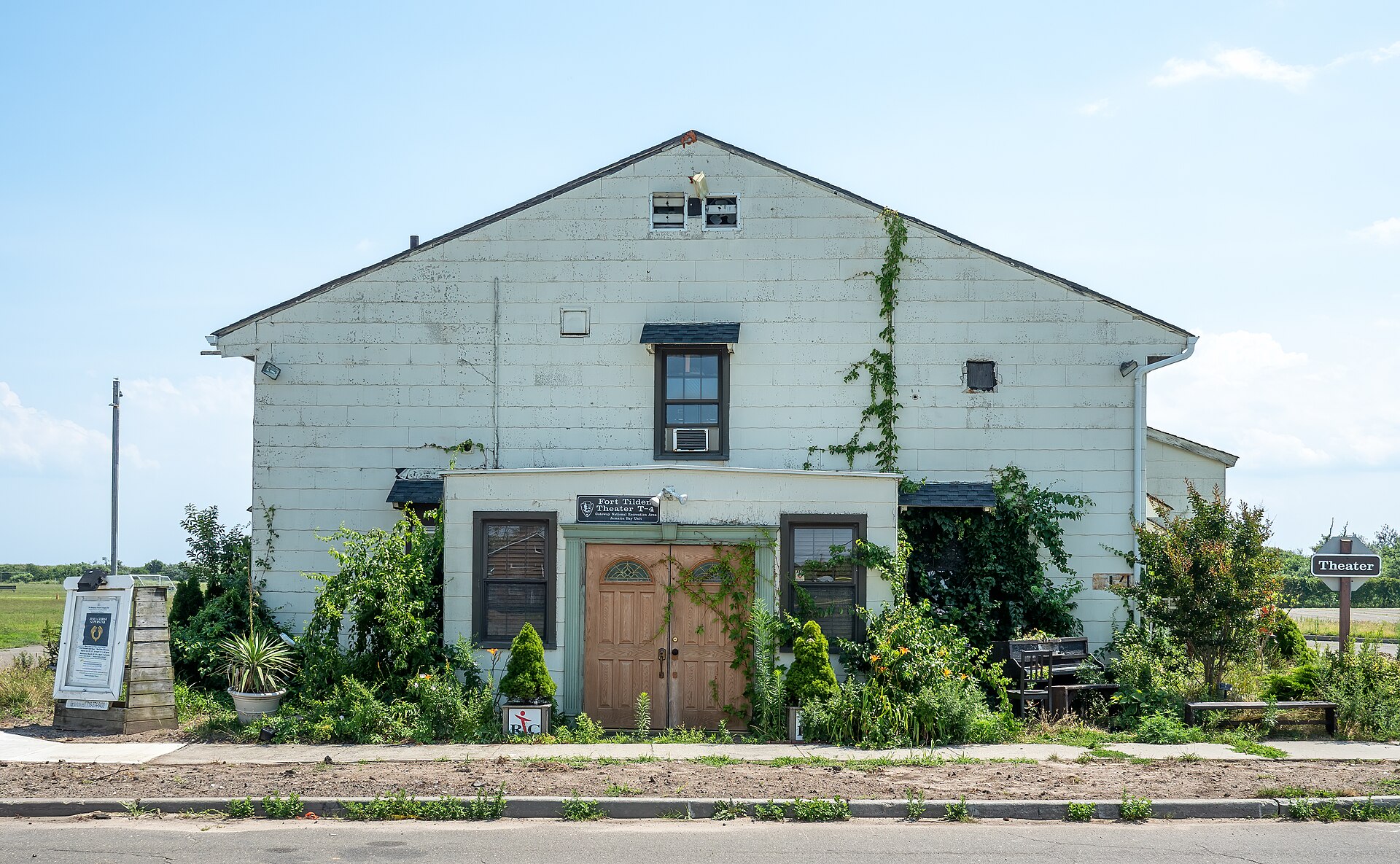
A theater and arts activity bring people into spaces shaped by the former post. The accompanying 2020 photograph shows the theater building, a useful reminder that weathered exteriors do not always mean a place has been discarded.
Battery Harris also provides an elevated perspective on the surrounding landscape through its designated visitor access. Where open, the viewpoint helps connect the harbor, peninsula, and city.
Nature has softened the military geometry. Plants frame straight concrete lines, and trails lead between places built for very different purposes.
Visiting without confusing access with abandonment
Check Gateway’s current alerts and parking guidance before traveling. Facilities and access conditions can vary, and a map is useful for distinguishing the fort from neighboring recreation areas.
Stay on established routes and obey closures around historic structures. Do not climb fences or assume graffiti indicates permission to enter.
Swimming is prohibited at Fort Tilden, and there are no lifeguards. Choose an officially designated swimming beach elsewhere if getting into the water is part of your plan.
Bring drinking water, sun protection, and footwear suitable for sandy or uneven paths. A rewarding visit does not require entering a closed chamber. The public landscape already reveals the fort’s essential story: a city’s defenses repeatedly rebuilt, then opened to a different kind of life.
Frequently asked questions
Where is Fort Tilden?
It is on the Rockaway Peninsula in Queens, New York, within Gateway National Recreation Area.
Is Fort Tilden still a military base?
No. Its military role ended in 1974, and the site is now managed as part of a national recreation area.
Can you swim at Fort Tilden?
No. The National Park Service prohibits swimming there, and lifeguards are not provided.
Are all the old structures open?
No. Public access applies to designated areas. Closed buildings, fenced sections, and restricted battery spaces remain off-limits.
Image credits
Featured image: Cédric Boismain from France, CC BY 2.0. Body image: Rhododendrites, CC BY-SA 4.0.

