Diamond Head once concealed weapons designed to fire over the crater rather than straight toward the sea.
Battery Harlow is a former mortar battery on the outer northern slope of Diamond Head, or Lēʻahi, in Honolulu. Built as part of Fort Ruger, it survives as a historic military structure. It should not be treated as an unrestricted tourist attraction or an extension of the public summit trail.
Its story reveals a side of Hawaiʻi’s best-known skyline that beach photographs rarely show: a landscape reshaped for coastal defense.
Why Battery Harlow was built at Diamond Head
The United States expanded Oʻahu’s defenses in the early twentieth century as Honolulu and Pearl Harbor gained military importance.
Historic American Buildings Survey documentation connects Fort Ruger with the coastal defense program associated with the Taft Board of 1905. The federal government acquired land at Diamond Head in 1906, although the process generated objections over notice and control.
The Library of Congress record places the fort within that broader expansion. The crater offered protected ground and commanding observation positions.
This was not an empty landscape waiting for a military purpose. Lēʻahi already held cultural meaning and a long local history. The fort added a new layer of ownership, restricted movement, and engineering to an existing Hawaiian place.
Eight mortars behind the crater
Construction of Battery Harlow began in April 1907 and finished in March 1910. It was Fort Ruger’s first major fortification.
The battery held eight 12-inch mortars, arranged in two pits with four weapons in each. Three substantial bunkers supported the installation, including a central space used for plotting and command functions.
Unlike a long-barreled coastal gun firing on a flatter path, a mortar sent its projectile on a high arc. At Harlow, that arrangement allowed fire over the crater toward offshore targets.
The Hawaiʻi Department of Defense’s Fort Ruger history describes the battery and its role. The heavy concrete was part of a coordinated installation, not simply a shelter dug into a hillside.
The mortars are gone, but the relationship between the pits and protected rooms still helps explain the original design.
The machinery mattered as much as the walls
A coastal battery depended on accurate information. Crews needed to determine where a moving target was and where a shell should arrive.
A National Guard environmental report from 2003 described surviving mechanical equipment used to transmit firing data at Battery Harlow. It presented the installation as an unusually valuable preservation resource.
The National Guard report also described the enormous scale of its ammunition and the reach of the mortars.
That document is evidence of the battery’s recorded condition at the time. It is not confirmation that the same mechanisms remain operational today or that visitors may handle them.
The distinction is useful when looking at old military sites. Concrete may survive visibly for decades, while delicate machinery needs specialized care. Preserving both can reveal far more than preserving an empty shell alone.
Military retirement did not erase the site
After the battery’s fighting role ended, its weapons were removed. Fort Ruger’s wider landscape continued to support government and military functions rather than becoming one uniformly abandoned property.
The Hawaiʻi National Guard became closely associated with the area. Different batteries and buildings followed different paths, with some reused and others preserved as historic resources.
A preservation plan included in state project documentation discussed protecting Battery Harlow and preparing it for interpretation. Such recommendations show the effort required to care for a site, but a planning proposal does not establish current public opening hours.
That is why a historical reference to possible tours should not be mistaken for a standing invitation to visit.
Archival photographs show preservation in action
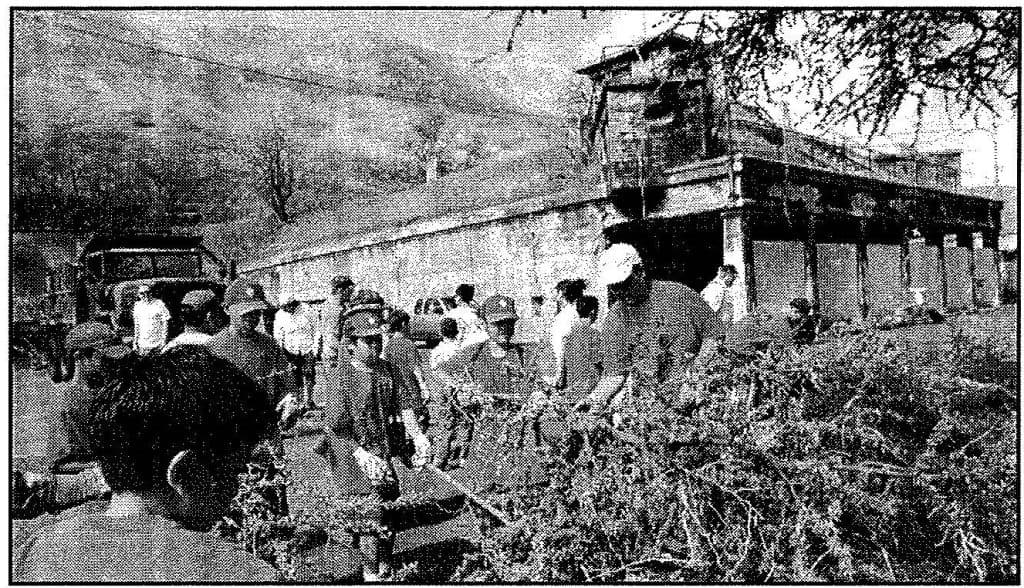
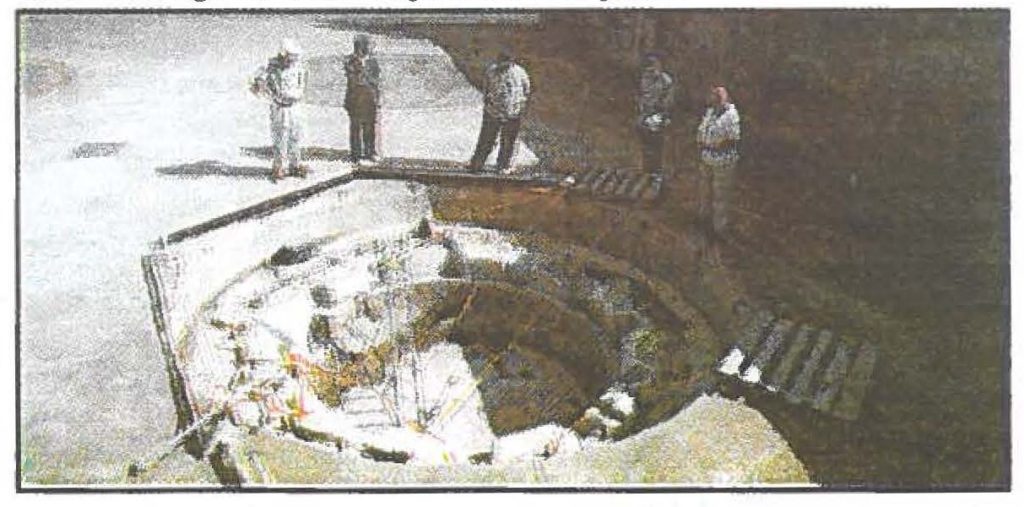
The two photographs accompanying this article document work at Battery Harlow in 2001. One shows volunteers clearing vegetation. The other records a group learning about the battery during a restoration-related event.
They are historical documentation, not pictures of a current visitor program. Their value lies in showing people actively caring for a structure that might otherwise disappear behind growth and weathering.
The preservation story is less dramatic than a battle, but it has lasting consequences. Clearing vegetation, documenting machinery, and explaining a site’s purpose help keep its history legible.
A surviving battery still needs people willing to recognize why it matters.
Can you visit Battery Harlow?
No regular public visiting schedule was established by the official sources reviewed for this article. Contact the responsible land manager before attempting access, and respect all gates, signs, and active government property boundaries.
The public Diamond Head summit route is a separate experience. It includes military features connected with the crater’s observation and fire-control history, but admission does not authorize entry to Battery Harlow.
The official Diamond Head State Monument page requires entry and parking reservations for nonresidents. It describes a steep summit hike passing through a tunnel and the former Fire Control Station.
That approved route offers a way to understand the wider defensive landscape. Looking across the crater, it becomes easier to imagine how observation points and distant batteries once worked together.
Battery Harlow’s mystery needs no invented underground adventure. Its documented engineering and survival are compelling enough.
Frequently asked questions
Where is Battery Harlow?
It is on Diamond Head’s outer northern slope in Honolulu, within the historic Fort Ruger landscape.
What weapons did it contain?
The battery held eight 12-inch mortars arranged in two pits. The weapons have been removed.
Does a Diamond Head ticket include Battery Harlow?
No. Public summit access and access to Battery Harlow are separate matters.
Do the photographs show tours available today?
No. Both images document preservation activity in 2001. They should not be used as evidence of a current public tour schedule.
Image credits
Featured image: Sgt. 1st Class Wayne T. Iha / Hawaii Army National Guard, Public domain. Body image: Sgt. 1st Class Stephen M. Lum / Hawaii Army National Guard, Public domain.