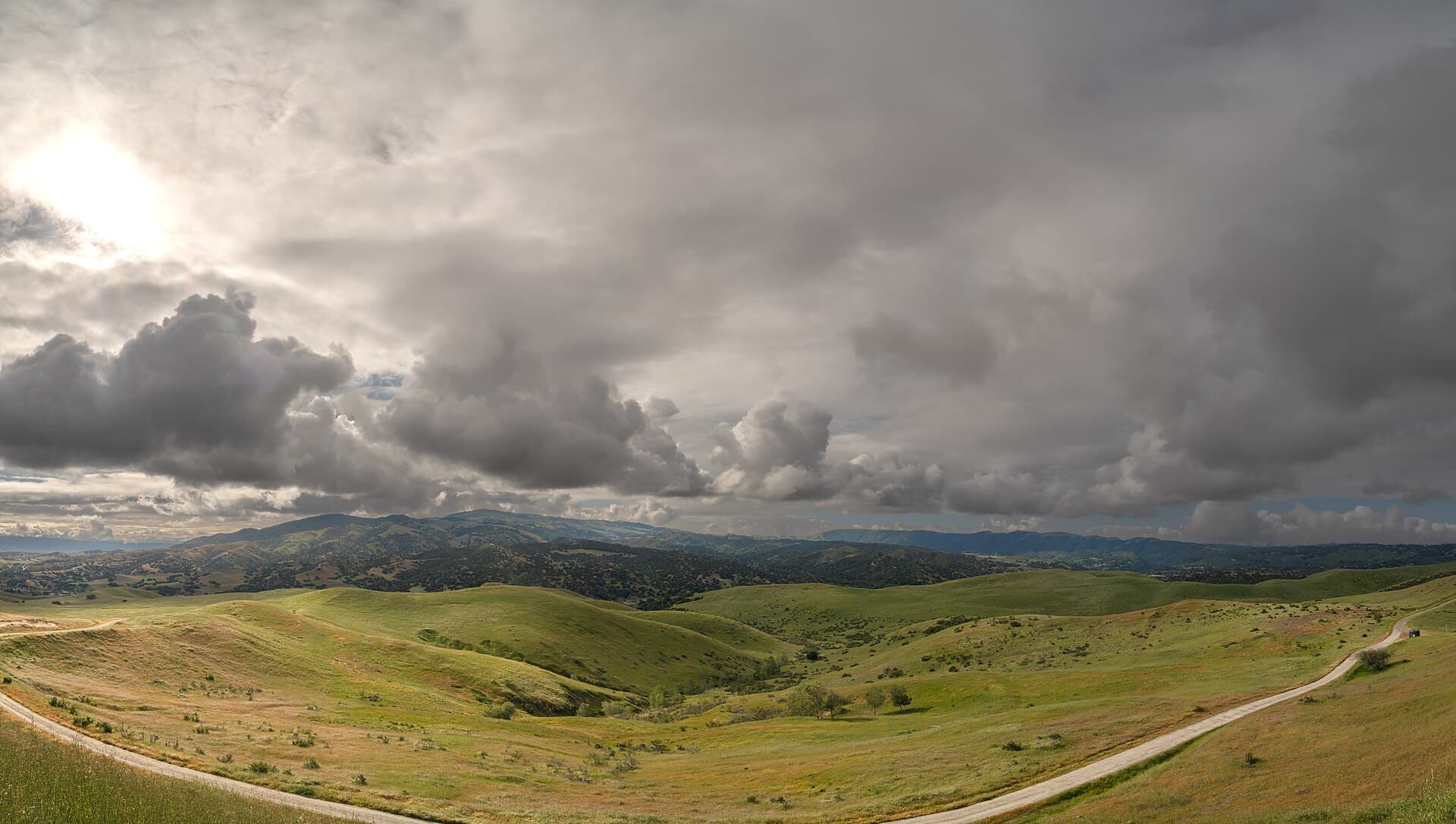
Where soldiers once trained, public trails now wind through green hills and oak woodland.
Fort Ord, California, served the Army from 1917 to 1994. Its closure left a vast landscape near Monterey Bay, but the former base did not become one continuous abandoned property.
Today its lands include educational uses, public recreation, and areas that remain restricted during environmental and munitions cleanup. The right way to visit is to choose a designated public destination, rather than assume every former military road or building is open.
Why Fort Ord mattered
The Bureau of Land Management’s monument history describes a post where about 1.5 million military personnel trained. During the Vietnam War era, the installation became an important training and staging place.
That history makes the landscape meaningful even where buildings no longer dominate the view. Roads, open ground, and hills were part of a working military environment.
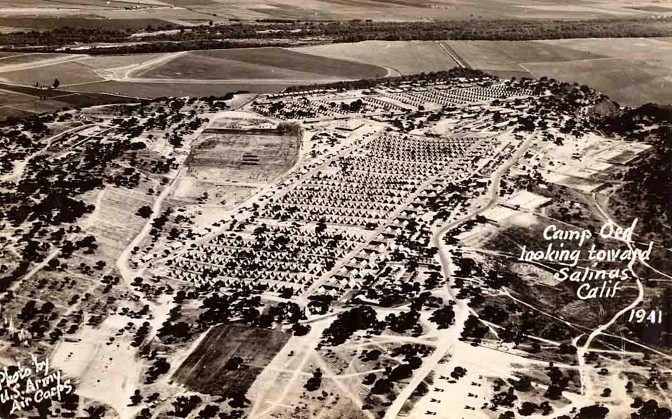
The archival photograph below shows an Army camp around 1941. Rows of temporary-looking structures and organized routes reveal how extensively the land was arranged for military life.
Compare that scene with the featured 2023 landscape photograph. The images show different periods and viewpoints, but together they help explain why the former base cannot be understood through a single abandoned barracks.
Closure did not happen everywhere in the same way
The main base closed in 1994 through the federal base realignment and closure process.
A Cal State Monterey Bay planning document explains the setting for reuse and the role of the Fort Ord Reuse Authority, which operated from 1994 to 2020.
Turning a military installation into civilian land involves more than handing over keys. Roads, utilities, land ownership, environmental responsibilities, and proposed uses must fit together.
This is why old descriptions of the “abandoned base” can be misleading. A photograph may show one empty structure while a nearby parcel serves an entirely different purpose.
For travelers, the practical lesson is simple: identify the manager and rules for the specific place you want to visit.
A university took root on former Army land
California State University, Monterey Bay was established in 1994 and welcomed its first students in 1995.
Its arrival gave part of the former military landscape a new daily rhythm. Classrooms and campus life replaced some of the routines associated with the Army.
The university’s Founding Faculty Oral History Project records the work of starting a new institution. Its account describes an initial group of roughly 600 students and the challenge of preparing for opening within a short period.
These memories offer a useful companion to military history. They show reuse as something people had to make happen, through practical decisions and effort.
A university campus is also a reminder that former military land can become ordinary, active space. It does not need to remain a ruin to retain a connection with its earlier life.
Why cleanup still affects access
Fort Ord’s environmental story began before the base closed. The Army’s account of EPA’s partial deletion from the Superfund list explains that the site entered the cleanup program in 1990.
Cleanup concerns include contaminated soil and groundwater, as well as military munitions. Different problems require different work, and progress on one area does not establish that every parcel is ready for unrestricted use.
The Army’s property information identifies land transfers and areas retained for continuing responsibilities, including the Impact Area Munitions Response Area.
This is the reason to take closures seriously. A quiet field can still carry risks that are not visible from a path. Public recreation and restricted cleanup work can exist close together without sharing the same access rules.
Visiting Fort Ord National Monument
The BLM manages a network of designated public routes through habitats including oak woodland, grassland, and maritime chaparral.
Use the current official map and remain on authorized trails. The monument’s guidance distinguishes open routes from closed ones, so follow the signs on the ground rather than an informal shortcut shared online.
Plan for daylight access, carry water, and select a distance that suits your group. This is a landscape visit, with changing light, broad views, and reminders of its military past.
Do not collect objects as souvenirs. Historic material belongs to the place, and unfamiliar metal may be something more serious than discarded scrap.
What to do around suspicious objects
The Army’s Fort Ord safety notice explains how visitors should respond to possible munitions: do not touch or move them, leave the area, and report the location through the instructed emergency channels.
You do not need to identify an object before deciding to leave it alone. Avoid approaching for a closer photograph.
These precautions allow the visit to stay focused on what the public land offers. Fort Ord’s present-day appeal is the chance to experience a large surviving landscape near Monterey Bay while understanding the work required to make parts of it available.
Its story continues through education, restoration, and recreation. The Army chapter remains visible, but it is no longer the only chapter.
Frequently asked questions
When did Fort Ord close?
The main Army base closed in 1994. Cleanup and other federal responsibilities continued afterward.
Is all of Fort Ord open to visitors?
No. Public recreation areas, campus land, private property, and restricted cleanup parcels have different rules.
Can you explore abandoned barracks?
Do not assume permission. Enter buildings only when their current owner or manager explicitly authorizes public access.
Where should a first-time visitor go?
Start with the official Fort Ord National Monument information and choose a marked public trail suited to your group.
Image credits
Featured image: Jesse Pluim / Bureau of Land Management, Public domain. Body image: U.S. Army Air Corps., Public domain. Images retain their original framing; dates are identified in their captions or the article.

