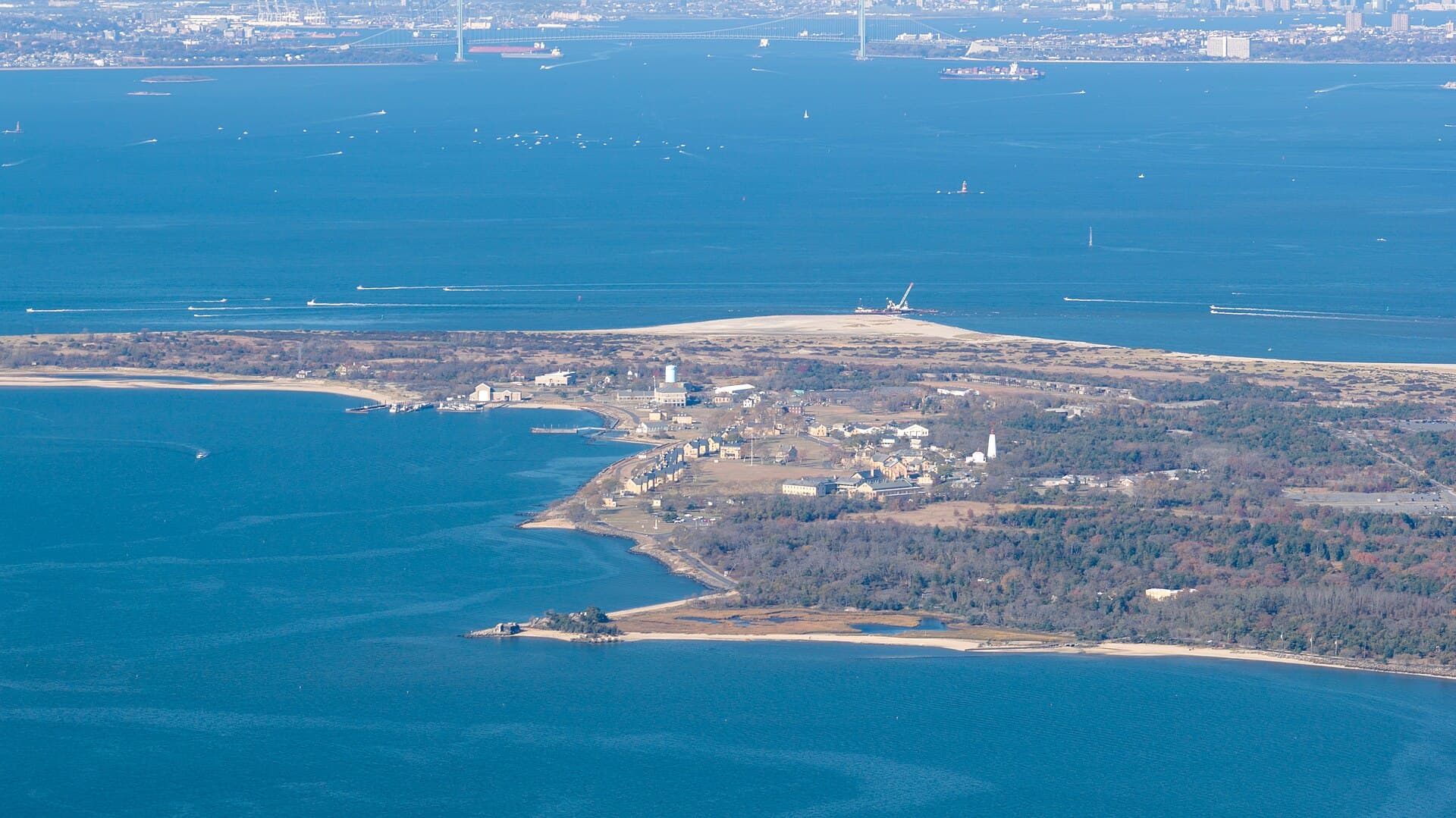
The houses face the water as if their military neighbors might return at any moment.
Fort Hancock occupies the northern end of Sandy Hook, New Jersey, within Gateway National Recreation Area. It defended the approaches to New York Harbor and supported a military community before the Army ended its principal mission here in 1974.
Today, the site mixes public parkland, historic interpretation, vacant buildings, and properties being restored for new uses. It is not a single abandoned compound. Visitors can explore designated public areas, while building interiors require specific authorization or an announced program.
Why Fort Hancock stood at Sandy Hook
Location explains the fort’s purpose. Sandy Hook reaches toward the entrance to New York Harbor, placing military facilities near a vital maritime approach.
The National Park Service’s military timeline traces several layers of defense. An earlier masonry fort begun in 1859 was never finished. New weapons helped make that design obsolete before completion.
Sandy Hook also hosted a proving ground from 1874 to 1919, where the Army tested weapons before the work moved to Aberdeen, Maryland.
That means the landscape had two related roles: defending a harbor and helping evaluate the tools of defense. The surviving site records repeated changes in military technology, rather than one unchanging fort.
A military town grew around the batteries
Fort Hancock was established in 1895. The NPS overview of the post describes the yellow-brick buildings that rose around the turn of the twentieth century.
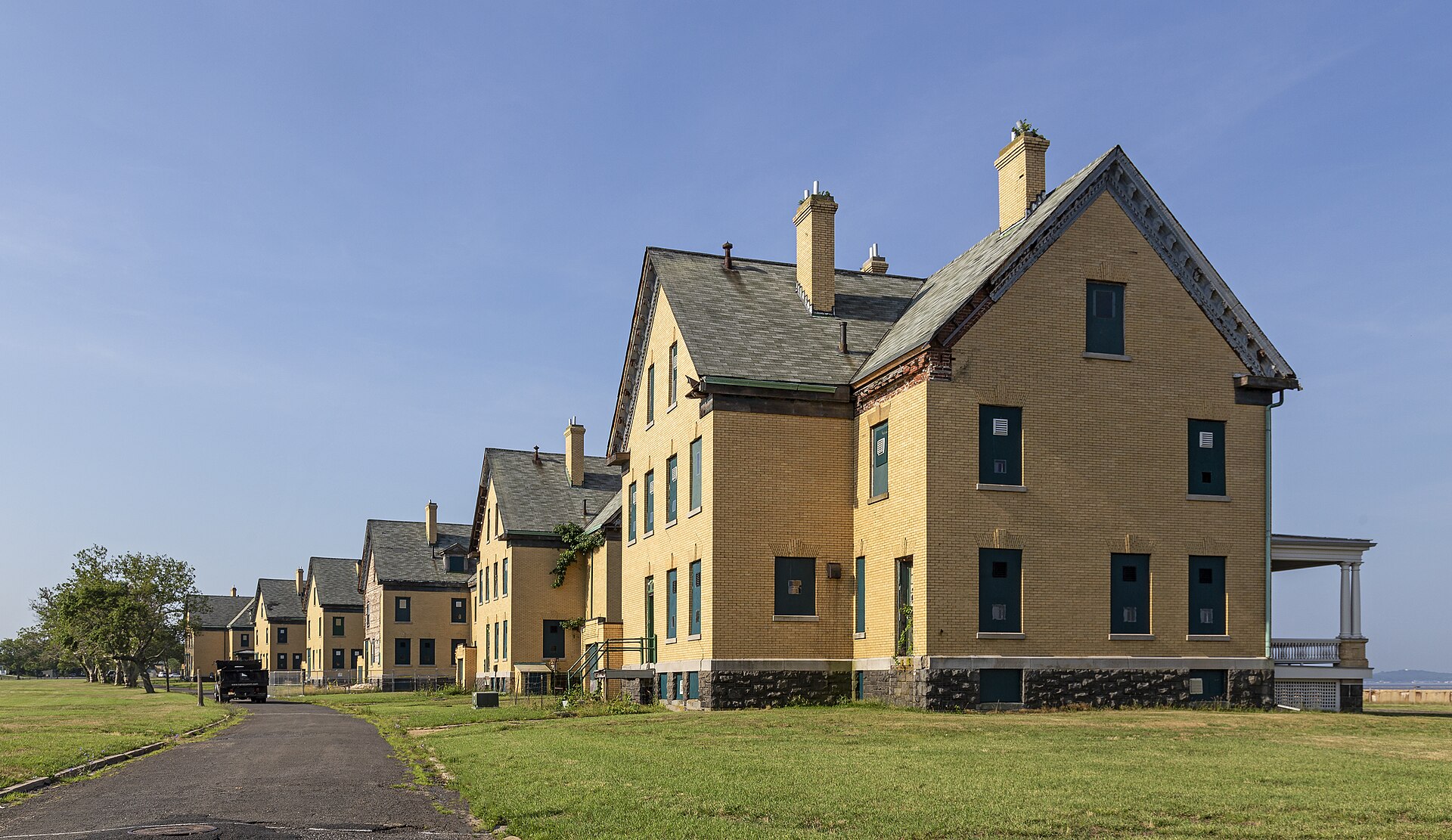
Officers’ homes are among its most recognizable features. Their repeated rooflines and waterfront setting can feel surprisingly domestic beside the idea of coastal guns.
That contrast is the key to the place. A military installation needed housing, administration, supplies, and everyday services as well as weapons. The fort was a community organized around defense.
The same NPS account includes the presence of the Women’s Army Corps during World War II. Such details broaden the story beyond the gun crews and commanders usually associated with coastal forts.
Reading the houses as part of military history
The park’s “An Old Army Town” guide provides a useful way to approach the historic district. It encourages visitors to see relationships among buildings, rather than treating each structure as an isolated ruin.
A row of houses reveals patterns that a single close-up does not. Repeated materials suggest planning; differences in size and placement hint at the social organization of the post.
Walk slowly enough to notice those details from public routes. Look at roof shapes, chimneys, porches, and the spacing between buildings.
The body photograph dates to July 2016. It documents the appearance of officer housing then, not the condition or occupancy of every property today. The featured aerial image, taken in November 2025, places the district within the larger Sandy Hook landscape.
Closure did not freeze the site
The Army’s presence changed several times before final closure. The NPS timeline records a 1950 closing followed by reactivation in 1951, then the end of the fort’s Army mission in 1974.
Cold War defense required different systems from the great coastal batteries of the earlier era. That shift is part of why the post cannot be reduced to a single date or architectural style.
After military use, preserving such a large collection of buildings became a new challenge. Vacant structures require maintenance even when no tenant occupies them.
The empty windows seen in some photographs represent a preservation problem, but they do not describe every building. The district’s current story includes active efforts to find compatible uses.
How preservation leases work
The Fort Hancock leasing program offers a way to repair and reuse historic buildings while keeping the property under federal ownership.
The park’s leasing questions and answers explains that a lease is not a sale of the land. It also distinguishes reuse from general public access to interiors.
This matters for visitors. A building may be restored for a specific occupant without becoming a museum. Another may still be under negotiation or awaiting work.
The existence of a lease, letter of intent, or announced project should not be treated as proof that a building is already occupied. Preservation happens one property at a time, and the status of individual structures can change.
Planning a visit today
Start with current Gateway National Recreation Area information for Sandy Hook. Check seasonal arrangements, park alerts, and any scheduled history programs before leaving.
Use established roads and paths, respect signs, and stay outside closed buildings. If you want to see an interior, choose a program that explicitly includes it, such as a currently advertised historic-house opening.
A good visit does not depend on getting inside every structure. The public landscape already reveals the fort’s setting, the arrangement of its town, and the water it was built to defend.
Spend time with the houses as well as the military features. They make the past easier to imagine as daily life rather than an abstract defense plan.
Fort Hancock’s lasting interest lies in that combination: a waterfront neighborhood built for a mission that ended, now being carried into a different future.
Frequently asked questions
Is Fort Hancock in New York?
No. It is at Sandy Hook in New Jersey, although its defenses protected the approaches to New York Harbor.
When did the Army leave?
The fort’s principal Army mission ended in 1974, after earlier changes in activity and temporary closure.
Are all the historic buildings abandoned?
No. The district includes different conditions and uses, including restoration and leasing projects.
Can you enter the houses?
Only where a current program or authorized occupant permits access. Public park access does not include every building interior.
Image credits
Featured image: Szeremeta, CC BY 4.0. Body image: Acroterion, CC BY-SA 4.0. Images retain their original framing; dates are identified in their captions or the article.

