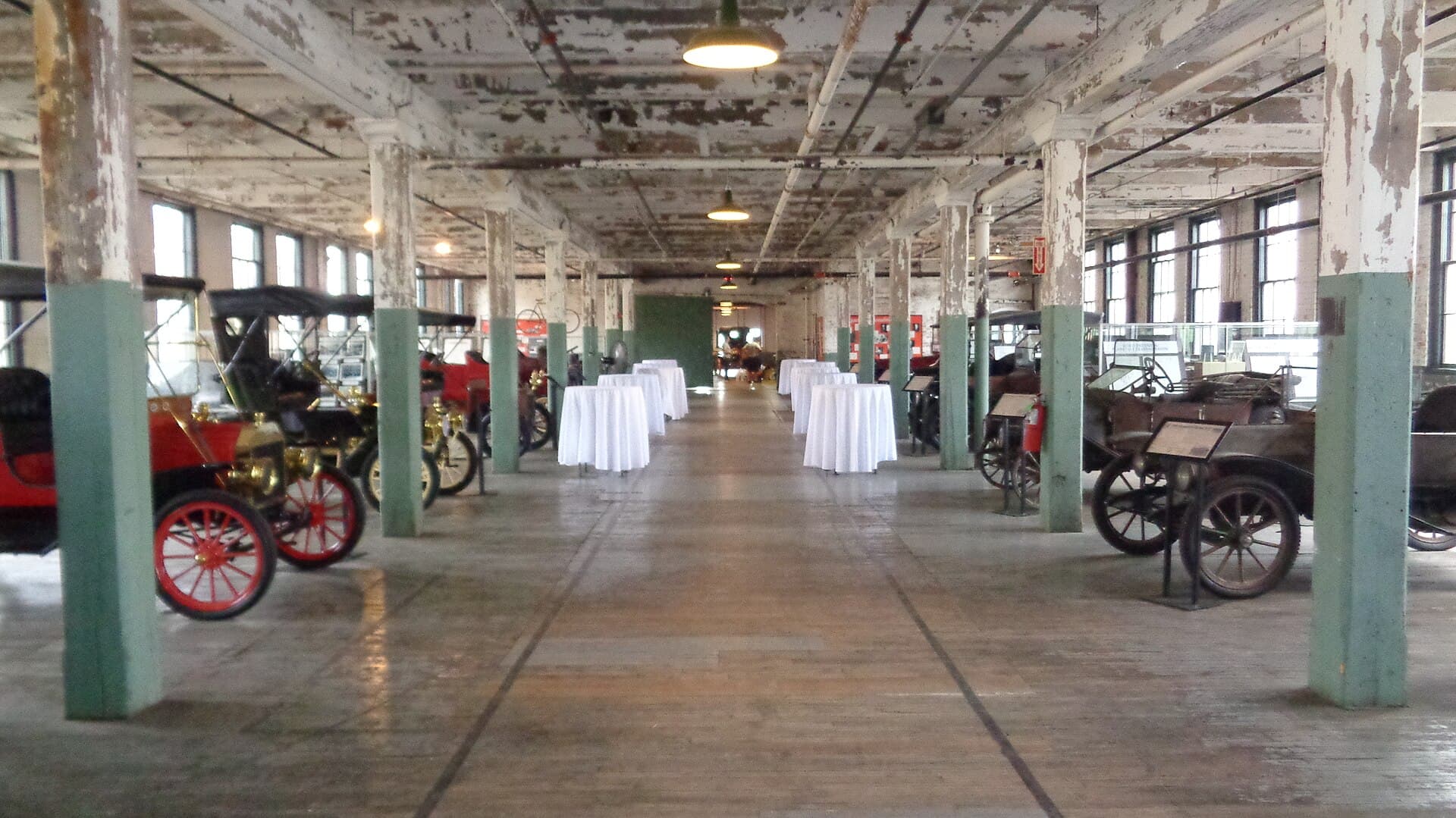
Before the Model T changed the roads, it took shape inside a modest brick factory in Detroit.
The Ford Piquette Avenue Plant is the preserved birthplace of the Model T and an operating museum. Built in 1904, it served Ford before production moved to Highland Park in 1910. Later owners kept the building in use, and preservationists acquired it in 2000.
It is a rewarding stop for anyone interested in forgotten industrial places, but it is not abandoned. Visitors can enter through an established museum program and see a factory from the early years of American motoring.
Inside the Ford Piquette Avenue Plant
The three-story building has brick walls, wooden framing and long rows of windows. Its design drew on the mill buildings of an earlier industrial era.
The museum’s history identifies it as Ford Motor Company’s first purpose-built factory. It also describes firewalls, fire doors and a sprinkler system supplied by a rooftop water tank. The museum’s building history
Those details reveal the practical thinking behind the familiar exterior. A factory needed daylight, working space and protection against a fire that could destroy machinery and stop production.
The preserved rooms allow visitors to consider those needs at human scale. This is not an endless modern assembly hall. The floors and columns make it easier to imagine teams working within a limited footprint.
A new car in a crowded neighborhood
Piquette stood in Milwaukee Junction, an area shaped by intersecting rail lines and manufacturing businesses. Rail access helped bring supplies in and send finished vehicles out.
Detroit’s historical designation report places the building within this emerging automotive district. Ford was part of a wider network of manufacturers, suppliers and skilled workers rather than an isolated inventor’s workshop. City of Detroit historic report
The Model T takes shape
The Model T arrived in 1908 as an attempt to make a practical, durable car available to a much wider market.
The Henry Ford museum explains that demand quickly exceeded the capacity of the Piquette building. The car’s success created a problem that the small factory could not solve simply by working harder. The Henry Ford’s Model T history
Its appeal combined several qualities. Buyers wanted a vehicle that could handle rough roads, remain usable and justify a substantial expense. The Model T’s importance came from how those needs were brought together.
The National Historic Landmark nomination describes its lightweight engine, removable cylinder head and other engineering features. These details show that affordability was linked to design, manufacture and maintenance, not merely a low advertised price. National Park Service nomination
Before the moving assembly line
A common mistake is to place Ford’s famous moving assembly line at Piquette.
The Detroit Historical Society explains that early Model Ts were assembled by hand here. The moving chassis assembly line came later, at Highland Park in 1913. Detroit Historical Society on the Model T
This difference makes a visit more interesting. Piquette represents the stage just before the production system most closely associated with Ford transformed the industry.
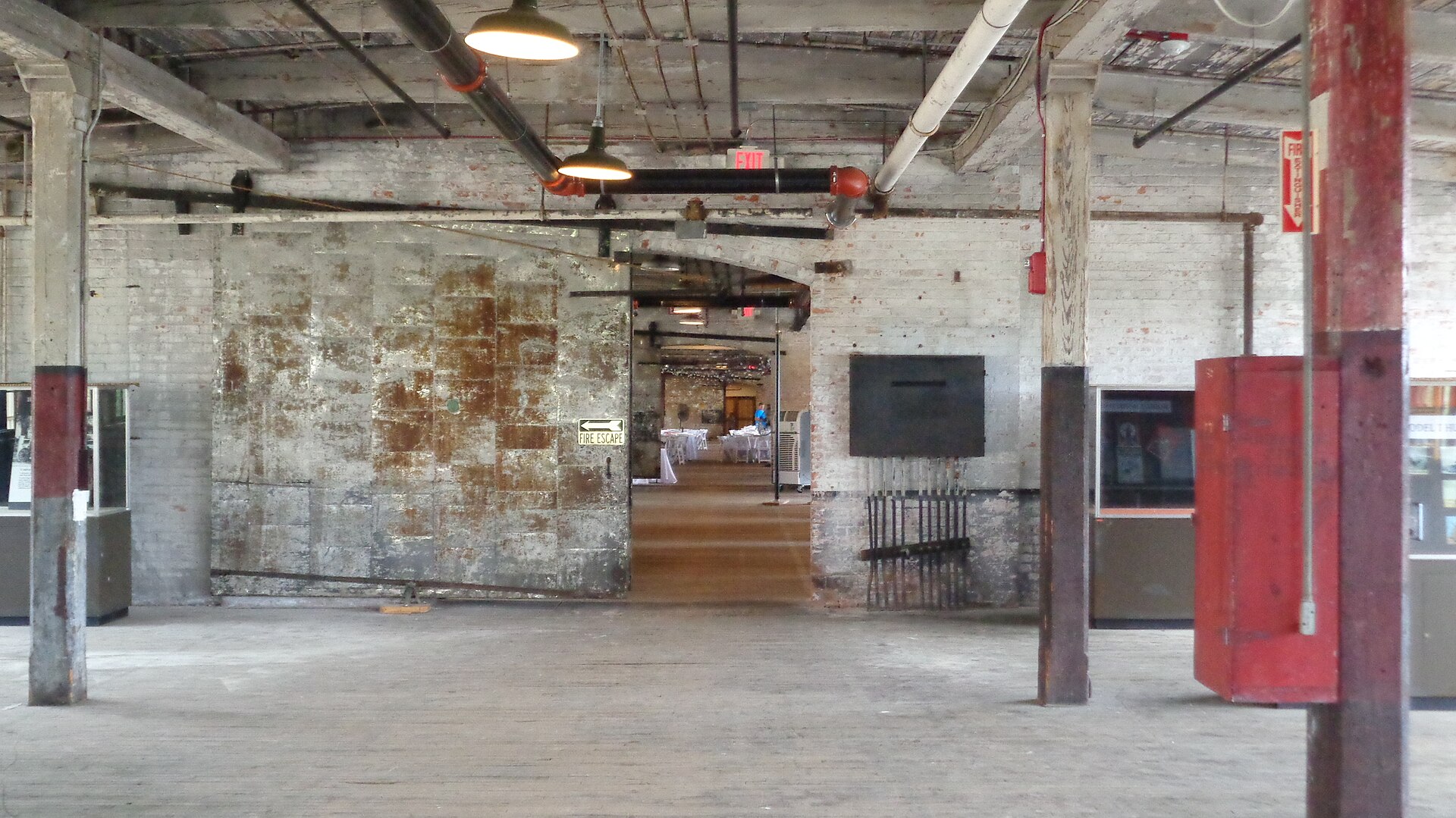
The 2017 interior photographs show museum spaces within the old factory. The broad floor, repeated posts and large fire door help visitors read the building as an artifact in its own right.
Ford leaves, but the building survives
Model T production moved to Highland Park in January 1910. Ford sold Piquette to Studebaker in 1911.
The building later passed through other owners and uses before the Model T Automotive Heritage Complex acquired it in 2000. The Detroit Historical Society traces that sequence and identifies its present role as an early automotive museum. Piquette’s ownership history
This was not a factory abandoned the moment Ford departed. Later occupancy helped carry the structure through much of the twentieth century.
Preservation then gave it a different purpose: helping visitors understand a short but unusually influential period of manufacturing history.
What visitors can see today
The museum presents early Ford models alongside vehicles from other manufacturers, using artifacts, photographs and interpretation to place them in context. Guided tours and independent visits offer different ways to explore. Ford Piquette museum
Look beyond the most famous car. Comparing earlier models helps reveal how ideas developed through experiments and revisions.
Also look up and around. Beams, windows and doors are part of the experience, not merely the background for polished vehicles.
Planning your visit
The museum is at 461 Piquette Avenue in Detroit. Consult its current visitor page for opening days, tickets, guided-tour times and holiday exceptions.
The operator also provides elevator information and asks visitors who need it to call. Check those arrangements in advance rather than assuming every entrance offers the same access. Official visiting information
Piquette rewards curiosity more than technical expertise. You do not need to know how to repair an engine to appreciate a place where a promising idea outgrew the walls built to contain it.
Frequently asked questions
Is the Ford Piquette Avenue Plant abandoned?
No. It is a preserved automotive museum open on its advertised schedule.
Was the Model T developed here?
Yes. The first production period of the Model T took place at Piquette in 1908 and 1909.
Was Ford’s moving assembly line introduced here?
No. The famous moving chassis assembly line was introduced at Highland Park in 1913.
Why did Ford leave?
The company needed greater production capacity and transferred Model T assembly to Highland Park in 1910.
Image credits
Featured image: Jackdude101 / Wikimedia Commons, CC BY-SA 4.0. The Ford Piquette Avenue Plant museum’s second floor in June 2017.

Body image: Jackdude101 / Wikimedia Commons, CC BY-SA 4.0.
