A building that helped fill American homes with sound now stands quiet above Camp Washington.
The Crosley Building in Cincinnati, Ohio, is a former radio and appliance factory at 1333 Arlington Street. Built in 1929, it later served other industrial and storage uses before becoming fully vacant in 2009. A public redevelopment agency acquired it in 2024, but a completed new use has not been established.
This is the historic manufacturing building in Camp Washington. It should not be confused with the University of Cincinnati’s Crosley Tower, a separate structure with a different history.
The Crosley Building and a changing household
The nine-story building belonged to an era when radios were becoming part of everyday domestic life. The Port, Cincinnati’s redevelopment agency, identifies Samuel Hannaford & Sons as its architects and describes approximately 330,000 square feet of space.
Manufacturing expanded beyond radios to refrigerators, washing machines and stoves. The building therefore connects several familiar household objects with one industrial address. The Port’s project history
That connection is easy to miss from the street. A large factory can seem remote from daily life, yet its products may have shaped the kitchen, laundry room or living room.
The site’s scale reflects the space needed to make and handle those products. Repeated floors and windows belong to a working building, designed to support activity on a scale far beyond a small workshop.
Seeing the building as a workplace
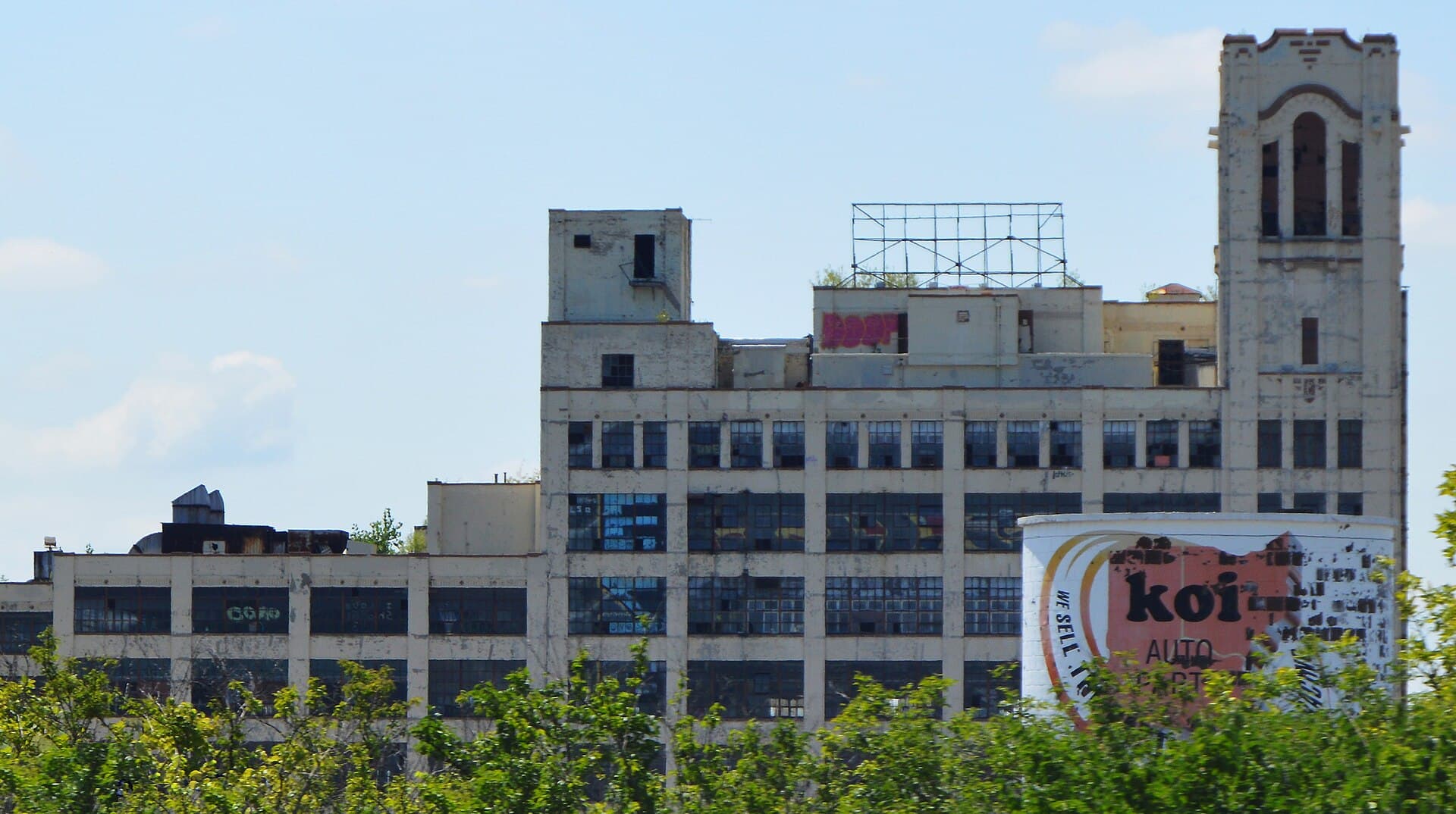
The featured photograph records the exterior in 2015. The body image provides a separate view from 2020. Both predate the public agency’s acquisition.
These dates matter. They show the building during its long vacancy, not a completed redevelopment or a promise that every detail remains unchanged.
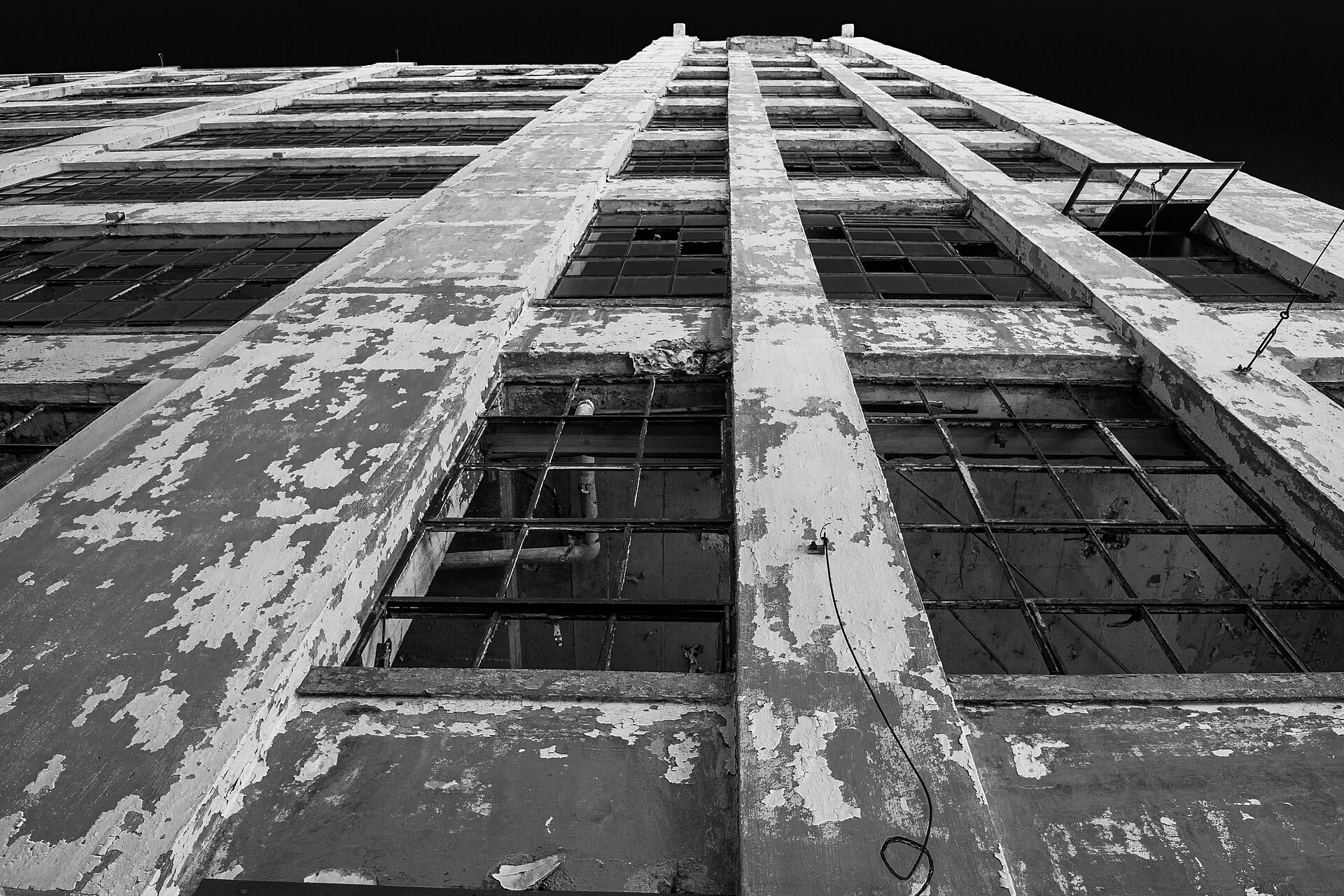
Industrial architecture invites a particular kind of looking. Repeated window bays suggest broad interior spaces. Height raises questions about how materials traveled between floors. Large entrances hint at the movement of goods.
Closure came in stages
The Crosley manufacturing operation closed in 1960. The building then found other uses, including warehousing, offices, light manufacturing and printing.
It did not become entirely vacant until 2009. Cincinnati condemned it in 2012 after significant deterioration. These are separate milestones, not interchangeable closure dates. The Port’s building overview
That layered ending is common at large industrial properties. A famous company can leave while smaller occupants keep parts of a building useful for decades.
Once those later users disappear, the cost of maintaining a large structure remains. Weather and deferred repairs do not pause while a new purpose is being discussed.
The building’s long afterlife is therefore part of its history, rather than an empty space between manufacturing and preservation.
A public acquisition changes the conversation
The Port’s 2024 impact report confirms that it closed on the Crosley acquisition in March of that year. The report describes building analysis and architectural review as steps toward redevelopment planning with stakeholders and the community. The Port’s 2024 impact report
This is more concrete than an expression of interest, but it is still not the same as an occupied, renovated building.
The distinction is important because some project pages retain older language about anticipated purchases or possible end users. The dated annual report confirms the acquisition; it does not establish a final tenant or public opening.
Why cleanup and study come first
The Port’s published project material discusses asbestos abatement, lead-paint removal and environmental work. Those tasks explain why reuse involves much more than replacing windows.
A building can be historically important and still require extensive work before people can occupy it again. Structural analysis also helps determine which future uses are realistic.
The agency’s industrial strategy places Crosley within a wider effort to return underused property to productive use. Possible jobs and investment figures in project materials describe potential outcomes, not results already achieved.
The surrounding neighborhood has a stake in those decisions. Reuse affects traffic, employment, neighboring properties and the appearance of an important local landmark.
What the current planning record says
Cincinnati’s January 2026 Revive 75 workshop material includes the Crosley building and surrounding block in its discussion of future change. It offers planning context rather than proof that construction is complete. City of Cincinnati planning material
As of November 2026, the sources reviewed here do not confirm a finished redevelopment or regular public interior tours.
How to appreciate the landmark
View the exterior only from lawful public areas, without entering fenced property or obstructing traffic. The building is not an open-access exploration destination.
For a deeper look, follow updates from The Port and Cincinnati’s planning department. Historical photographs can help separate the manufacturing years, later occupancy and long vacancy.
Crosley’s future remains unfinished. Its past is already clear enough to deserve attention: a place where familiar objects were made at an extraordinary scale, and where a neighborhood is still waiting to see what comes next.
Frequently asked questions
When was the Crosley Building constructed?
It was built in 1929 in Cincinnati’s Camp Washington neighborhood.
When did it become vacant?
The original manufacturing operation closed in 1960, but later occupants remained until the building became fully vacant in 2009.
Who acquired it for redevelopment?
The Port confirmed its acquisition in March 2024.
Is it the same building as Crosley Tower?
No. The Camp Washington factory and the University of Cincinnati tower are separate buildings.
Image credits
Featured image: Nyttend / Wikimedia Commons, Public domain. Cincinnati’s Crosley Building in August 2015, during its long vacancy.

Body image: Hhelvey / Wikimedia Commons, CC BY-SA 4.0.
