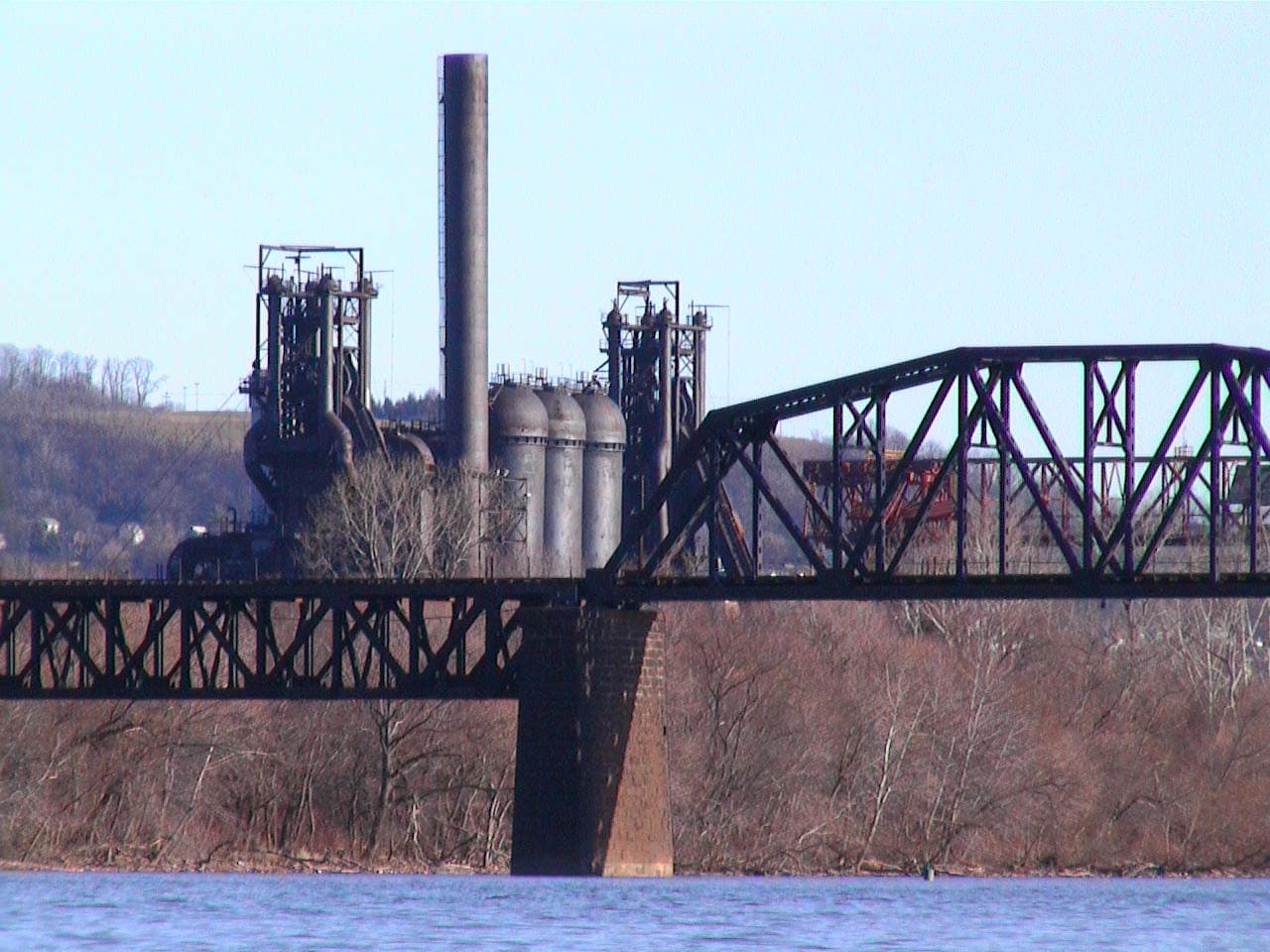
Two iron giants beside the Monongahela now welcome people whose grandparents might have worked beneath them.
The Carrie Blast Furnaces in Swissvale and Rankin, Pennsylvania, preserve a major part of the Pittsburgh region’s industrial story. Furnaces No. 6 and No. 7 stopped operating in 1978. Today, Rivers of Steel manages the historic site through tours, arts programs and preservation work.
Their weathered appearance can suggest abandonment. In fact, this is an actively cared-for landmark where visitors can learn how ironmaking shaped the surrounding communities.
What the Carrie Blast Furnaces actually made
Carrie produced iron for steelmaking. That distinction is easy to lose when the whole region is remembered for steel.
The Historic American Engineering Record traces ironmaking at the site to the 1880s. Carnegie acquired the independent operation in 1898, and a bridge later connected it with the Homestead works across the river. Furnaces No. 6 and No. 7 were completed in 1907. Library of Congress history
The bridge made the river part of an integrated industrial landscape. Hot metal could move between stages of production rather than being treated as a finished product at the furnace.
Imagine that relationship when looking across the water. The surviving machinery was one part of a much larger operation, joined to mills, rail lines and workers’ neighborhoods.
Who was Carrie?
For years, even people interpreting the site were uncertain about its namesake. Archival research eventually identified Caroline “Carrie” Clark, daughter of one of the founding owners.
WESA reported in 2023 that a historical newspaper account described her lighting the fires during the furnace’s christening. The discovery replaced a long-standing educated guess with documentary evidence. WESA’s namesake report
Reading the machinery
The preserved furnaces rise roughly 92 feet. Rivers of Steel describes them as rare surviving examples of ironmaking technology from before World War II. Official Carrie visitor information
At first, the surrounding pipes and platforms may look like a puzzle. A guided industrial tour connects those parts to the movement of materials, the supply of heated air and the handling of molten iron.
The separate trestle photograph below records another part of that working system. Materials had to reach the right place in a continuous, organized flow.
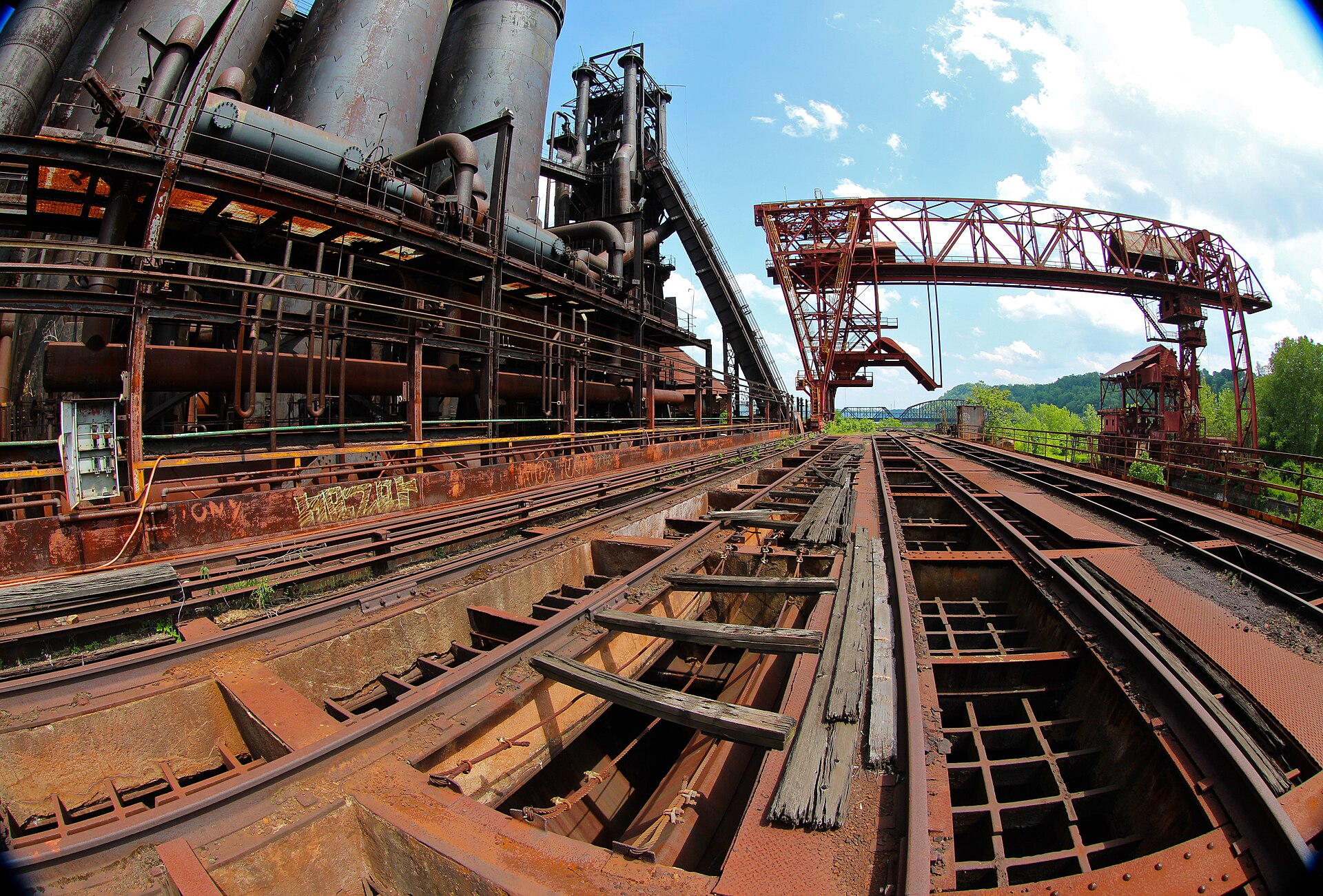
The scale is impressive, but scale alone is not the point. Every valve and access platform reflects a task someone performed. Understanding those tasks turns a dramatic backdrop into a workplace.
Two shutdown dates, one long decline
The surviving furnaces went offline in 1978. Other parts of the Carrie plant continued until 1984.
Rivers of Steel’s preservation history explains that much of the property was later scrapped, while advocates fought to retain important structures. County ownership followed in 2005, National Historic Landmark recognition in 2006, and Rivers of Steel stewardship in 2010. Preservation history
Those dates explain why different accounts give different answers to “When did Carrie close?” They may be describing the two landmark furnaces or the broader plant.
The later years also brought a different kind of loss. Equipment removed for scrap could no longer help explain the original process in place.
What remains is valuable partly because so much around it disappeared.
Preservation does not mean leaving rust alone
A weathered industrial site needs continuing care. Historic metal, brickwork and elevated structures cannot simply be left untouched because visitors like their appearance.
Rivers of Steel describes stabilization projects intended to address decades without regular maintenance. The goal is to retain historical meaning while managing the physical condition of the surviving equipment.
This work is less visible than a festival or a tour, but those public experiences depend on it. Access routes, closed areas and changing restrictions are part of stewardship.
Art adds another layer
Carrie also became known for the large deer sculpture created from material at the site. Arts tours place that work within a wider story of artists responding to industrial remains.
Current programs include metalworking, graffiti arts and other workshops. These activities give visitors ways to engage with materials and creative processes, rather than only looking at them from a distance. Rivers of Steel programs
The result is not a replacement for the workers’ history. At its best, new activity gives people a reason to encounter that history and ask more questions.
Planning a legal visit
Use the operator’s current booking calendar. Tour schedules and special events vary, and this is not a site for unrestricted wandering.
The published visitor address is 801 Carrie Furnace Boulevard. Follow current arrival instructions rather than older routes through surrounding industrial property.
Ask about terrain, accessibility and footwear before booking if those details affect your visit. Allow time for the interpretation: the equipment becomes far more interesting once its purpose is clear.
Carrie’s strongest impression may come when the giants stop looking mysterious. They become understandable evidence of the labor and engineering that built a region.
Frequently asked questions
Are the Carrie Blast Furnaces abandoned?
No. They are preserved and operated as a heritage destination by Rivers of Steel.
When did they stop producing iron?
Furnaces No. 6 and No. 7 stopped in 1978. The rest of the Carrie plant closed in 1984.
Can you take a tour?
Yes. Book through Rivers of Steel and check the current schedule and visitor requirements.
Who was Carrie?
Research identified Caroline Clark, a founding owner’s daughter who participated in the original furnace christening.
Image credits
Featured image: PixOnTrax at English Wikipedia / Wikimedia Commons, Public domain. An archival view of the Carrie furnaces across the Monongahela, uploaded in 2007.

Body image: Roy Luck / Wikimedia Commons, CC BY 2.0.
