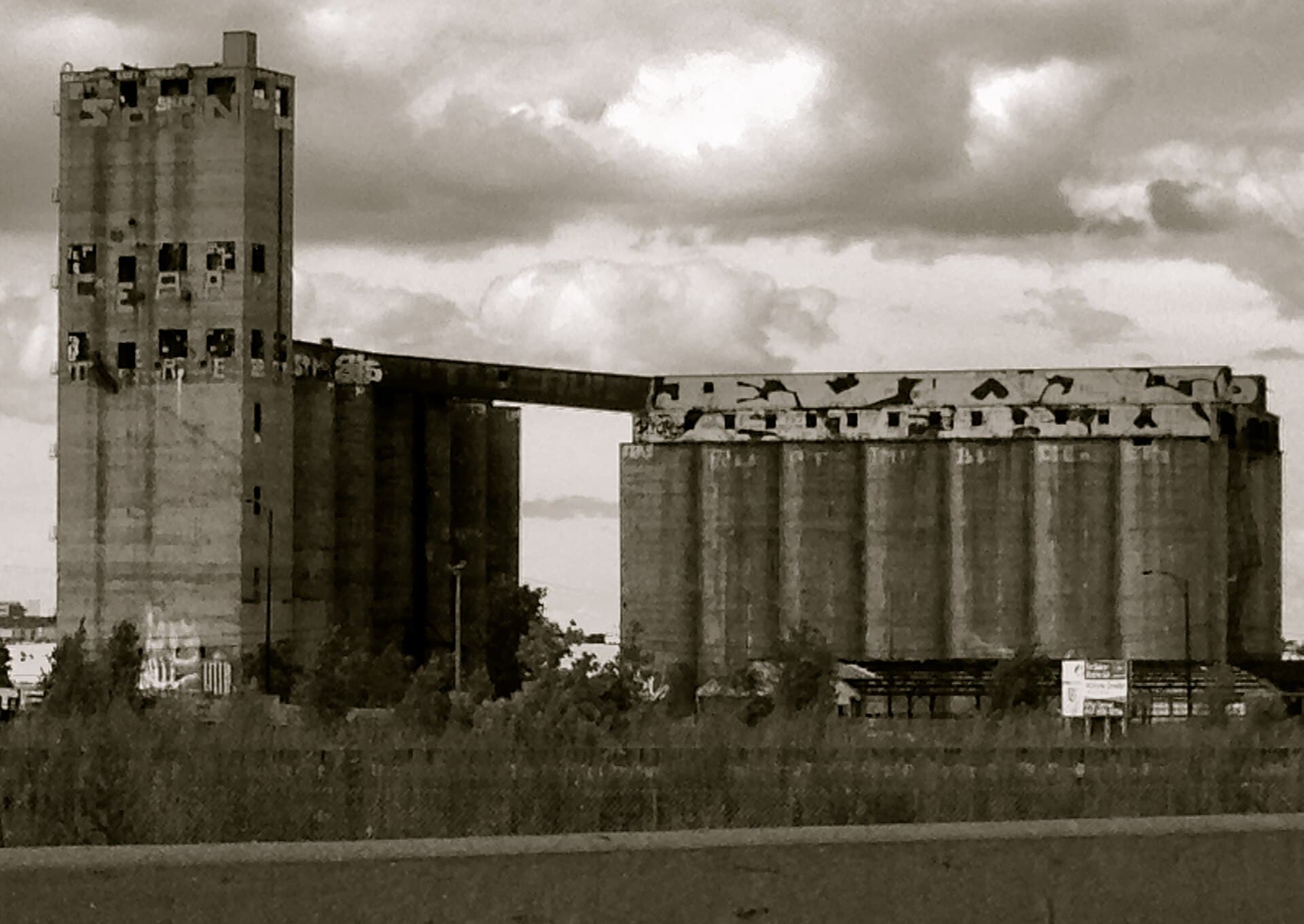
Chicago’s grain towers helped feed a continent before becoming a landmark people fought to save.
The Damen Silos, also known as the Santa Fe Elevator, stood beside Chicago’s industrial waterways near Damen Avenue. Their twentieth-century history began in 1906, and grain operations ended after a 1977 explosion. Decades of vacancy followed, then a contested demolition process.
By 2026, the site had changed substantially. Old photographs remain valuable historical records, but they should not be treated as a guide to an intact attraction or permission to enter the property.
Why Chicago needed the Damen Silos
Grain arriving from farms needed places to be stored, sorted and transferred between transport systems. Elevators made that work possible at a scale far beyond sacks handled one at a time.
The U.S. Army Corps of Engineers describes Damen as a significant transport facility that connected rail, truck and barge traffic. It identifies the Atchison, Topeka & Santa Fe Railroad with the 1906 construction. Army Corps historical overview
That is the hidden connection between a dramatic industrial skyline and an ordinary kitchen. Grain elevators belonged to the systems that carried agricultural products toward markets and consumers.
A machine disguised as a building
Preservation Chicago describes a complex of storage silos, a powerhouse, an elevator and equipment for cleaning and handling grain. The site was more than a set of empty cylinders. Preservation Chicago’s history
Each part supported a sequence of operations. Grain had to be moved, treated, stored and dispatched. The buildings were shaped around that movement.
Their repeated vertical forms made an unusually memorable landmark. Seen beside water, the towers suggested the volume of material once passing through them.
The photographs accompanying this article record earlier conditions. The featured view dates to 2013; the body image comes from the Historic American Engineering Record.
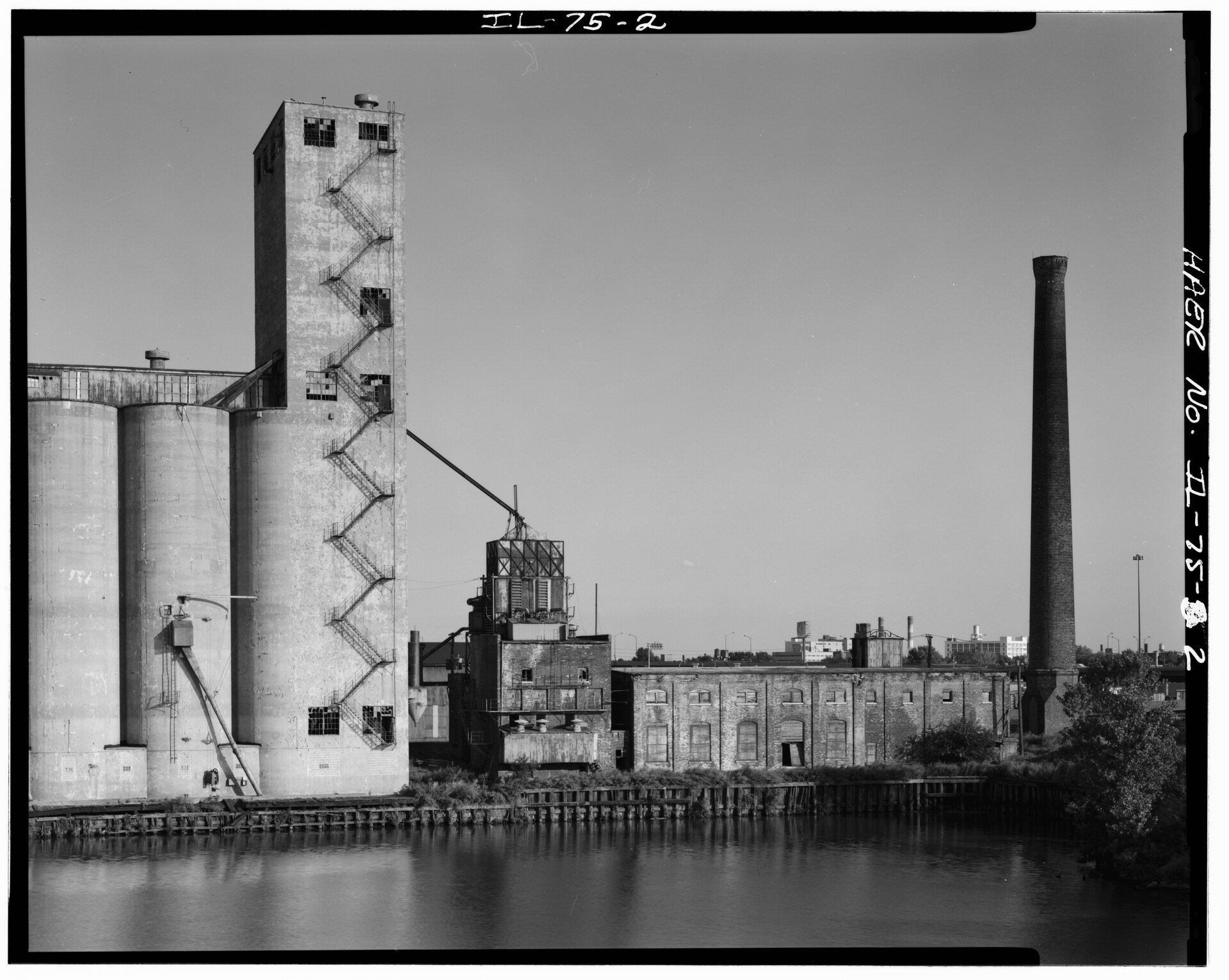
The archival view is especially useful for understanding the relationship between the elevator, the waterfront and nearby transport routes. It records a working landscape’s form, even after its original purpose ended.
Explosions and rebuilding
Grain dust can ignite under the right conditions, making fire prevention central to elevator operations. Damen’s history included serious accidents.
After an explosion and fire in 1932, the workhouse was rebuilt. Another explosion in 1977 preceded the end of use, according to the Army Corps account.
The contrast is striking: a structure built to hold something as ordinary as grain belonged to a hazardous industrial process.
Rebuilding after one disaster did not guarantee survival after another. By the later twentieth century, changes in transport also affected Chicago’s role as a grain-handling center.
WBEZ’s historical reporting explains how highways allowed shipments to reach more destinations without passing through a single major distribution point. WBEZ’s Damen history
The shutdown therefore sits within both the site’s accident history and a wider change in the movement of goods.
A second life in photographs and art
During the long vacancy, Damen became familiar through photography and urban art. Its walls and vast spaces attracted people interested in the city’s overlooked industrial landscape.
A Chicago Public Library exhibition in 2018 documented that artistic response through photographs. The exhibition notice described the interplay of architecture, nature and color at the site. Chicago Public Library archive
That was a historical exhibition, not an announcement of current tours. It also did not turn the silos into a public park.
The argument over what should survive
Preservation advocates proposed keeping the silos within a broader vision for riverfront reuse and public amenities. Their case emphasized both industrial heritage and the needs of nearby communities.
The property’s sale and demolition plans raised questions about who would shape the riverfront’s next chapter. Residents also voiced environmental concerns surrounding the work.
Inside Climate News reported on those concerns during public discussion of the demolition in 2025. Its coverage shows that the dispute was about more than whether old concrete looked attractive. Community concerns reported in 2025
For neighbors, the consequences included dust, future land use and the relationship between industrial activity and daily life.
What changed by 2026?
The McKinley Park Development Council’s dated monitoring record documents demolition and subsequent site work in 2026. Its entries include the removal of remaining structures and later activity involving earthmoving and paving. Community monitoring record
The reviewed sources do not establish a public heritage attraction replacing the silos. Do not enter the property or approach work areas to look for remnants.
Remembering the industrial riverfront
Damen’s story can still be explored through engineering records, library material and historical reporting.
Compare images taken from similar directions. Look for the relationships between water, rail infrastructure and storage buildings rather than only the most dramatic tower.
The loss of a structure changes the skyline. A well-preserved record can still explain why it stood there and why people cared when it disappeared.
Frequently asked questions
When were the Damen Silos built?
The twentieth-century complex began in 1906, with major rebuilding after the 1932 fire and explosion.
When did grain operations end?
The silos stopped being used after an explosion in 1977.
Are the old exploration photographs current?
No. Demolition and site work have substantially changed the property.
Can you visit the site as a public attraction?
No public visitor attraction is established by the sources reviewed here. Respect property boundaries and work areas.
Image credits
Featured image: Roy Luck / Wikimedia Commons, CC BY 2.0. Chicago’s Damen Silos in July 2013, before the later demolition.

Body image: Historic American Engineering Record / Wikimedia Commons, Public domain.