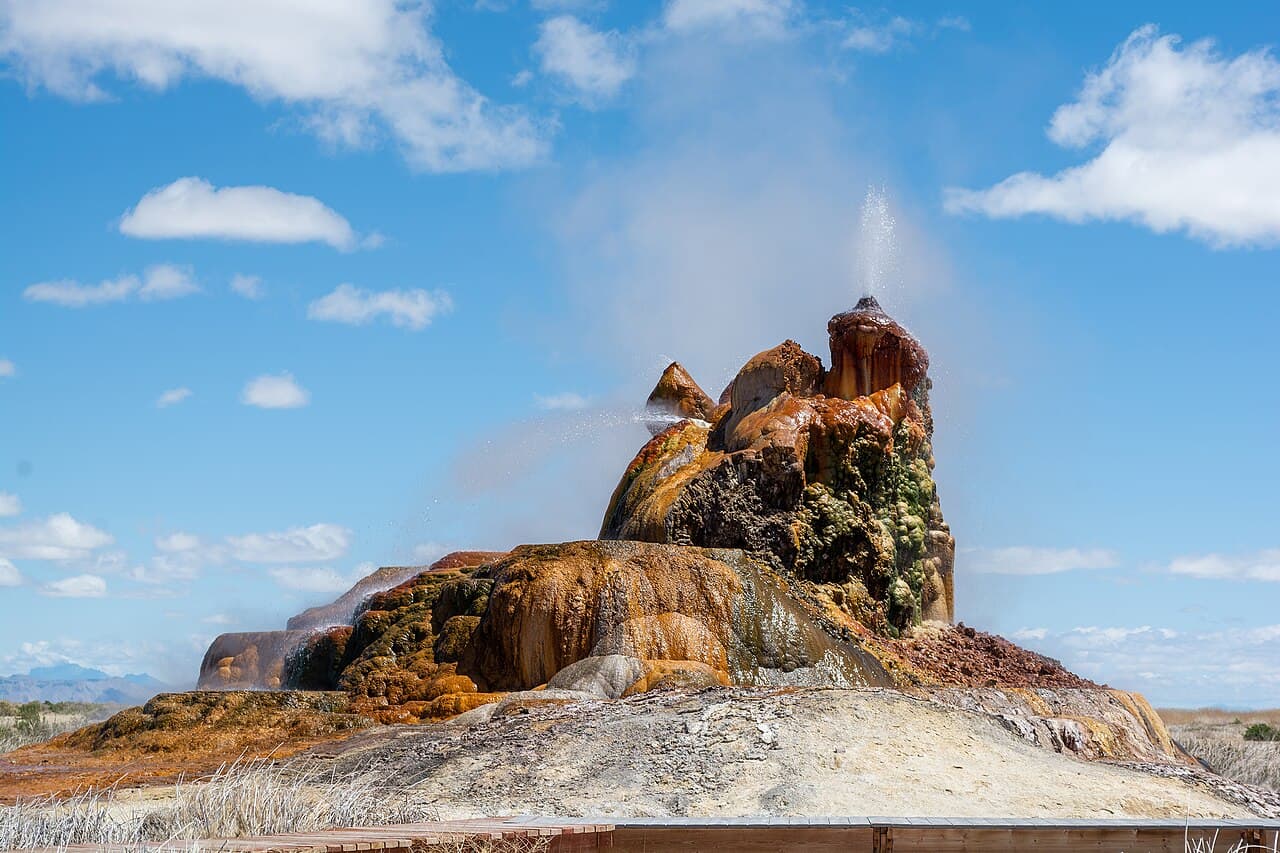
Fly Geyser looks like a small, brightly colored volcanic sculpture. Its mineral cones and steaming water seem almost too unusual to be real.
But this Nevada landmark did not simply emerge untouched from the desert. A drilling project helped start the water flow that built the formation.
A human opening into geothermal heat
Fly Geyser stands on Fly Ranch in Nevada's Black Rock Desert region.
Burning Man Project's account of the property traces the well-known formation to geothermal drilling in 1964.
Hot water reached the surface and continued flowing. Natural mineral deposition then worked around a human-made opening.
That combination makes the site different from a wholly natural spring system with no drilling history.
Water builds what it leaves behind
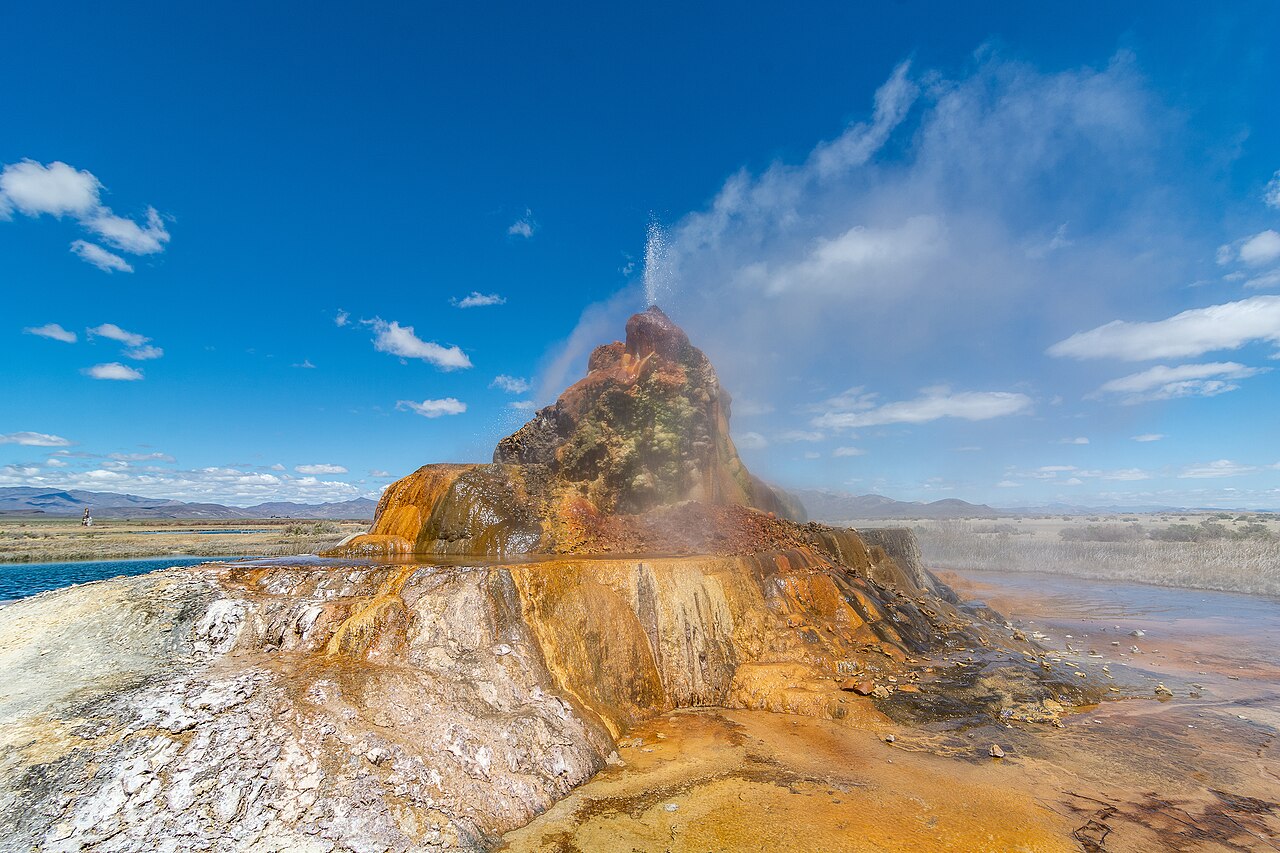
Geothermal water carries dissolved materials. As it reaches surface conditions, some of those materials form deposits.
Repeated flow builds layers, terraces, and irregular shapes. The visible cones are therefore records of continuing water movement, not sculptures carved from an existing hill.
The Nevada state tourism publication describes mineral accumulation around the flowing feature.
Color comes from a living surface, too
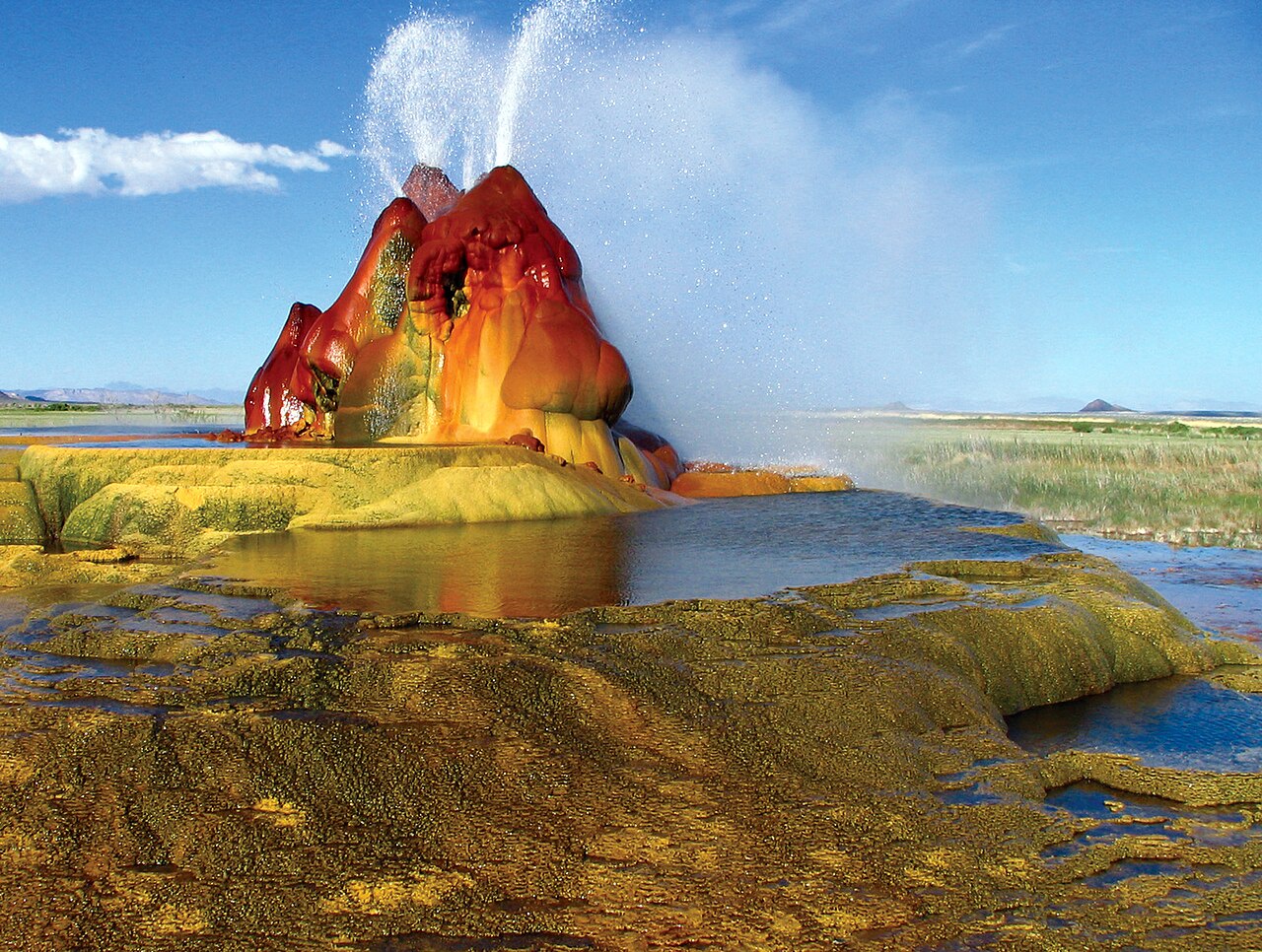
Heat-tolerant microorganisms contribute color around the wet deposits. Their communities interact with the temperature and chemistry of the water.
Photographs vary with light, moisture, and editing, so the brightest online colors should not be treated as a fixed palette.
The underlying scene remains extraordinary: hot water, mineral growth, and living pigments working together.
A landmark within a managed property
Burning Man Project acquired Fly Ranch in 2016. Access is managed, and the formation should not be treated as an unrestricted roadside bathing spot.
The surrounding habitat matters as well as the famous geyser.
Fly Geyser's story is compelling because it crosses a boundary. People opened a route for the water, but chemistry and biology built the remarkable forms that followed. Its beauty records both human intervention and Earth's continuing geothermal activity.
Photo credits
Featured image: RuggyBearLA; Wikimedia Commons source; CC BY 2.0. Resized for web display.

Body image 1: RuggyBearLA; Wikimedia Commons source; CC BY 2.0. Resized for web display.

Body image 2: Jeremy C. Munns; Wikimedia Commons source; Public domain. Resized for web display.
