Behind Philadelphia’s fortress walls, a failed experiment in silence became a place for public conversation.
Eastern State Penitentiary is a former prison in Philadelphia’s Fairmount neighborhood, now operated as a historic site. It opened in 1829 and ended its prison use in 1971. Visitors can enter through official tours and programs, rather than seeking access to an unattended ruin.
Its weathered cells are striking, but their appearance is only the beginning. The more important story concerns what the prison’s designers believed isolation could accomplish, what happened to the people inside, and why the building survives.
Why Eastern State Penitentiary looked like a fortress
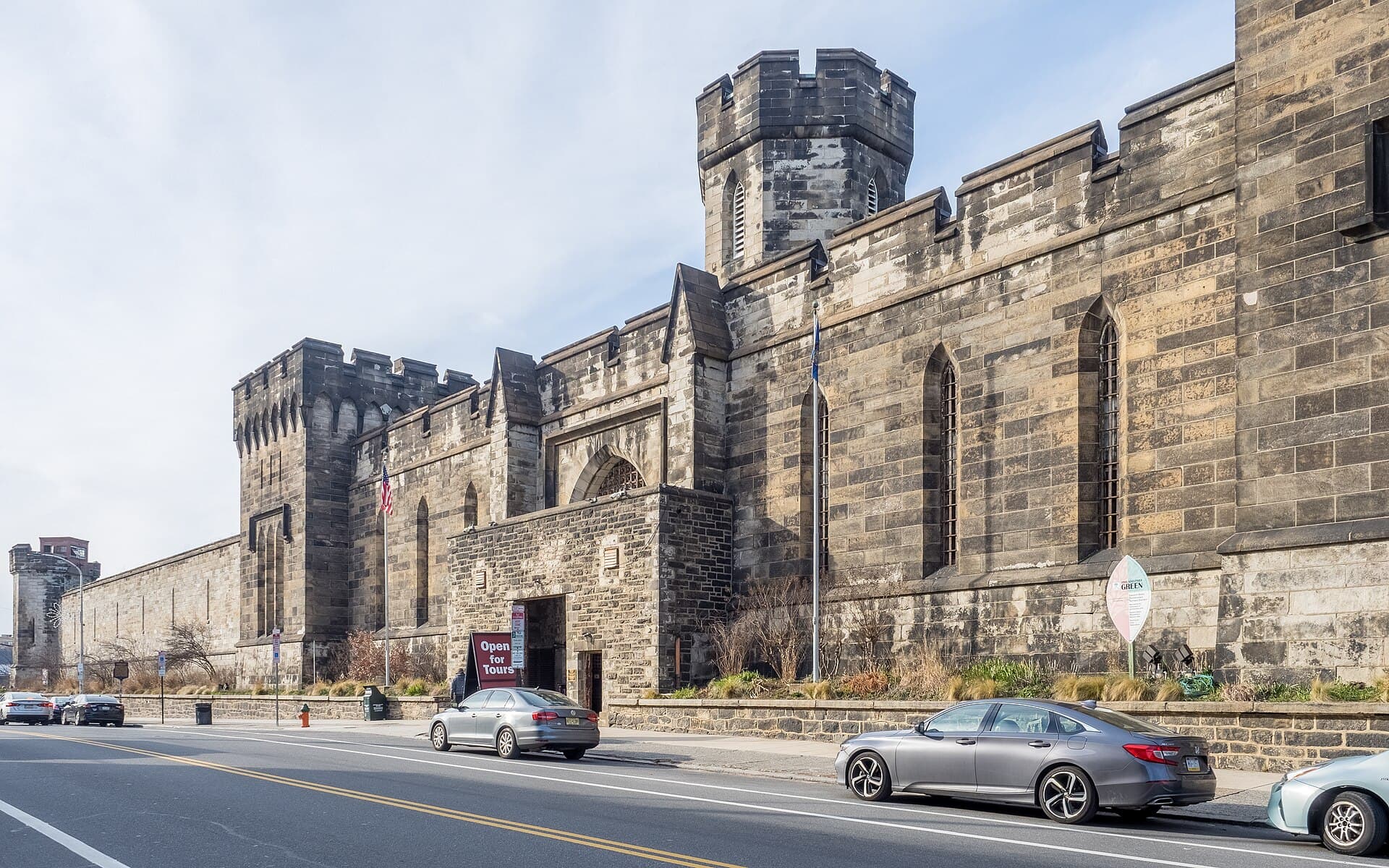
The entrance presents an imposing face to the street: high stone walls, battlements, and towers. Within that boundary, architect John Haviland arranged cellblocks around a central point.
The original seven-block plan made the institution easy to supervise from its center. Pennsylvania authorized the project in 1821, and the first prisoner arrived in 1829. It was an ambitious attempt to make architecture enforce an entire theory of punishment. National Archives architectural history
Look at the building with that purpose in mind. A corridor was not simply a route between rooms. A cell was not simply somewhere to sleep. Their arrangement helped limit contact between people.
The promise and cost of separation
Reformers promoted confinement and reflection as an alternative to brutal public punishments. Eastern State’s system combined isolation with work inside individual cells, including trades such as shoemaking and weaving.
That ideal did not erase suffering. Prisoners resisted, found ways to communicate, and lived within a system that attracted criticism from its earliest decades. The historian Jennifer Lawrence Janofsky describes both the reform movement and the widening gap between its promises and daily conditions. Encyclopedia of Greater Philadelphia
This history deserves careful language. Calling the prison “humane” without qualification repeats what its supporters hoped to achieve. Calling it only a frightening ruin leaves out the beliefs and choices that created it.
The site is most revealing when those two ideas remain together: a reform project could still cause profound harm.
A prison that changed while it operated
Eastern State did not preserve its original system unchanged for its entire life. Officials formally abandoned the separate system in 1913, after practice had already shifted under pressure from overcrowding.
The population eventually far exceeded the institution’s early capacity. New cellblocks filled more of the grounds, and the prison’s physical form became a record of adjustment rather than a perfect architectural diagram. State prison operations ended in 1970; a brief period of city jail use followed before final closure in 1971. Official historical timeline
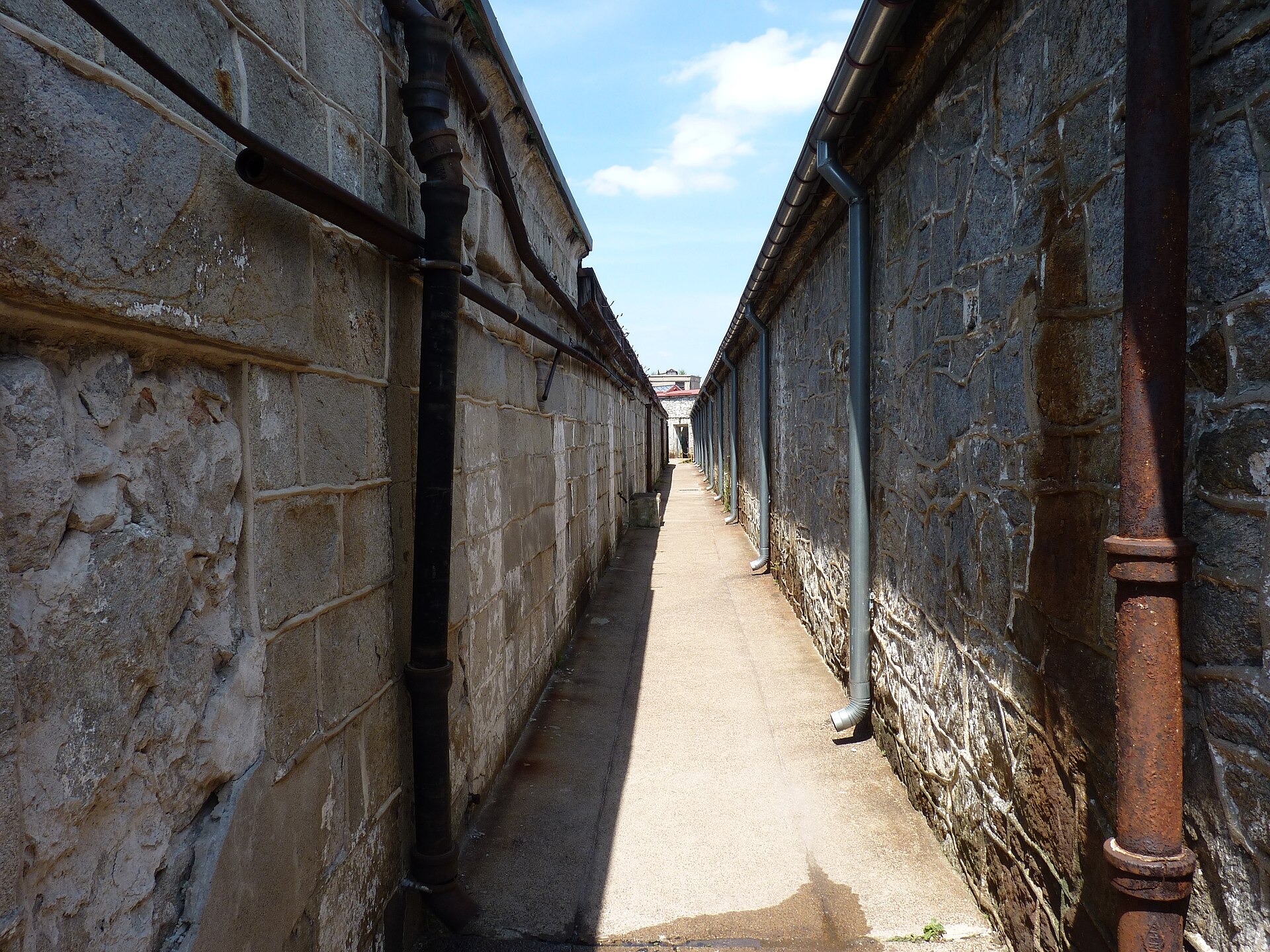
The narrow outdoor passage in the photograph offers another way to read that history. The heavy walls and closely spaced buildings show how much of the experience depended on controlled space.
Famous prisoners can draw attention, but the institution held many people whose names never became attractions. Pennsylvania’s prison-record research guide points toward surviving records for people who want to move beyond celebrity stories and investigate individuals. Pennsylvania State Archives research guide
How an empty prison became a historic site
Closure left a difficult question: what should Philadelphia do with a vast prison embedded in a living neighborhood?
Commercial redevelopment proposals brought the building’s future into question. Preservationists, neighbors, historians, and architects organized to keep its history accessible. The result was a different kind of reuse, centered on interpretation rather than replacing the old institution with unrelated development. Preservation history
The current organization connects the history of this prison with present questions about incarceration and justice. That mission changes what a visit can be. Crumbling surfaces become evidence to examine, rather than merely backgrounds for dramatic photographs. Eastern State’s mission
Preserving a place like this also means accepting that “restored” need not mean made to look new. Weathered material can communicate age and change while the visitor route remains managed.
Planning a thoughtful visit
Eastern State stands at 2027 Fairmount Avenue. Consult its official visitor information for current opening days, tickets, access arrangements, and program changes before traveling.
The site offers an audio experience and guide-led interpretation. Its exhibits include discussion of prison history and contemporary incarceration, so allow time to read and listen rather than treating the grounds as a quick photo stop. The operator does not recommend the experience for children younger than seven. Know before you go
A useful approach is to begin with the building’s overall plan, then focus on a small detail: a doorway, an exercise space, or the view down a cellblock. Ask what that feature allowed and what it prevented.
The visit becomes more memorable when you leave with a question about the institution, not just a picture of decay. Eastern State’s walls once separated prisoners from society. Their survival now gives the public a place to examine that separation.
Frequently asked questions
Is Eastern State Penitentiary still a working prison?
No. Prison use ended in 1971. It now operates as a historic site with managed visitor access.
Why are the cellblocks arranged like spokes?
Haviland’s radial design placed the blocks around a central observation point and supported the original system of separate confinement.
Can you explore without permission?
Use the official visitor entrance and approved routes. A ticket does not authorize entry into closed preservation or work areas.
Is this mainly a haunted attraction?
Its year-round historical interpretation concerns incarceration, architecture, and justice. Paranormal claims are not evidence of its documented past.
Image credits
Featured image: ajay_suresh, CC BY 2.0.

Body image: Dudva, CC BY-SA 3.0.
