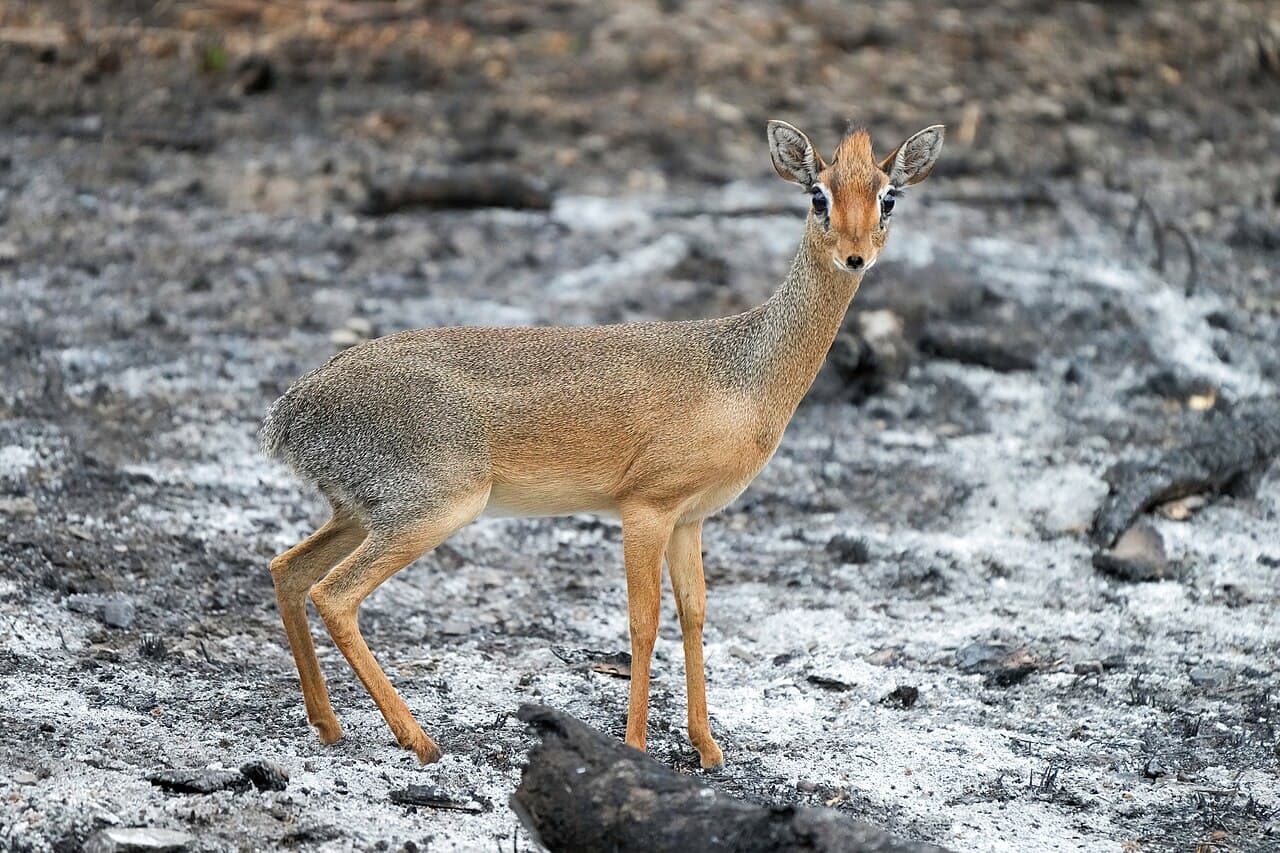
A dik-dik can weigh less than many house cats. Yet this small antelope has a long, flexible-looking snout and scent glands that help it manage life in African scrub.
Its enormous eyes may catch your attention first. Look closer, and a whole set of useful details comes into view.
An antelope on a smaller scale
Dik-diks belong to a group of small African antelopes. Kirk's dik-dik is one familiar example, shown in the photographs here.
The African Wildlife Foundation describes adults weighing roughly 3 to 6 kilograms. Size varies, so that range is more useful than imagining one exact weight for every animal.
Slender legs and a small body suit movement through cover. A male's short horns can be partly hidden by the tuft on his forehead.
That nose has a purpose
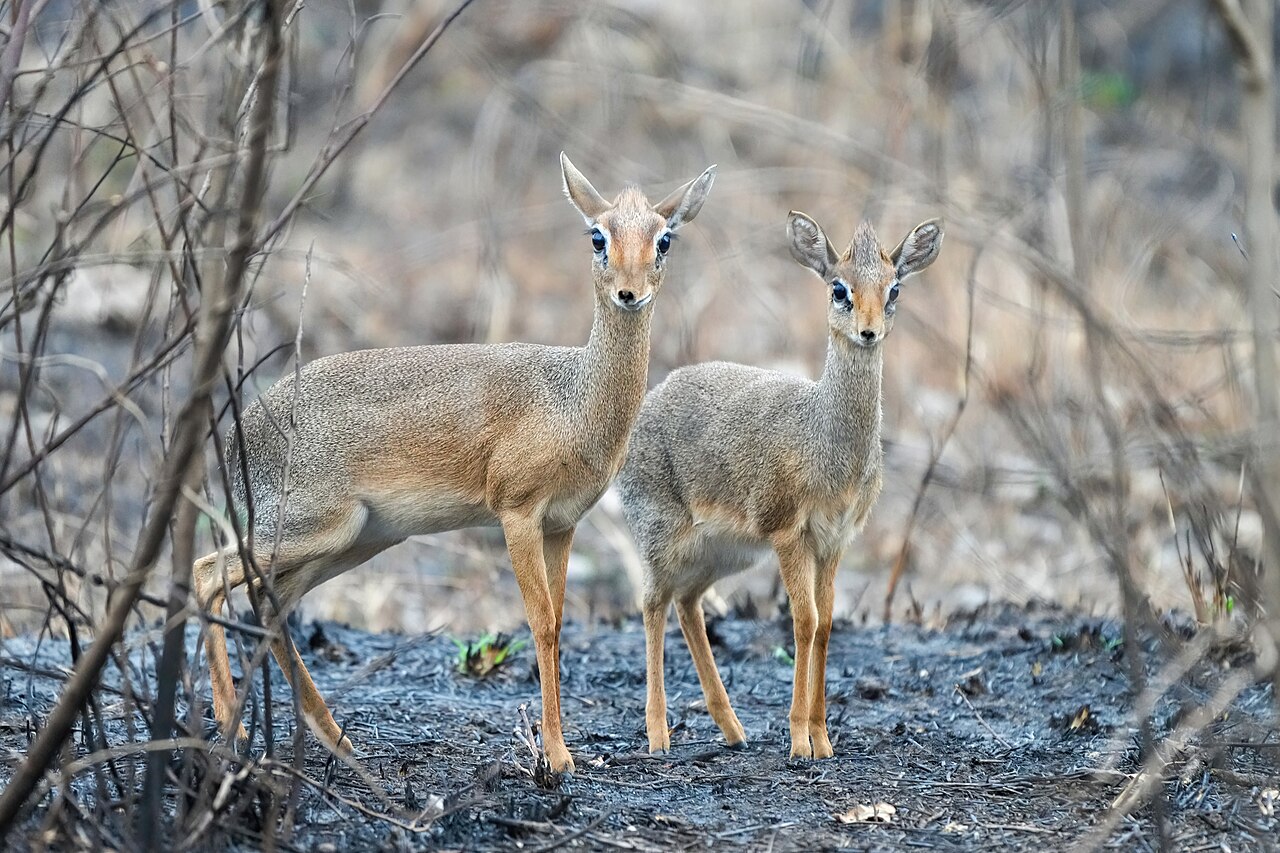
The elongated snout is more than an unusual shape. It helps with heat exchange as the animal breathes, contributing to temperature control in warm conditions.
Dik-diks also obtain much of their water from the vegetation they eat. Leaves and shoots are important parts of their menu.
These features work together with behavior and habitat choice; no single adaptation makes the animal independent of its environment.
A hidden message beside the eye
The dark spot near each eye contains a scent gland. Dik-diks use secretions to mark objects in their territory.
To another dik-dik, a twig can carry information that a passing person would never notice. San Diego Zoo Safari Park highlights the distinctive lives of these small antelopes.
Small animals need space, too
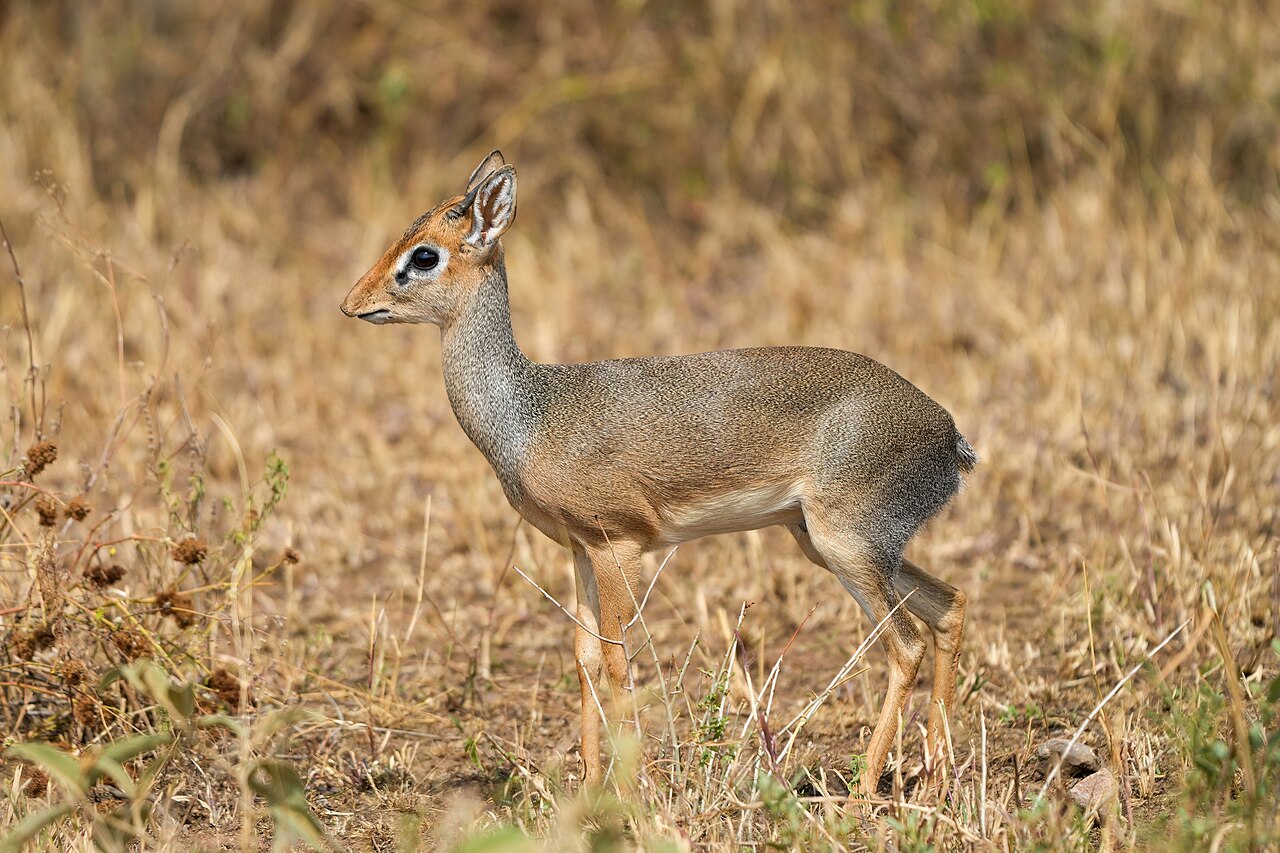
Dik-diks depend on suitable vegetation for food and shelter. Habitat change and hunting can create local pressures even for animals that seem good at hiding.
Their appeal goes beyond delicate faces. A dik-dik reveals how much biology can fit into a small body—from cooling breaths to messages left on branches.
Photo credits
Featured image: Giles Laurent; Wikimedia Commons source; CC BY-SA 4.0. Resized for web display.

Body image 1: Giles Laurent; Wikimedia Commons source; CC BY-SA 4.0. Resized for web display.

Body image 2: Giles Laurent; Wikimedia Commons source; CC BY-SA 4.0. Resized for web display.
