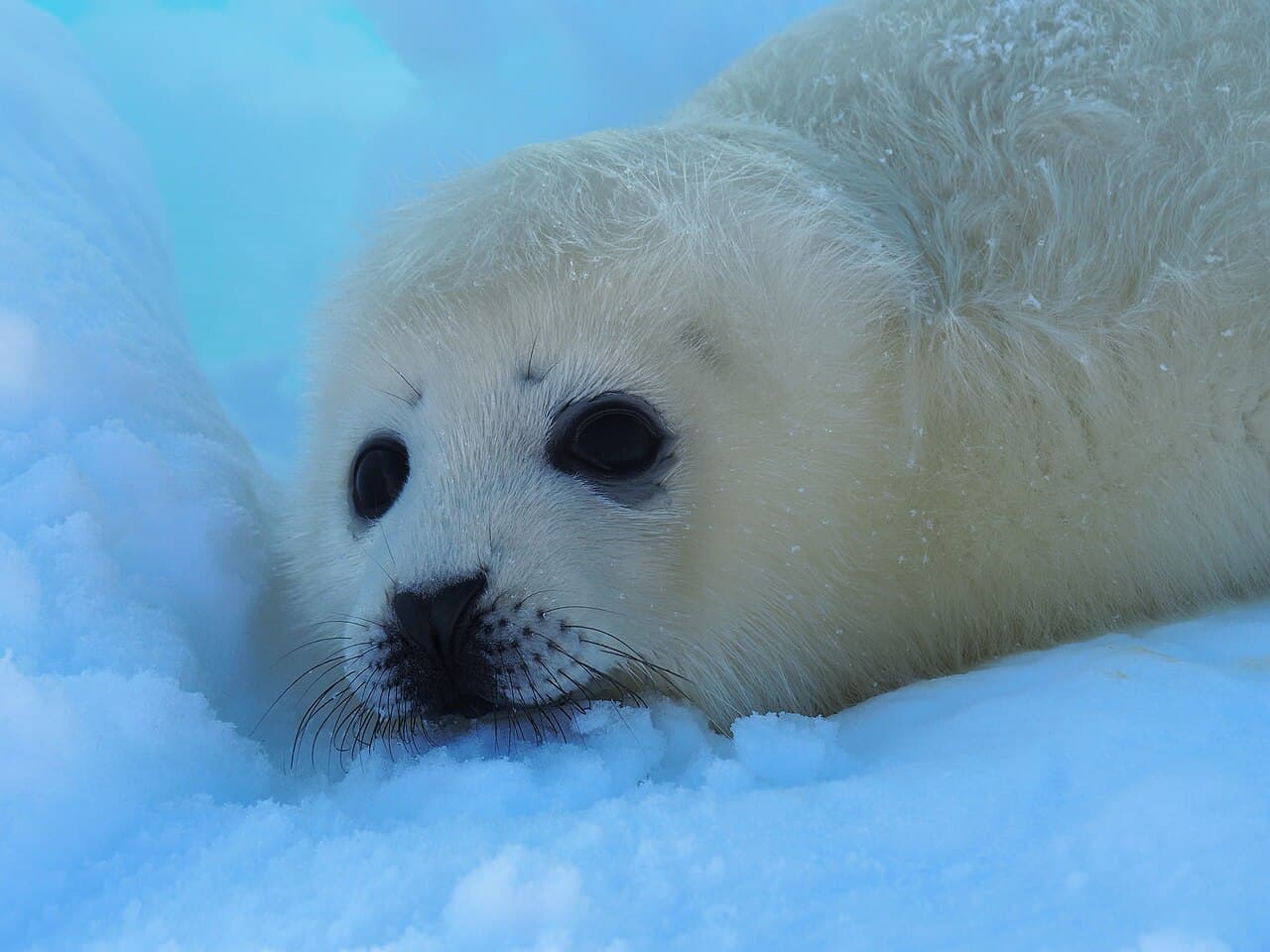
A baby harp seal's famous white coat lasts only a short part of its life. Within its first weeks, that fluffy appearance begins to give way to a different coat.
The white pup in a photograph is not a miniature version of a permanently white adult. It is an animal passing through a brief and important stage.
Born on the ice
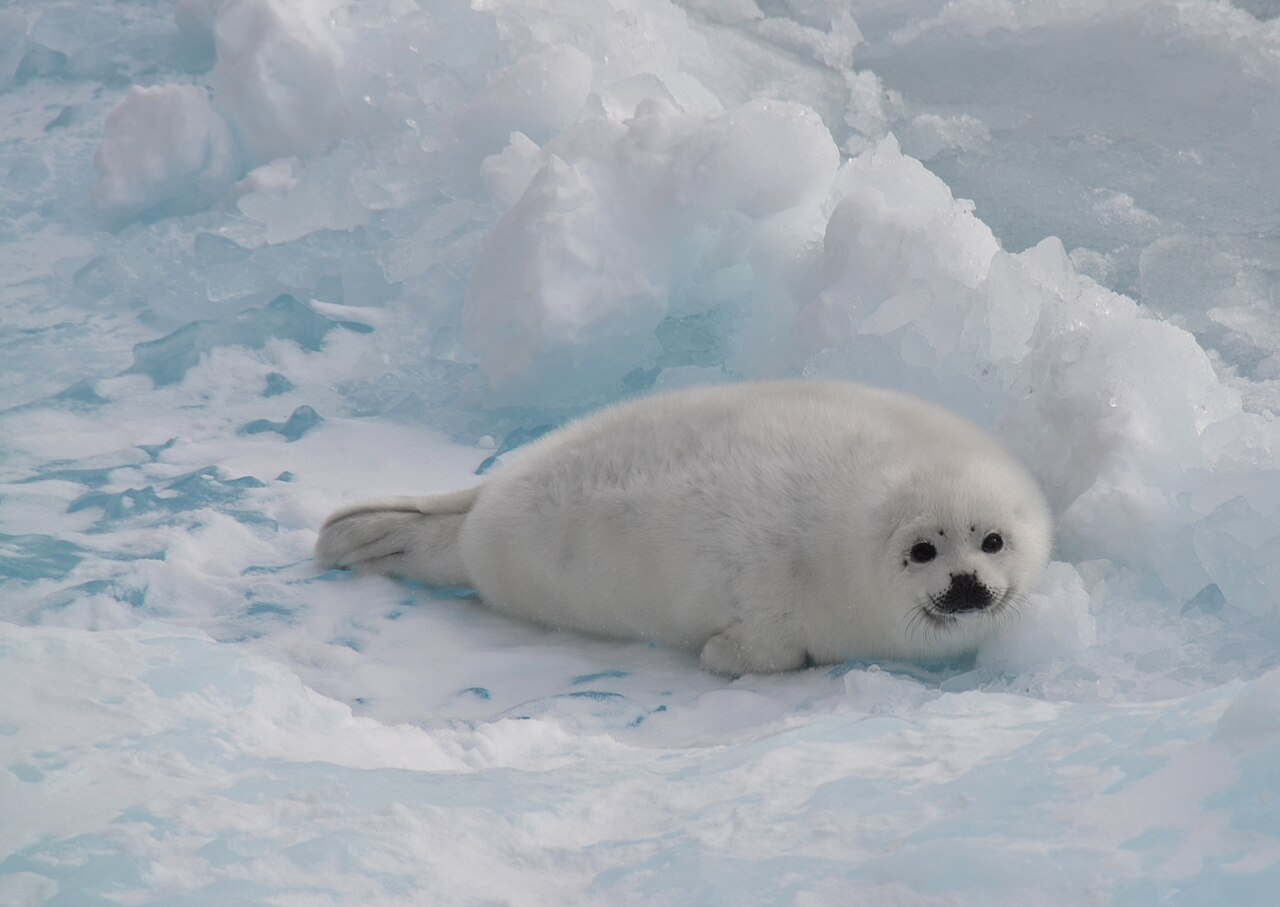
Harp seals breed on sea ice in the North Atlantic region. Mothers give birth to pups on ice, where the young begin life before they can manage independently at sea.
NOAA Fisheries describes their seasonal movements and dependence on suitable breeding ice.
That setting makes a stable platform important. Ice is part of the nursery, not simply a scenic background.
The whitecoat stage changes quickly
The newborn coat is called lanugo. After the early whitecoat period, pups shed it and develop a shorter, darker-spotted appearance.
Descriptions differ slightly on how long the white stage lasts, so “the first few weeks” is more useful than treating one birthday as a universal changeover.
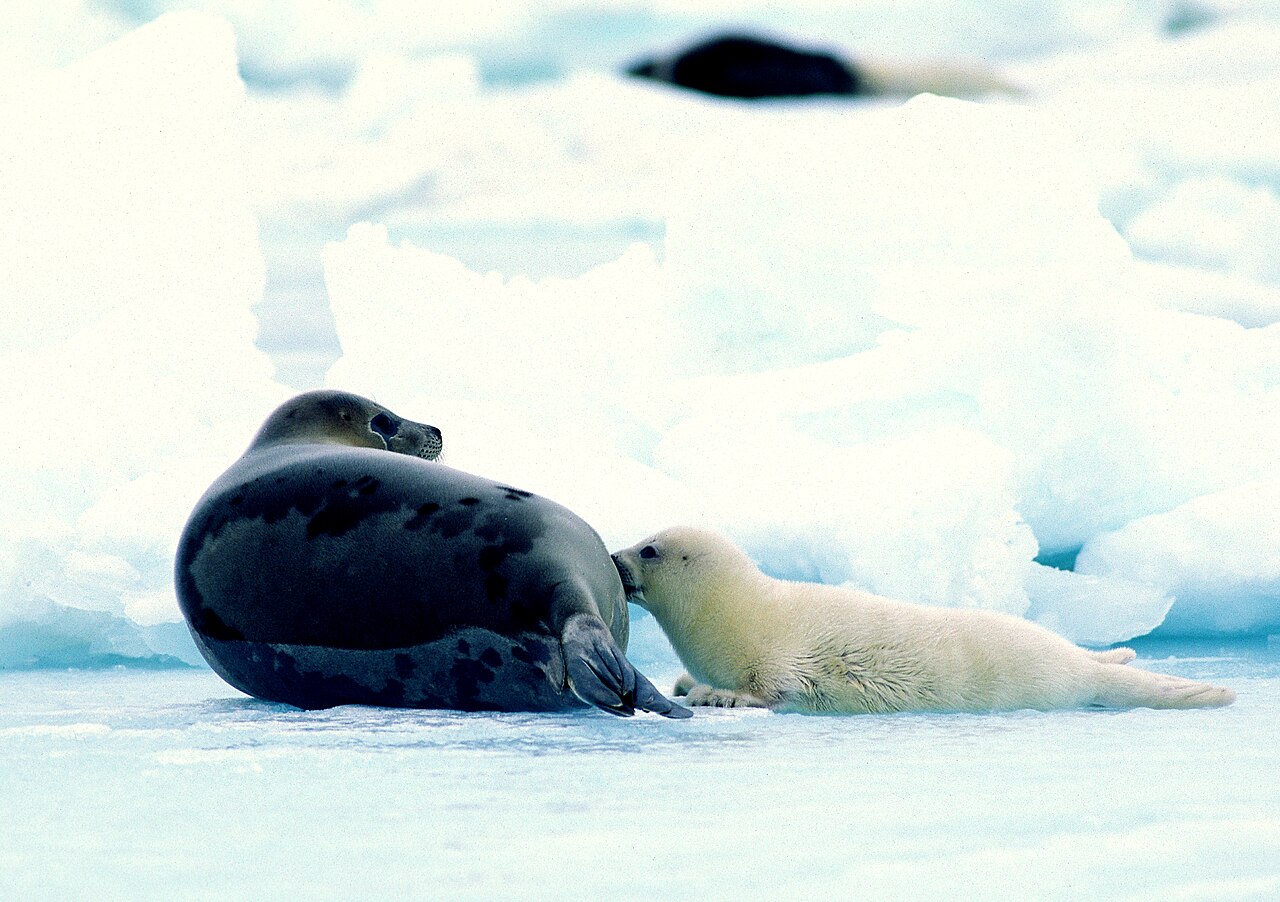
The Norwegian Polar Institute explains the later juvenile stages and the very different markings of mature harp seals. The adult's dark harp-shaped pattern gives the species its name.
A short, demanding start
Mothers nurse their pups during an intensive early period. The young must grow and build reserves before the next stage of life.
A pup resting alone should not automatically be assumed abandoned. Wildlife needs space, and close approaches can disrupt animals during a vulnerable time.
A nursery shaped by a changing sea
NOAA identifies sea-ice changes as an important concern for harp seals. The timing and condition of ice affect where mothers can give birth and young can develop.
The fluffy white coat may be what draws us in. Understanding the ice beneath the pup helps us see the larger story: a remarkable beginning that depends on a working northern ecosystem.
Photo credits
Featured image: Hotel Kaesong; Wikimedia Commons source; CC BY-SA 2.0. Resized for web display.

Body image 1: Visit Greenland; Wikimedia Commons source; CC BY 2.0. Resized for web display.

Body image 2: Lysogeny; Wikimedia Commons source; CC BY-SA 4.0. Resized for web display.
