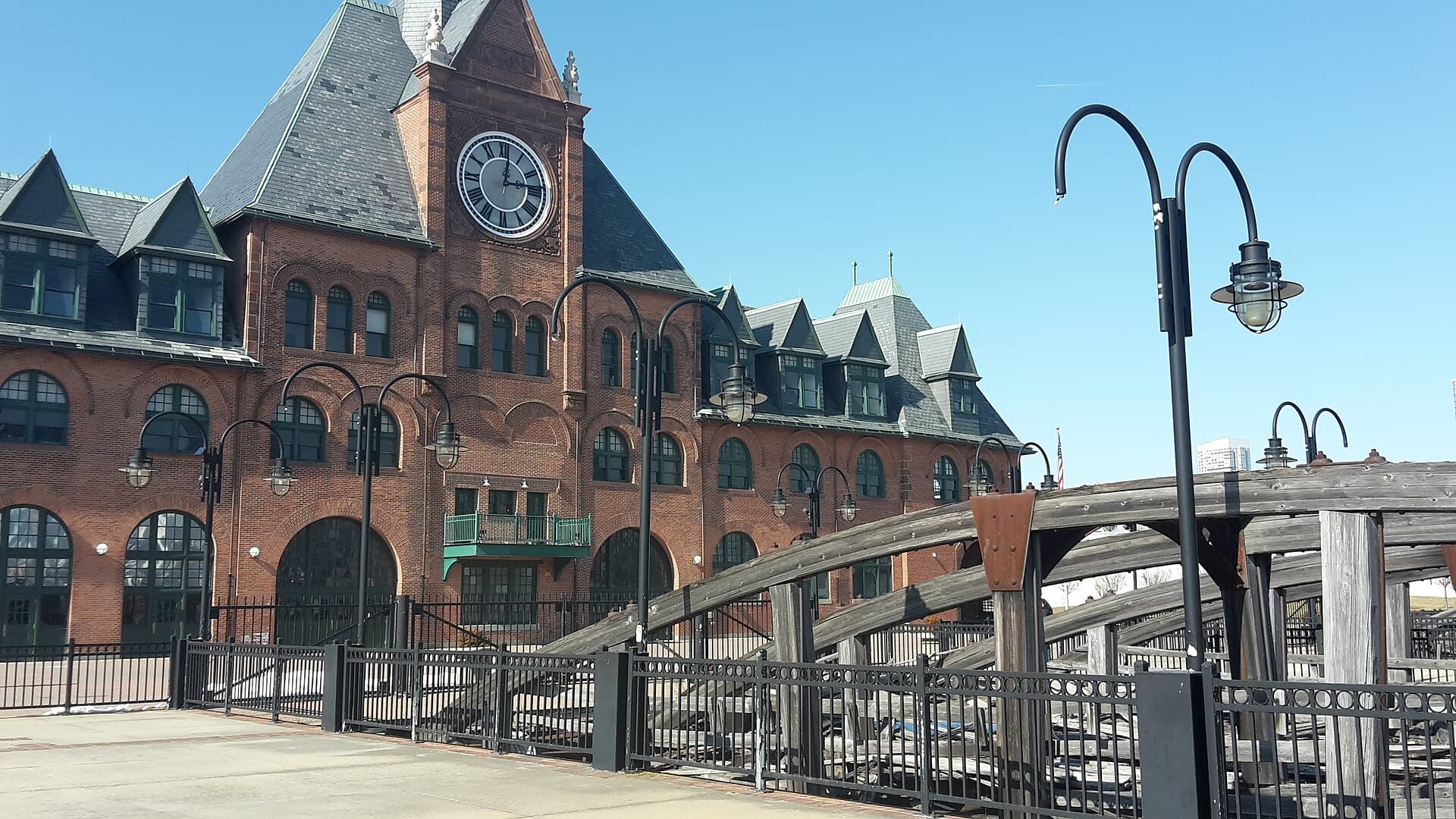
A grand station faces Manhattan, but its trains no longer leave the platforms.
The CRRNJ Terminal, formally the Central Railroad of New Jersey Terminal, stands in Liberty State Park in Jersey City. Also called Communipaw Terminal, the 1889 landmark once connected trains with harbor ferries. Rail service ended in 1967, but the restored terminal now serves visitors and remains part of the journey to Ellis Island and the Statue of Liberty.
It is an especially useful place to understand New York Harbor before modern travel patterns. The water was not merely scenery beside the station. It was a necessary part of the route.
Why the CRRNJ Terminal faced the water
The railroad’s Jersey City waterfront facilities linked inland rail routes to ferries across the Hudson. Travelers moved between two forms of transportation, rather than expecting a train to carry them directly into Manhattan.
An earlier terminal opened in 1864. The larger building that survives today followed in 1889, reflecting the growing demands of the waterfront rail operation. The Jersey City Free Public Library’s historical guide places the terminal within the development of the city’s rail and ferry network. Library history of the terminal
The location helps explain its role in immigration. After processing at Ellis Island, many newcomers continued toward destinations beyond New York. A railroad gateway on the harbor connected the arrival story with the next stage of the journey.
It is better to picture several linked systems than one dramatic doorway into America: ships, inspection facilities, ferries, stations, and routes reaching inland.
A building designed to announce arrival
Red brick, a prominent clock tower, and a broad waterfront presence distinguish the terminal from a simple platform shelter. The architecture made a working transportation building into a civic landmark.
The public library identifies Peabody & Stearns as the architects. Later expansion included a large Bush train shed, adding capacity behind the better-known headhouse. Jersey City Free Public Library
The headhouse and the train shed should be understood as different parts of the complex. The building seen in most waterfront photographs handled people before they reached the tracks.
That distinction makes a visit more revealing. Stand back and look at the relationship between the decorative entrance and the long operational spaces beyond it. One welcomed travelers; the other organized departures.
What happened when rail service ended
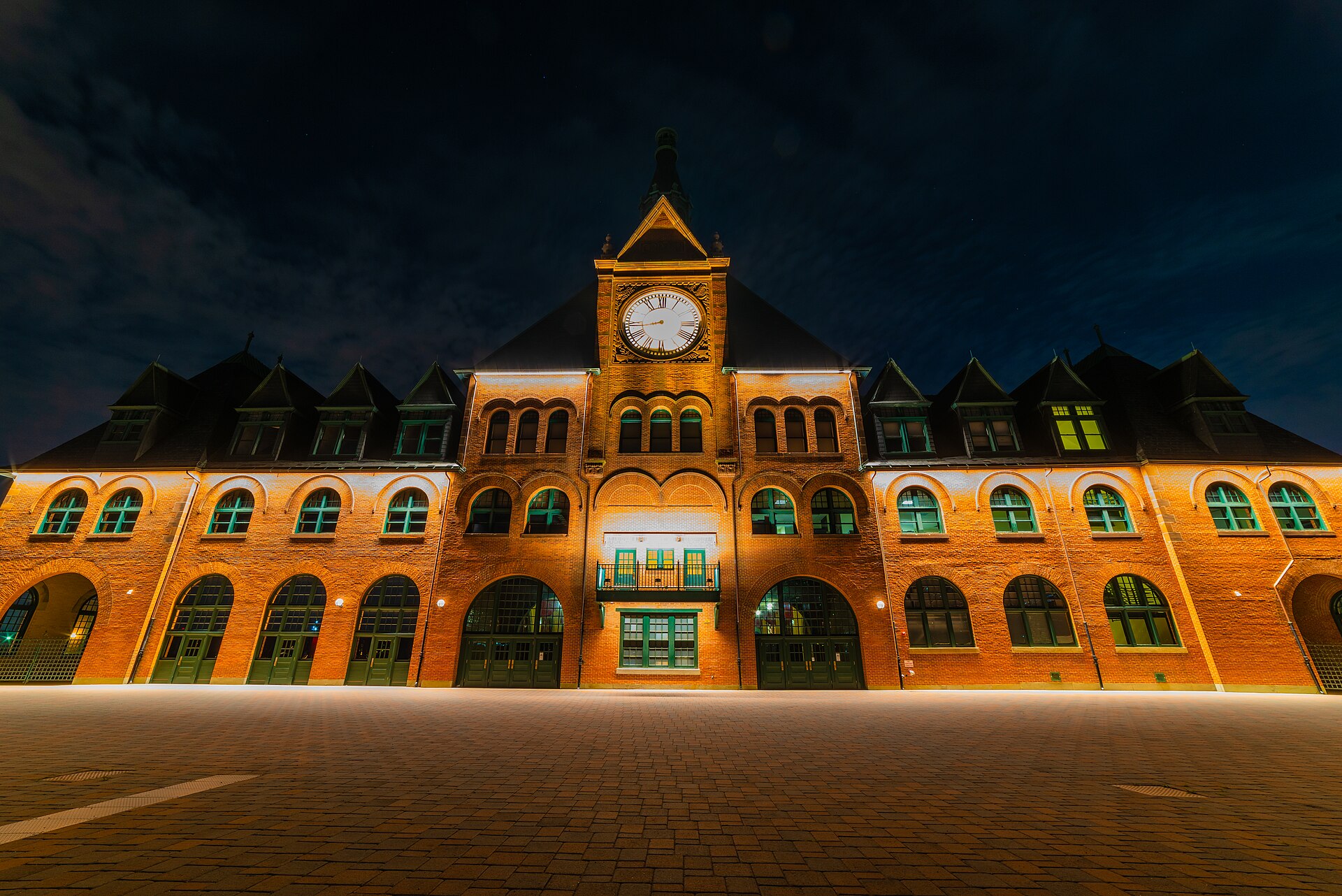
The railroad’s financial collapse brought passenger service at the terminal to an end in 1967. The site then passed through a period of disuse before becoming part of the public landscape associated with Liberty State Park. New Jersey State Park Service
The photograph above shows the illuminated facade in 2018. It is evidence of a preserved landmark, not an operating rail timetable hidden behind old walls.
The terminal is sometimes grouped with abandoned stations because its original function disappeared. That description needs qualification today. The headhouse has been restored and serves public uses, even though passenger trains no longer arrive there.
A building can retain reminders of abandonment without remaining wholly abandoned. At Communipaw, that mixed condition is part of what visitors encounter.
Restoration had to account for the harbor
Water helped make the terminal successful, but it also created a major preservation challenge. Superstorm Sandy caused extensive flooding and damage to building systems and historic materials.
Engineering firm STV, which led the restoration work, describes repairs to windows, roofing, skylights, stained glass, and woodwork. The project also placed building systems higher to improve resilience against future flooding. STV restoration project
Those interventions show why preservation is not simply a matter of reproducing an old appearance. A historic structure must also cope with present environmental risks.
New Jersey’s continuing capital-project documents, including work on terminal building systems, further underline that restoration is followed by maintenance. A landmark’s reopening is a milestone, not the end of responsibility for it. New Jersey terminal project scope
Planning a visit from Liberty State Park
The terminal is at 1 Audrey Zapp Drive in Jersey City. The State Park Service lists free admission to the terminal, with seasonal opening hours. Confirm the current schedule and any closures before setting out.
Ferry trips to Ellis Island and the Statue of Liberty require their own arrangements. Visiting the terminal does not automatically provide a ferry ticket or access to every nearby attraction. Official terminal visitor information
Allow time for the exterior rather than rushing straight to the ferry. The waterfront setting explains the building’s function almost as clearly as an exhibit.
Stay within open visitor areas and obey barriers around rail structures or work zones. Historic platforms and sheds are not automatically public walking routes because the headhouse is open.
The terminal makes a good place to pause before or after an island visit. Ellis Island explains arrival and inspection; Communipaw reminds visitors that many journeys continued well beyond the harbor.
Frequently asked questions
What does CRRNJ stand for?
It stands for Central Railroad of New Jersey, the railroad associated with the historic terminal.
Do passenger trains still use the terminal?
No. Rail service at the terminal ended in 1967. Its present role is tied to heritage, public visitation, and harbor travel.
Is Communipaw Terminal a different building?
No. Communipaw Terminal is another name for this Jersey City landmark.
Is terminal admission the same as a ferry ticket?
No. Terminal admission and ferry transportation are separate. Check the park and authorized ferry operator before your visit.
Image credits
Featured image: Aude, CC BY-SA 4.0.

Body image: Santhosh Janardhanan, CC BY-SA 2.0.
