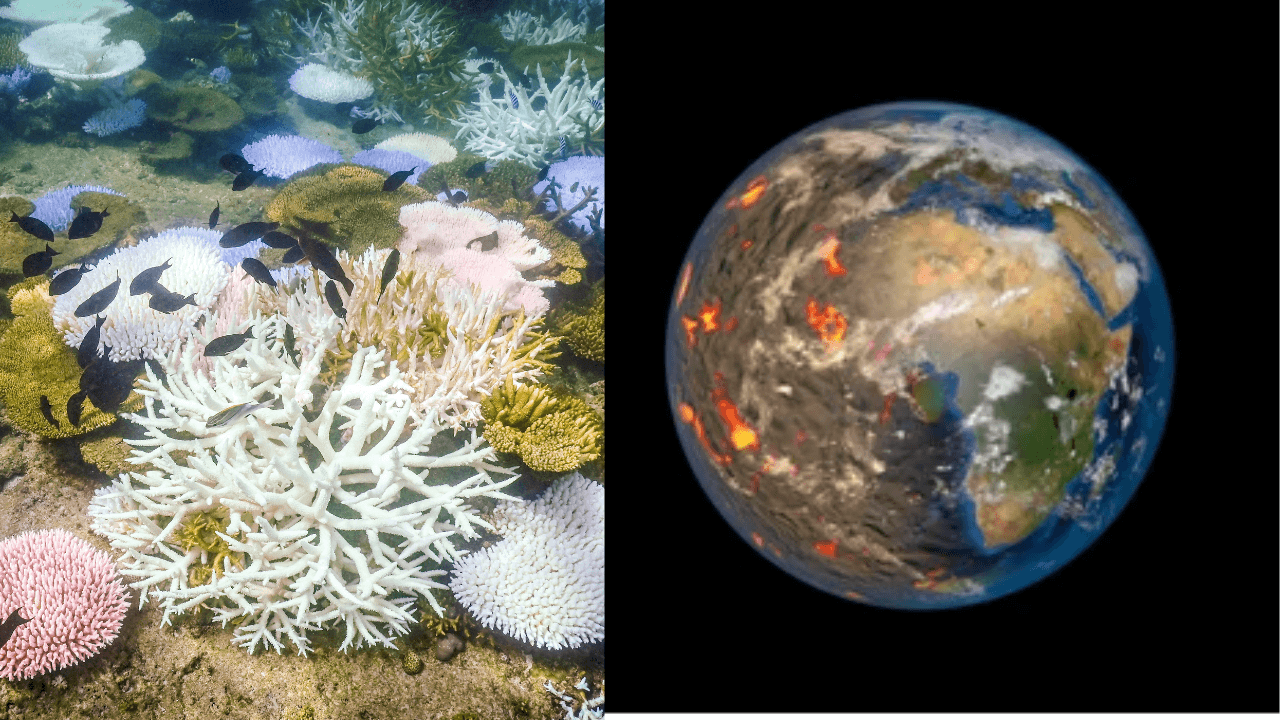
As scientists gather and share findings across the globe, the news echoes louder: we have crossed a critical threshold in climate change. The world’s warm-water coral reefs, formerly vibrant ecosystems that housed a quarter of all marine life, are dying off at an unprecedented scale. Reports confirm that even if we were to hit net-zero carbon emissions tomorrow, the majority of these magnificent reefs would still vanish forever. This stark reality leaves us gripped in a state of disbelief as we grapple with the consequences.
In recent studies, experts observed alarming patterns. Oceans have warmed significantly, leading to mass coral bleaching, where corals expel the algae that give them color and nourishment. Rarely, these corals can return, but the odds have dwindled with rising temperatures. Coral reefs, the intricate homes to countless species, are now facing widespread dieback, with estimates showing nearly every coral reef could become functionally extinct.
One passionate marine biologist, Dr. Sara Jenkins, stated, ‘When corals die, it’s not just the end of a species; it’s the beginning of a much larger ecological disaster. This event is just the first domino of many yet to fall.’ The implications stretch beyond marine life—they impact global biodiversity, coastal protections, and economies that rely on fishing and tourism. So, what’s next?
The death of these ecosystems marks more than just a moment—a historical milestone in climate degradation. It is both shocking and tragic to witness the shift from vibrant reefs to barren marine deserts. As one expert put it succinctly, ‘We’re now operating in a climate reality that would have seemed unimaginable just a decade ago.’ An overwhelming number of studies have signaled this cascading effect. According to a recent report from The Guardian, ‘Without immediate action to halt global heating, the world can expect to see not just coral collapse, but potentially catastrophic shifts in other systems.’ This raises an unsettling question: What has occurred after this tipping point?
For many, the future seems grim. Following the announcement of this tipping point, activist groups and scientists joined forces to advocate for swift policy changes. Yet critiques resound that efforts are too little, too late. Countries are struggling with their own challenges, often prioritizing short-term economic stability over long-term ecological health.
As we navigate through the resilience and heartbreak of these changes, we have to reflect on what this means for future generations. Will we have the courage to face this daunting reality and reframe our priorities to save our planet? This is a human story, weaving together science, emotion, and urgency. Our actions moving forward could either cement our fate or lead us toward a more sustainable future.
In the cacophony of news reports and scientific warnings, we need to ask ourselves: how will we respond to these warnings? How will we live with the impact of our actions on a planet that has begun to show signs of irreversible damage? Now is the time to speak up—not just for the corals, but for the future of our world.
Disclosure: We may earn a commission when you make a purchase through the ads.