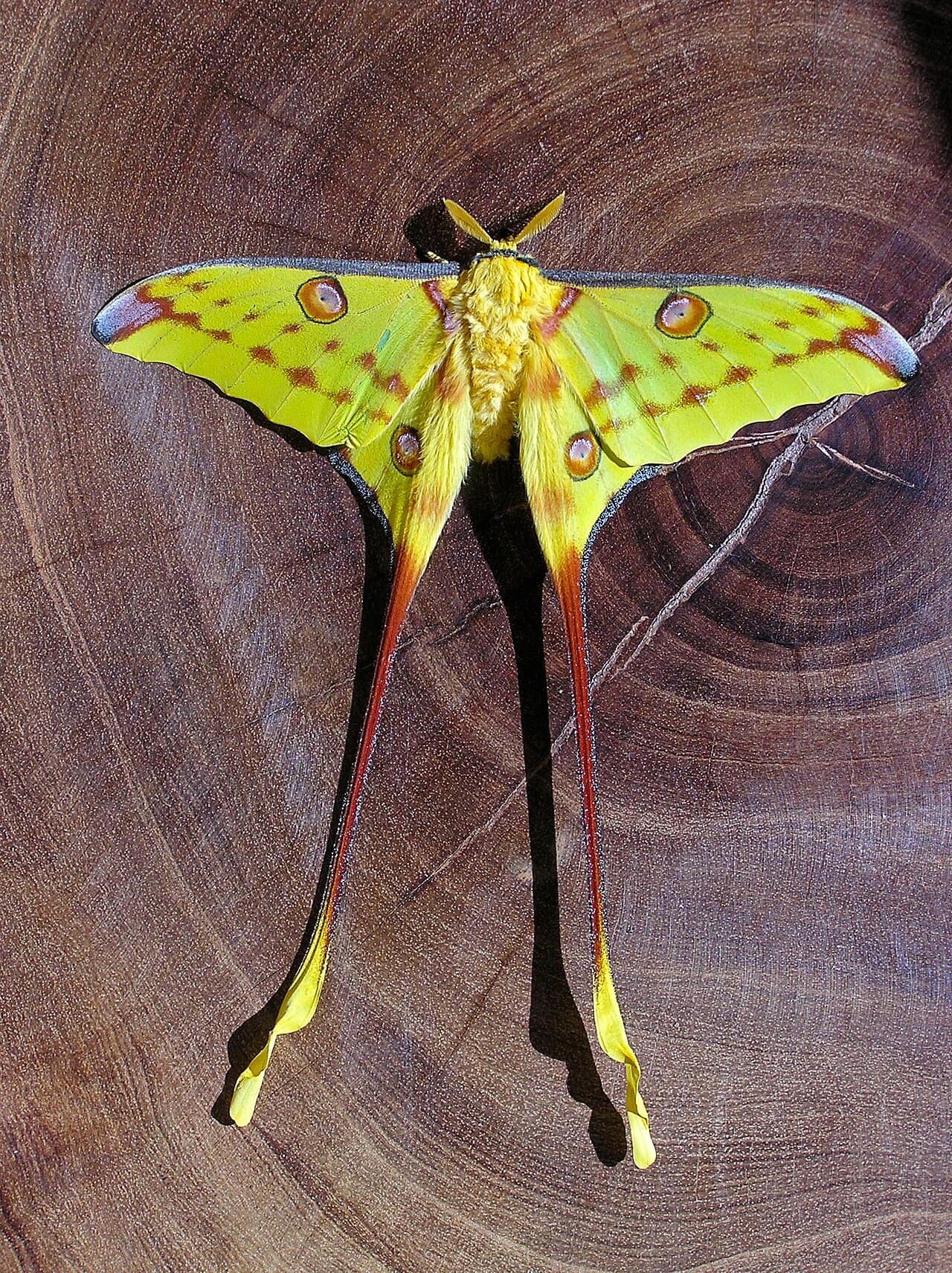
The comet moth carries long extensions from its hindwings, giving a yellow insect the outline of something trailing through space. Those tails explain one of its memorable common names.
Argema mittrei is also called the Madagascan moon moth. It comes from Madagascar, an island with an extraordinary variety of distinctive wildlife.
Tails that invite a closer look
Males have especially long, narrow tails. The wings also bear eye-like spots, adding another layer to the pattern.
The Natural History Museum's moon-moth profile discusses the idea that trailing tails help divert bat attacks from a moth's body. That explanation draws on research into tailed moths; appearance alone cannot show exactly what happens in every encounter.
A still photograph reveals the shape. Understanding its possible defensive value requires observing flight and predators.
A short adult chapter
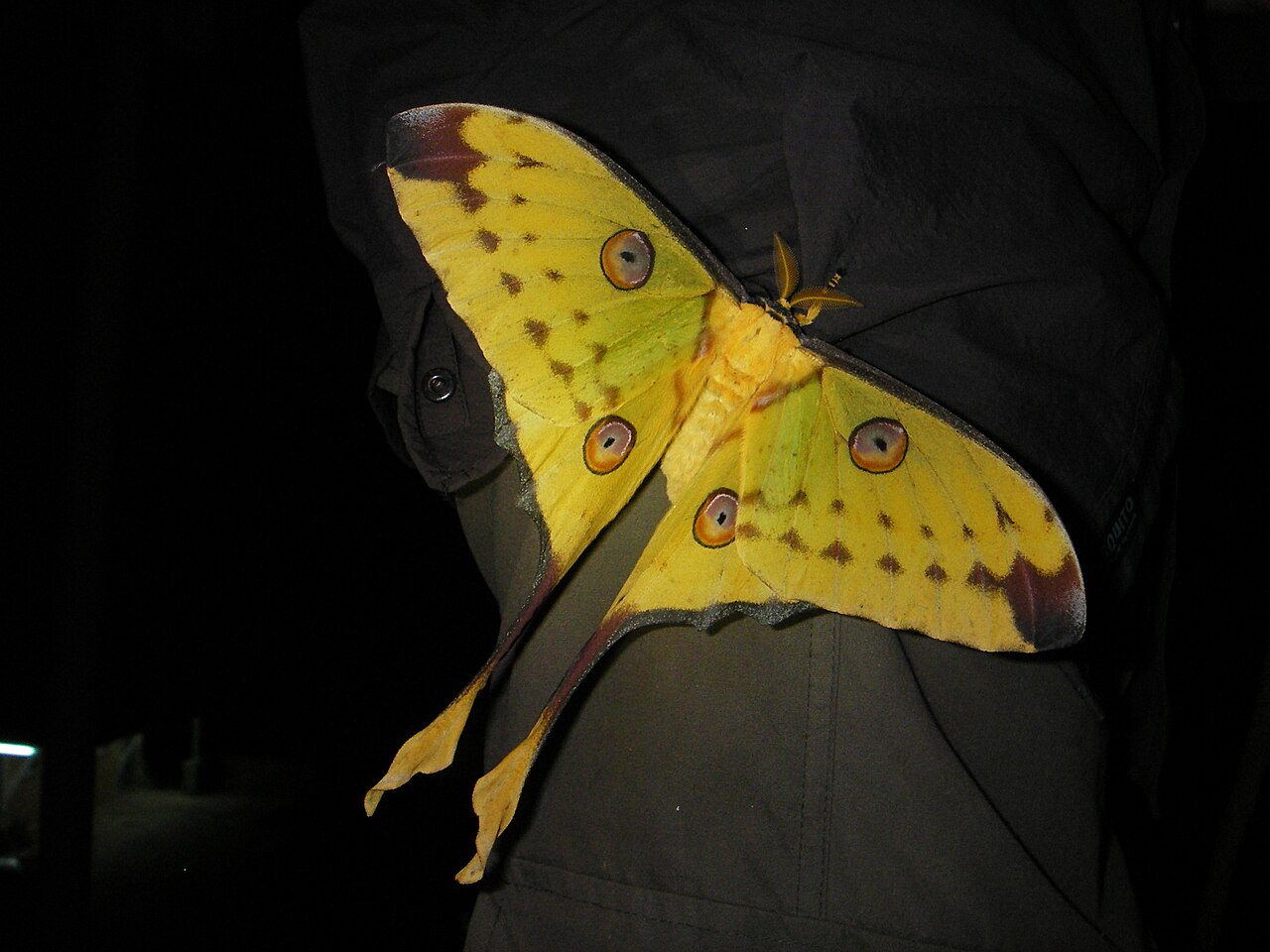
The adult does not feed. Stored energy must support its brief life, including finding a mate.
Large, feathery male antennae help detect the female's chemical signals. What looks like decoration is a sensitive tool.
The caterpillar has a different job: eating plants and growing before it spins a cocoon.
A cocoon with unanswered questions
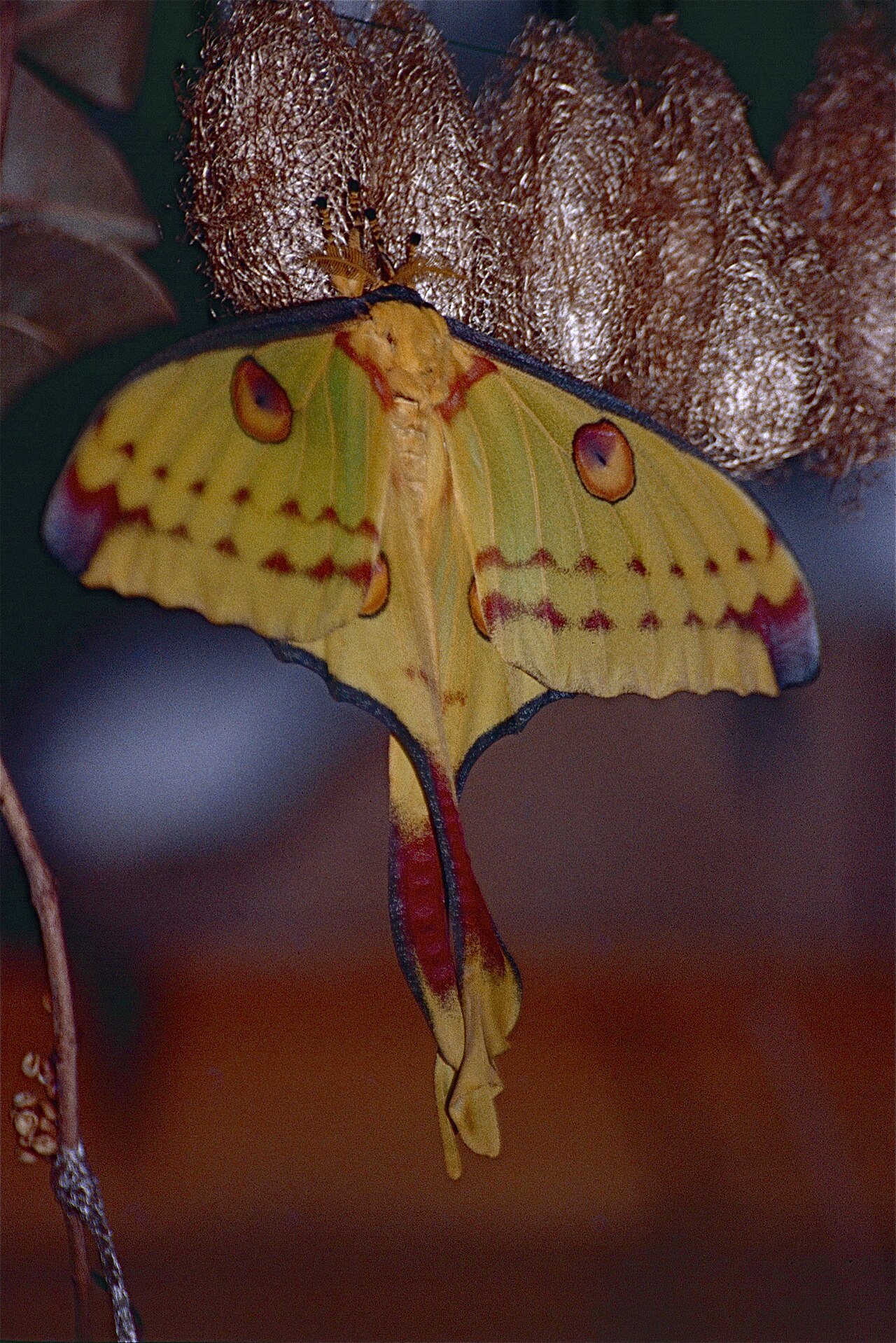
The silken cocoon has holes. Museum researchers suggest these could help rainwater drain, while acknowledging uncertainty about why particular cocoons develop their forms.
Historical field observations published by the Lepidopterists' Society associate the species with Madagascar's eastern rainforest.
Protecting forest habitat preserves the setting for more discoveries about animals like this one.
The comet moth's beauty is immediate, but its full story takes patience: a hungry caterpillar, a sheltered pupa, and finally a brief yellow shape with long tails moving through the night.
Photo credits
Featured image: Comet Moth (Argema mittrei) male (7112691481).jpg — Bernard DUPONT from FRANCE; CC BY-SA 2.0.

Body image 1: Argema mittrei 01.JPG — Axel Strauß; CC BY-SA 3.0.

Body image 2: Comet Moth (Argema mittrei) on cocoon (9671560483).jpg — Bernard DUPONT from FRANCE; CC BY-SA 2.0.

Photographs resized for web display where available.