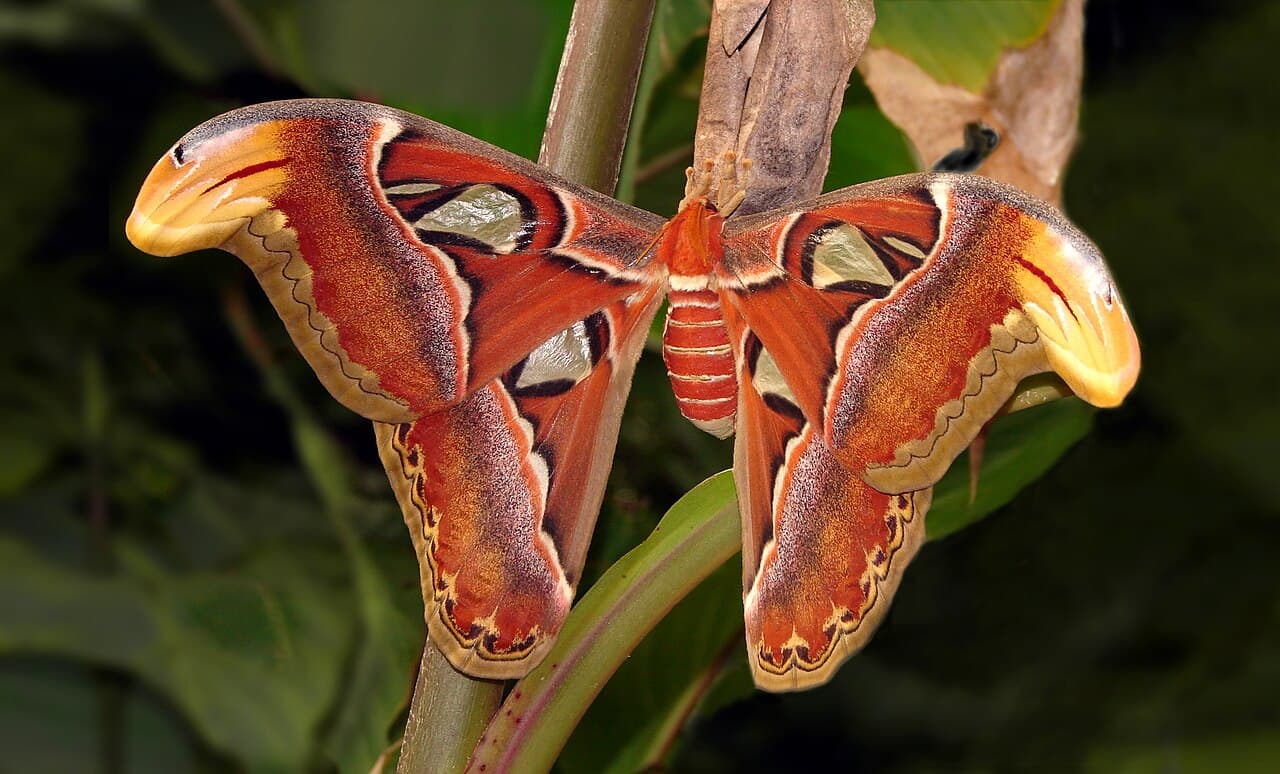
An atlas moth can spread wings about 27 centimeters across, yet the adult cannot feed. A very large flying insect begins its final stage with a fixed supply of energy.
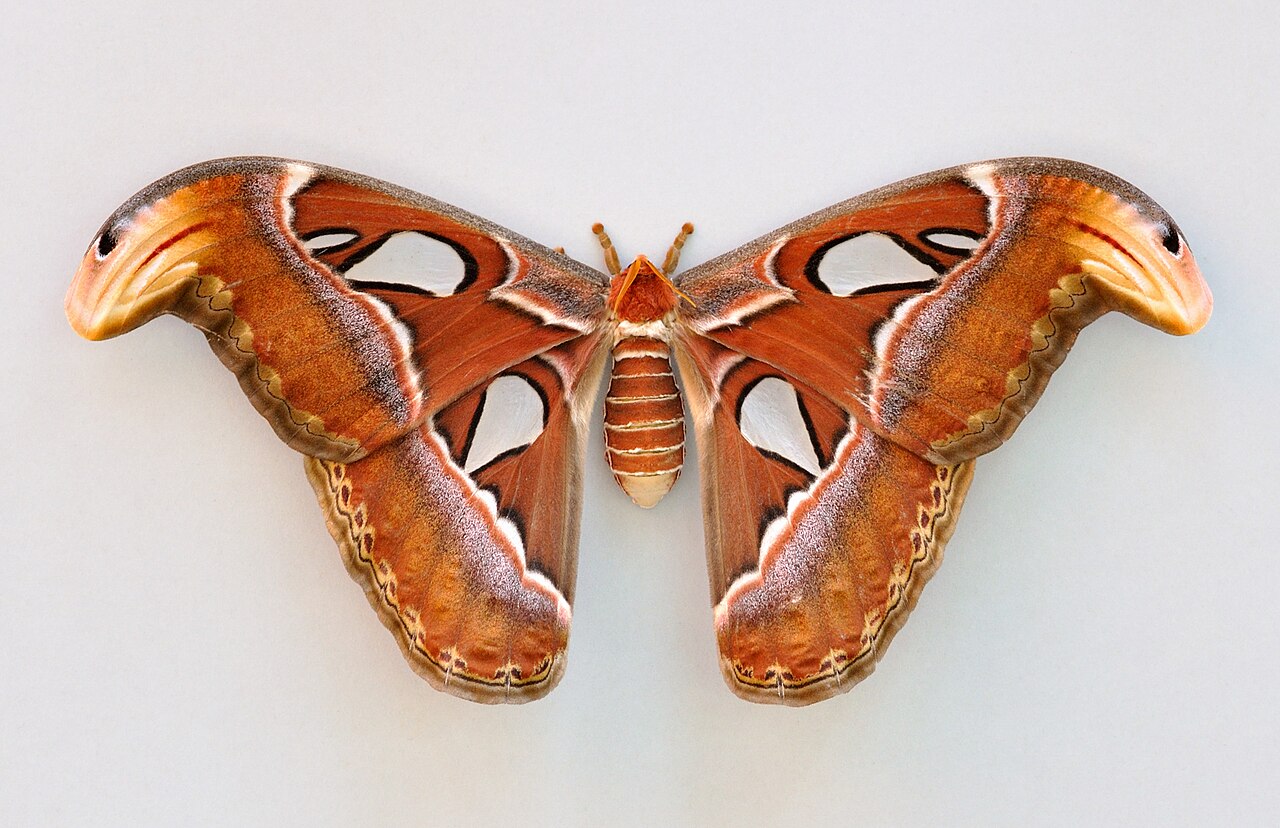
Attacus atlas is one of the world's largest moths. Its broad wings carry curved lines, pale windows, and outer tips that resemble snake heads.
Look at the wing tips
The Natural History Museum's atlas-moth profile describes the resemblance behind a Cantonese name meaning snake's head moth.
It is a resemblance in shape and pattern, not a real head. The actual moth's head remains small between the front wings.
The “largest moth” label also needs care. A record based on wing area is different from a record based on wingspan. “One of the largest” tells the story without turning several measurements into one contest.
The caterpillar pays the energy bill
Before pupation, atlas moth caterpillars eat leaves and build reserves. The adult's feeding tube is reduced and does not function.
The museum explains that adults rely on the energy stored earlier in life. Resting for much of the day helps conserve it.
The wide wings may dominate a photograph, but the earlier caterpillar made that adult life possible.
A forest animal, even in a butterfly house
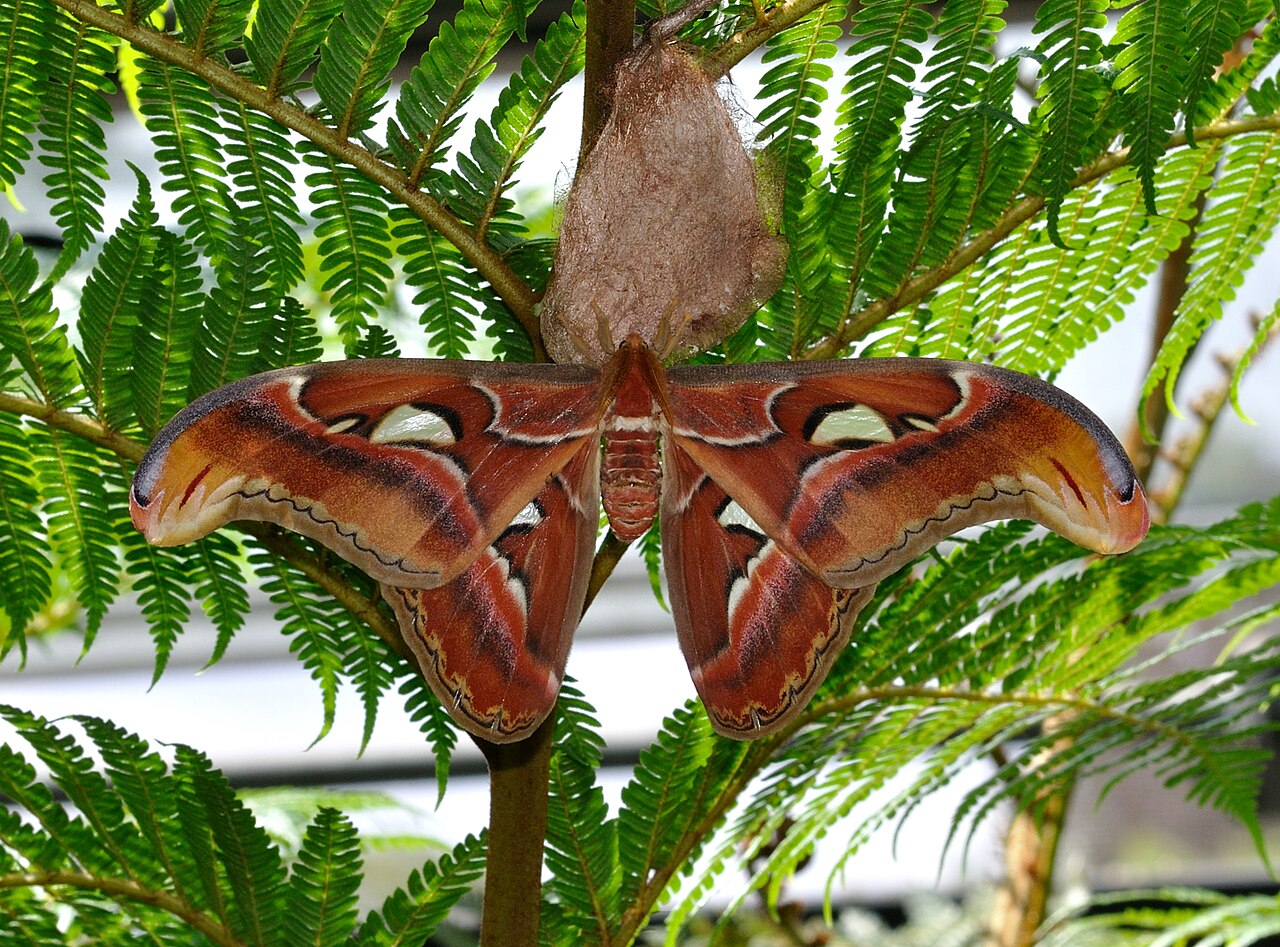
Atlas moths are native to parts of Asia. The photographs here include living animals in managed insect displays, where their patterns can be studied at close range.
Seeing an animal under human care is also a chance to ask what supports it in nature: food plants, shelter, and room for its life cycle.
The atlas moth rewards more than a quick reaction to size. Follow the wing tip inward, notice the tiny head, and imagine the feeding stage behind a giant that has already eaten its last meal.
Photo credits
Featured image: Attacus atlas London Zoo 01118-2.jpg — London_Zoo_01118.jpg : Nevit Dilmen ( talk ) derivative work: Hic et nunc; CC BY-SA 3.0.

Body image 1: Attacus atlas qtl1.jpg — Quartl; CC BY-SA 3.0.

Body image 2: Attacus atlas qtl3.jpg — Quartl; CC BY-SA 3.0.

Photographs resized for web display where available.