
A coati often explores with its nose first. Its long, flexible snout moves through leaves and around obstacles, helping it investigate a forest floor full of possible meals.
The raised tail may catch our eye, but the nose is one of the animal's most useful tools.
Meet the white-nosed coati
Coatis are relatives of raccoons. This profile focuses on the white-nosed coati, Nasua narica, rather than combining all coati species into one animal.
San Diego Zoo's coati overview describes these curious mammals and their adaptable feeding habits. A coati can search for invertebrates, eat fruit, and use its claws to uncover food.

Why the nose matters
A flexible snout lets a coati investigate narrow spaces and sift through the scents close to the ground. Strong forelimbs and claws add digging power.
It can also climb. Moving into trees provides access to places a ground-only forager would miss. Its tail helps with balance, but it is not a gripping, prehensile tail.
A group is not the whole population
Female coatis and young often travel in bands. Adult males tend to spend more time alone outside the breeding period, as described in Animal Diversity Web's species account.
That difference matters when interpreting a photograph. A lone coati is not automatically lost, and a group does not mean every individual follows the same social pattern.
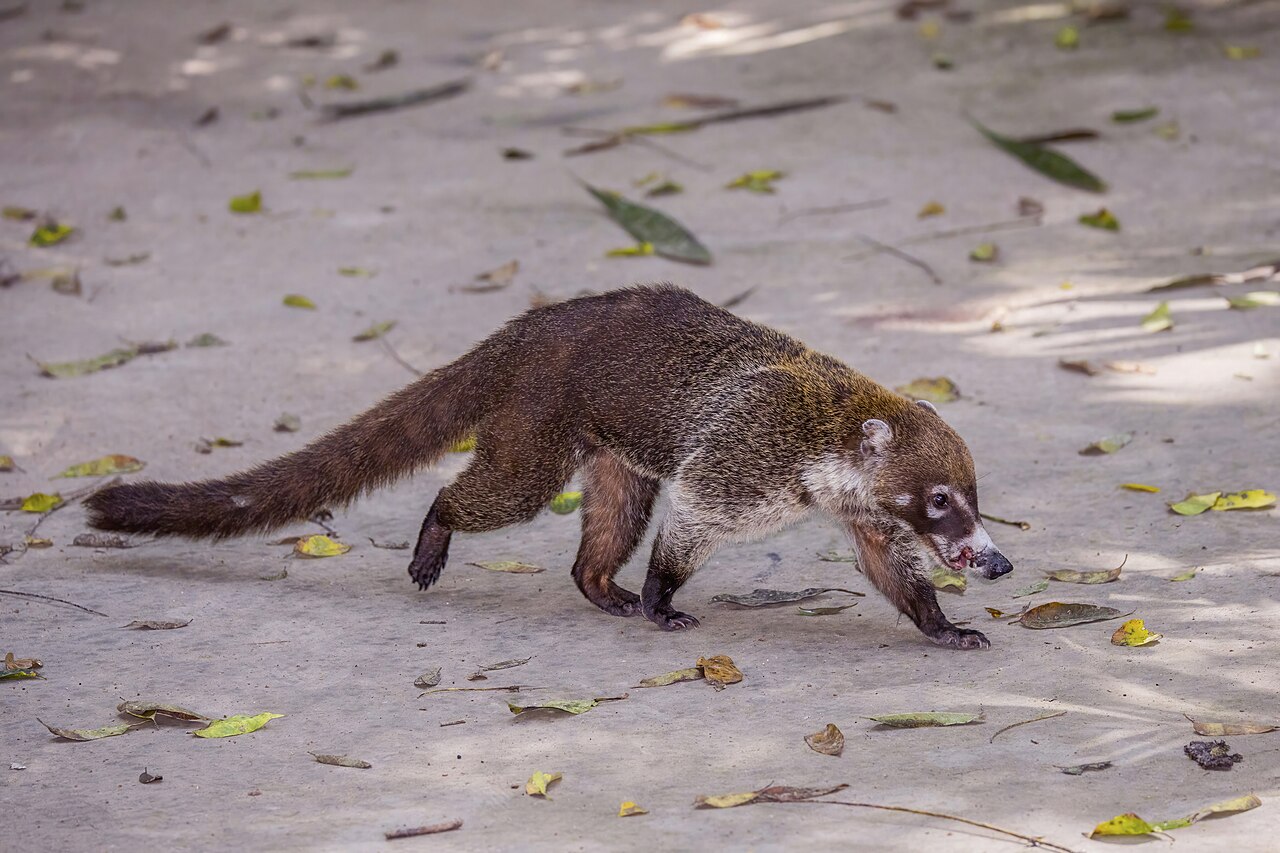
Curiosity needs space
Coatis can seem comfortable near people, but their interest in food does not make feeding them a good idea. Watching natural foraging gives a far better view of their skills.
Leave food secure and allow wildlife to keep its distance. A coati turning over leaves, following a scent, and climbing away has a much more interesting story to tell than one waiting for a handout.
Photo credits
Featured image: Giles Laurent; Source; CC BY-SA 4.0. Resized for web display.

Body image 1: Giles Laurent; Source; CC BY-SA 4.0. Resized for web display.

Body image 2: Charles J. Sharp; Source; CC BY-SA 4.0. Resized for web display.
