The old rides stopped in 1978. Decades later, people are returning for a different kind of day outside.
Chippewa Lake Park in Medina County, Ohio, operated as an amusement destination from 1878 to 1978. After decades of abandonment, the Medina County Park District acquired the former park in 2020. A first phase of public access opened in 2026, with the Tumble Bug Trailhead and a short walking loop.
This is no longer simply a story of rides disappearing into trees. It is also a story of a community finding new uses for a place filled with shared memories.
A lakeside gathering place became an amusement park
Chippewa Lake’s appeal began with the landscape. The water and surrounding grounds provided a place for people to gather, picnic and spend time away from their daily routines.
The park district’s master plan traces the transition from picnic grounds to an amusement destination.
Over time, rides, entertainment and other facilities expanded the experience. Visitors could come for more than a view of the lake.
That combination helped the park become part of regional life. A lakeside outing might include a ride, a performance or a meeting with friends.
A century of summer memories
The amusement park operated for one hundred years, from 1878 to 1978. A Medina County newsletter records that span and describes the rides, hotel and ballroom among its attractions.
Music was an important part of the park’s identity. A 2026 Ideastream Public Media feature recalls performances and company outings alongside the amusement rides.
The same report describes the role of the interurban railway in bringing visitors to the area during the early twentieth century.
Old tickets, photographs and ride cars preserve pieces of that experience. They can make a vanished day out feel surprisingly specific.
Why Chippewa Lake Park closed
By the later twentieth century, the park faced competition from larger entertainment destinations and changing regional conditions.
OHM Advisors, which worked on the site’s master plan, identifies amusement-park competition and local industrial decline among the factors behind the 1978 closure.
That explanation fits a broader change in leisure. Families had more choices, and older attractions had to compete with larger rides and newer facilities.
The closure did not erase local attachment. It separated the memories of a working park from a property that no longer had the same business purpose.
For years, that gap defined Chippewa Lake. People remembered the crowds while trees and weather changed the empty grounds.
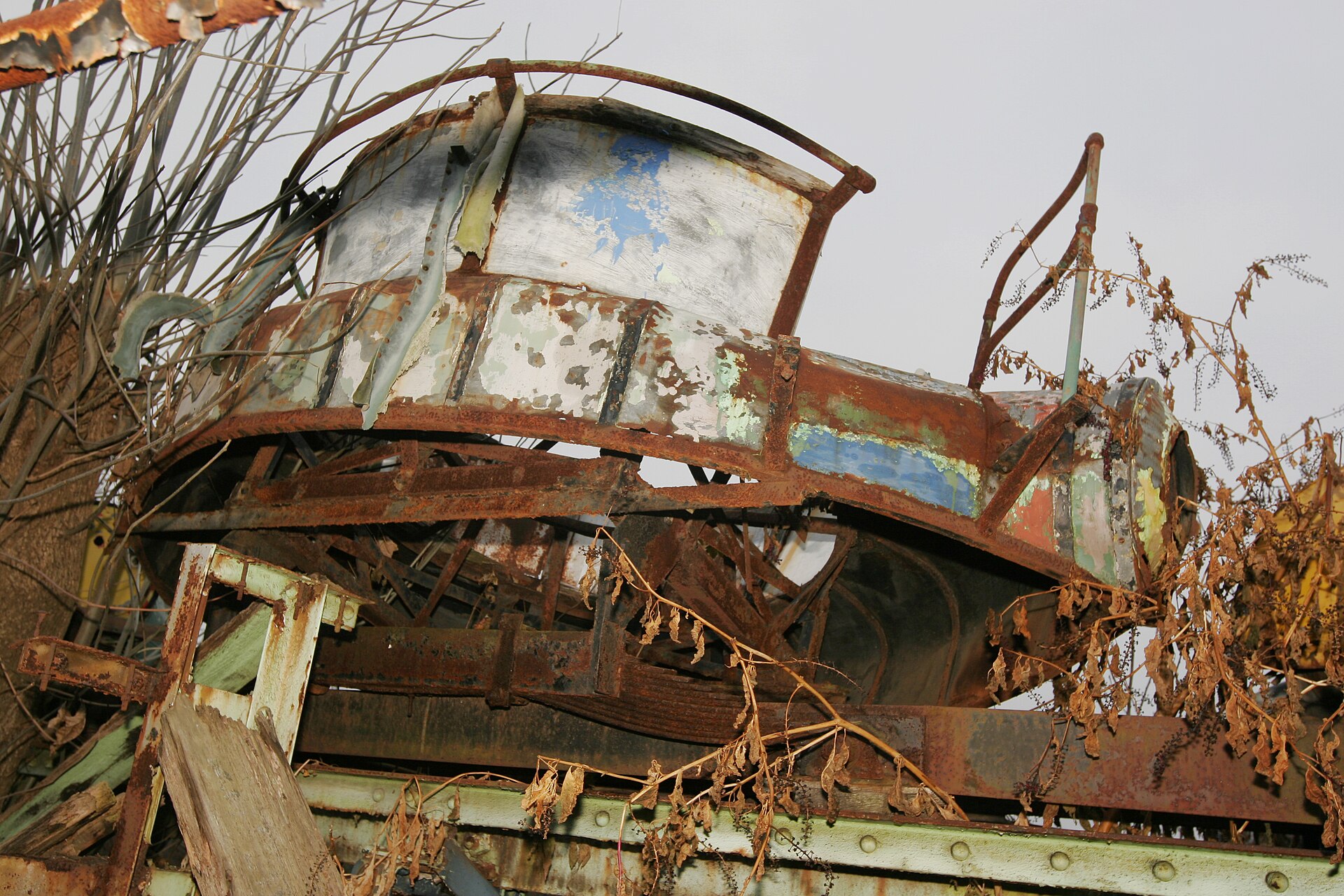
The Tumble Bug photograph dates from 2010. It shows a weathered remnant during the years of abandonment, not a functioning ride or the current public trail.
What abandonment left behind
The master plan describes vegetation reclaiming the property and the later removal of many amusement structures. The familiar photographs therefore document stages in a changing landscape.
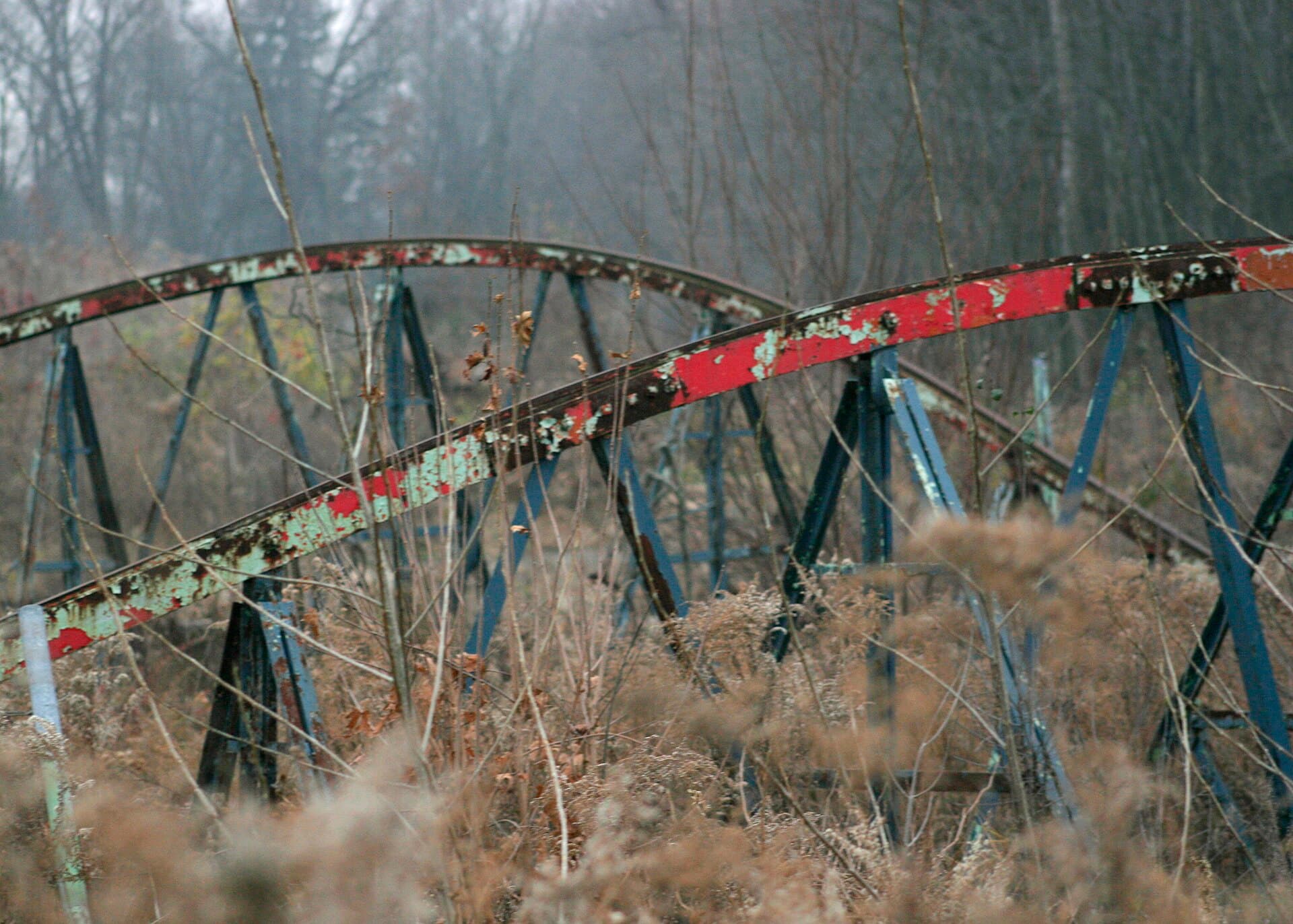
The featured image records old ride track in 2010. Its peeling paint and surrounding growth make the passage of time visible.
But a compelling ruin photograph is not a current site inventory. Some objects have disappeared, others have been preserved, and public access now follows a managed plan.
This is why the old advice to find a way through a fence is both inappropriate and outdated. The property has an owner responsible for opening areas safely and interpreting what survives.
A new public chapter
The park district purchased the 93-acre former amusement-park property in June 2020. It had already acquired the lake in 2007.
The official local project page describes the first public phase: the Tumble Bug Trailhead at 5796 Longacre Lane.
Opened in May 2026, that phase includes parking, restrooms, a shared picnic shelter and a half-mile accessible gravel loop.
Future extensions are part of the plan. They should not be assumed open simply because they appear on a drawing.
The new use returns to something older than the rides: the site as a place to gather outdoors. Its amusement history remains part of the identity, but the park’s next life has a different purpose.
Find the history in the museum
The Chippewa Lake Ohio Historical Society maintains a local museum with artifacts from the amusement park and surrounding communities.
Its published schedule is seasonal, with appointment arrangements also available. Check directly before visiting outside the summer period.
The society’s work offers a different kind of preservation from leaving machinery outdoors. Objects can be collected, identified and connected with the people who used them.
A ticket booth or ride car may tell a clearer story with a photograph and explanation beside it than when hidden in vegetation.
Pairing a museum visit with the public trail makes the old and new chapters easier to understand together.
Plan for the park that exists now
Use the designated trailhead and stay within open areas. A short public loop does not mean every former ride site or structure is accessible.
Check the park district’s current information for construction, closures and permitted activities. Do not climb old equipment or remove fragments as souvenirs.
Chippewa Lake’s return is meaningful because it gives people another reason to care about the place. The rides may be still, but the landscape is becoming part of community life again.
Frequently asked questions
Are the amusement rides operating again?
No. The new public use centers on trails, open space and historical interpretation.
When did Chippewa Lake Park close?
The amusement park closed in 1978 after operating since 1878.
Can you visit the former grounds legally?
Yes, designated public areas are open through the Tumble Bug Trailhead. Follow current boundaries and signs.
Is there a museum about the park?
Yes. The local historical society maintains a museum with seasonal hours and appointment options.
Image credits
Featured image: Dana Beveridge from Chicago, IL, USA, CC BY 2.0. Body image: Dana Beveridge from Chicago, IL, USA, CC BY 2.0. Images via Wikimedia Commons.

