The presidents lost their park, but the enormous faces survived the move.
Presidents Park near Williamsburg, Virginia, opened in 2004 and closed in 2010. Its giant presidential sculptures were later saved from demolition and moved to private property. Today, access to the collection is limited to published tours and photography workshops at a working industrial site.
The original landscaped attraction and the present location are different places. That distinction is the first thing to understand before following a map or an old photograph.
A park built around presidential faces
Presidents Park was a collaboration between local entrepreneur Everette “Haley” Newman and sculptor David Adickes. The current tour site’s history records its brief operating life.
Instead of displaying small portraits in a gallery, the attraction placed monumental busts outdoors. Visitors could walk among familiar faces at a scale that made them feel unfamiliar.
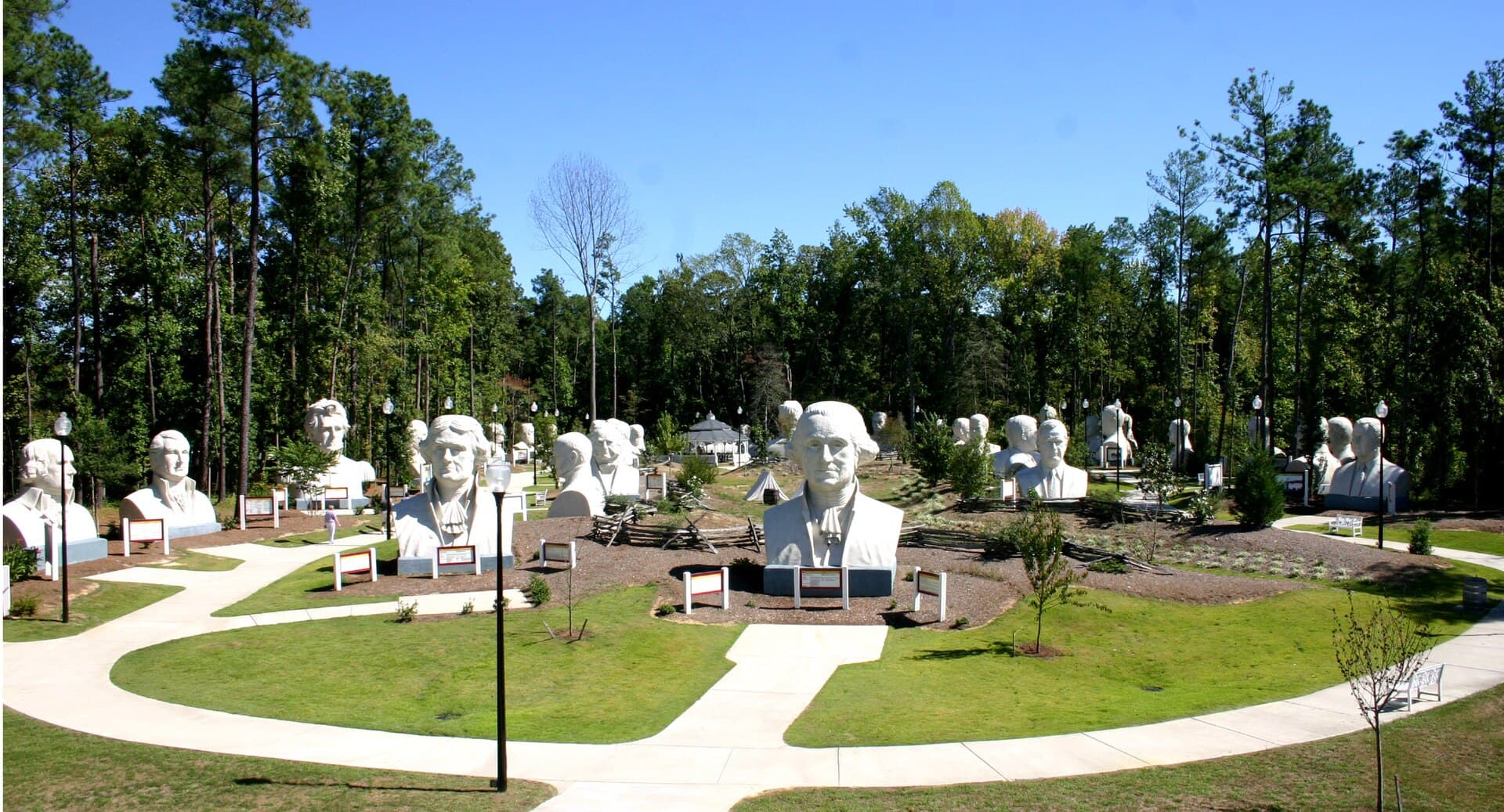
The featured photograph shows the original park in 2005. Paths, lawns, signs and trees framed the sculptures as an orderly outdoor museum.
That setting matters. The heads were not originally arranged as a collection of ruins, and their weathered modern appearance was not the initial artistic concept.
Seeing the earlier landscape helps explain how dramatically their meaning changed after the park closed.
The sculptor’s larger idea
Adickes was known for large works, and his official art website describes the presidential-head project as part of his work in steel and concrete.
The familiar subject creates an immediate connection. A visitor may recognize Washington or Lincoln before reading any label.
Scale then disrupts that familiarity. A face normally encountered on a page, coin or classroom wall becomes an object larger than the viewer.
This combination helps explain the sculptures’ appeal. They can be approached as portraits, roadside spectacle or a study in how public figures become visual symbols.
The Virginia collection is one part of Adickes’s wider sculptural work. Not every photograph of one of his presidential heads was taken at Presidents Park.
Closure and an unexpected rescue
The original park closed in 2010 after bankruptcy. Its contents faced removal when the property changed hands.
Contractor Howard Hankins was hired to demolish the heads, but chose to preserve them. The tour site’s account describes their transfer to his private property about eleven miles away.
Moving sculptures of this size was a major undertaking. They were not objects that could be placed casually in a pickup truck.
Smithsonian’s account of the rescue describes the difficult relocation and the damage associated with it.
The result was survival without a return to the original landscaped setting. The collection entered a different kind of existence: stored and exposed, but still recognizable.
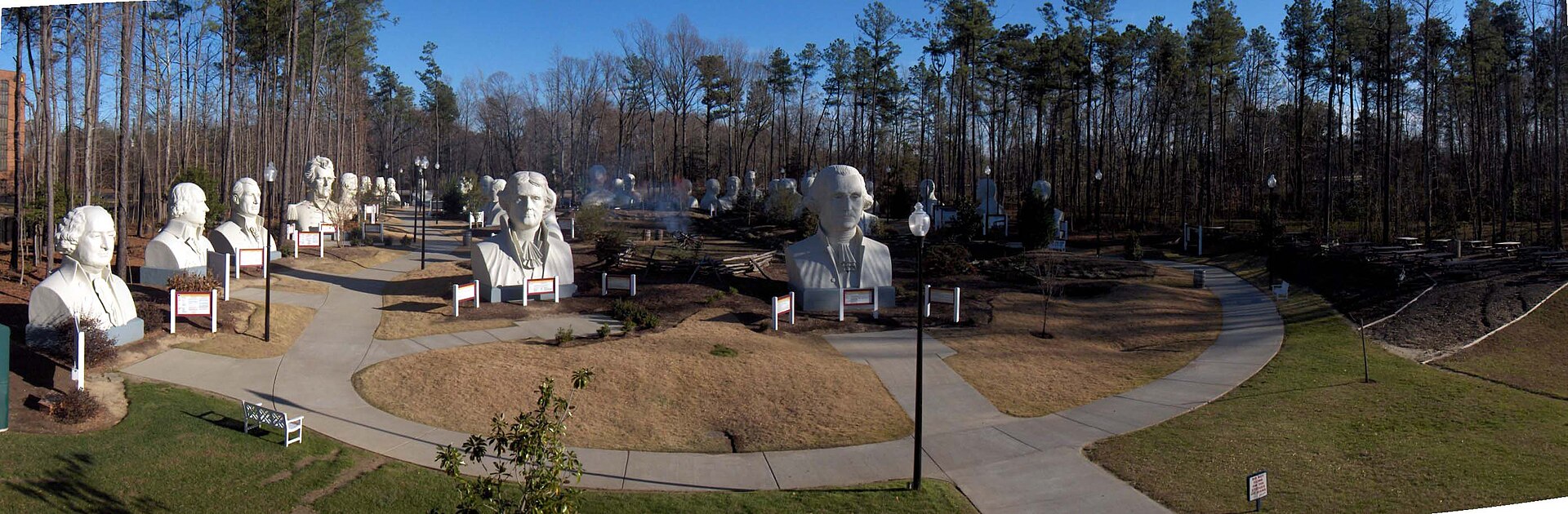
This second photograph shows the original park in 2006, before closure and relocation. It is not a view of the current tour property.
Why the changed setting became famous
The sculptures’ new surroundings altered how people saw them. Faces intended to convey dignity and historical importance began appearing in photographs as battered objects among an industrial landscape.
Damage can make a monument seem unexpectedly vulnerable. A familiar expression remains, while cracks and missing surfaces reveal the material beneath the image.
That contrast gives the collection much of its modern appeal. It also raises a useful question: are visitors responding to the presidents, the sculpture or the story of its survival?
The answer can be all three.
A Roadtrippers feature describes photographer John Plashal’s role in bringing organized visitors to the property. Photography became part of the collection’s new public life.
Yet visibility online should not be confused with unrestricted access on the ground.
What visiting means now
The current Presidents Heads website states that the sculptures occupy private property that also functions as an industrial recycling facility.
Pedestrian access is not allowed outside published tours and workshops. Book through the official listings and follow the directions supplied for that event.
Do not navigate to the original Presidents Park and expect to find the collection. Likewise, an old article describing a future park proposal may not reflect present visitor arrangements.
The current operator’s access rules are more useful than a decade-old exploration account.
Ask about walking surfaces, weather, accessibility and photography equipment before booking. An industrial property is not the same visitor environment as a maintained museum lawn.
Photograph the story, not just the damage
An authorized visit gives you a chance to notice how the sculptures were made and how they have changed. Different angles can reveal joints, supports and surfaces that a straight-on portrait hides.
Stay within the event’s boundaries and avoid climbing or touching fragile areas. A memorable image does not require adding more damage.
Historical photographs can provide a useful comparison afterward. The same faces appear first within a planned attraction and later within a story of rescue and uncertain preservation.
That before-and-after view is the real surprise of Presidents Park. The attraction failed, but its most distinctive objects acquired a second audience.
The heads remain a reminder that preserving something can begin with one decision not to destroy it, even when a complete plan for its future does not yet exist.
Frequently asked questions
Is Presidents Park still open?
The original Williamsburg-area attraction closed in 2010. The sculptures now occupy a different property.
Who made the giant heads?
They were created by sculptor David Adickes.
Can you visit the sculptures today?
Yes, through published authorized tours and photography workshops. Independent pedestrian access is prohibited.
Are the photographs here of the current site?
No. They show the original landscaped park in 2005 and 2006, before the sculptures were relocated.
Image credits
Featured image: David from Washington, DC, CC BY 2.0. Body image: Jacksondave, CC BY-SA 4.0. Images via Wikimedia Commons.

