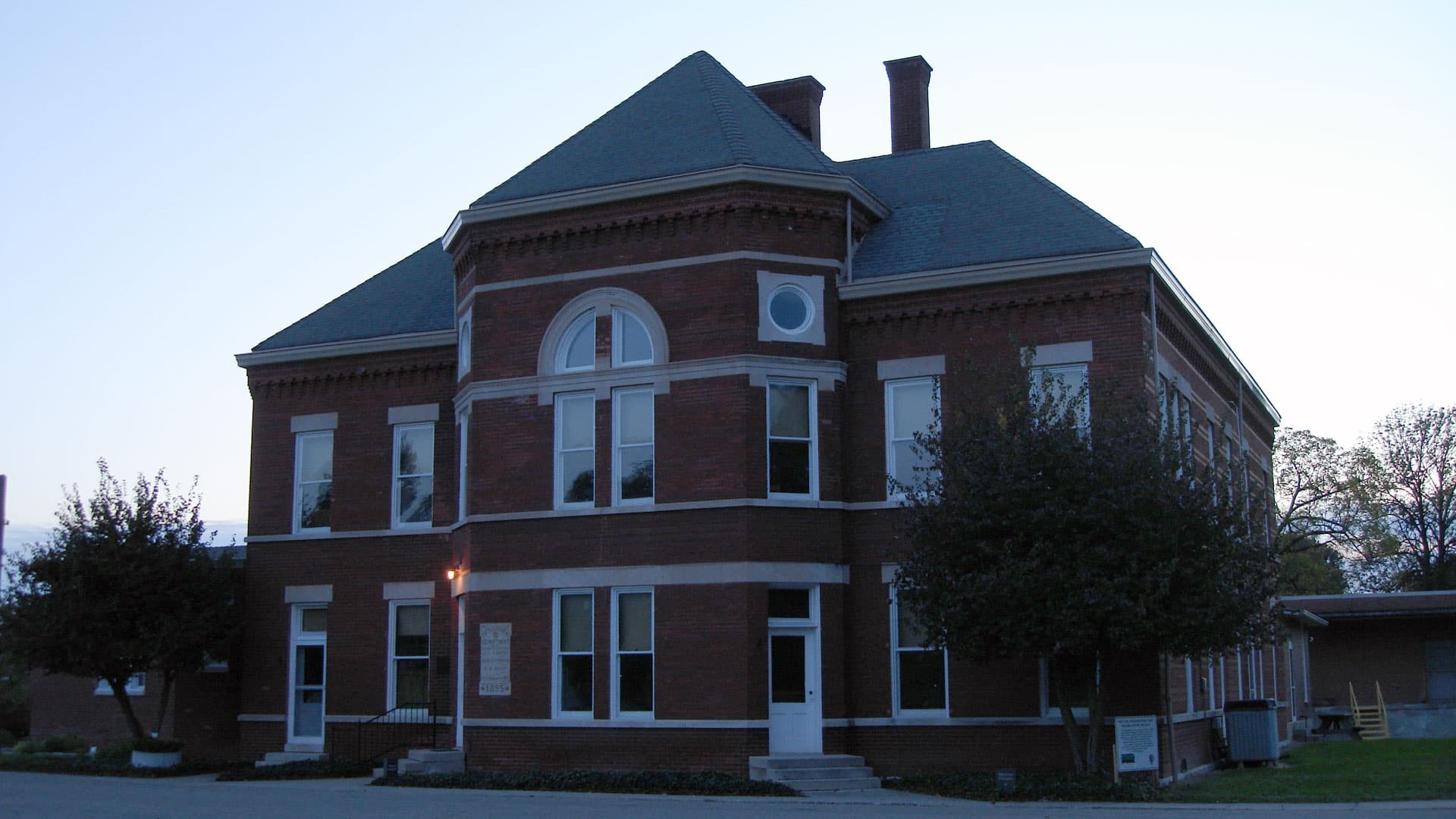
A small brick laboratory outlasted the enormous hospital it was built to understand.
Central State Hospital in Indiana operated in Indianapolis from 1848 to 1994. Much of its original campus has changed, but the Old Pathology Building survives as the Indiana Medical History Museum. Visitors can see it through an appointment-based guided tour, rather than an independent search through abandoned wards.
The building preserves a distinctive chapter in American medicine: the effort to understand mental illness by studying the physical body.
How Central State Hospital began
The hospital opened in 1848 under the historical name Indiana Hospital for the Insane. That wording belongs to the institution’s records and should not be used as a modern label for patients.
The Indiana Historical Bureau’s marker places its founding within a reform movement. Physicians sought an alternative to jails and almshouses, where people with mental illness often received little suitable care.
Work on the hospital farm and recreational activities formed part of treatment. These approaches reflected a belief that routine and surroundings could influence recovery.
Yet the historical marker also records inadequate funding, understaffing, neglect and abuse. Reform and failure were both present in the institution’s story.
In 1883, superintendent Dr. William Fletcher burned patient restraints in a public act of reform. It is a memorable event, but it should not be mistaken for proof that every difficulty disappeared afterward.
A laboratory built around a hope
In the 1890s, superintendent Dr. George Edenharter promoted a new approach: investigate physical causes of mental illness through pathology.
The Indiana State Archives describes the department that opened in 1896. It included laboratories, an amphitheater, a library, photography space and rooms for autopsies and dissection.
Edenharter hoped research would improve treatment and reduce the number of people needing long-term institutional care. It was an ambitious link between scientific investigation and public responsibility.
The archives also provide an important qualification. The department helped educate physicians, but did not fulfill all its hopes for original research and improved treatment.
That tension makes the surviving building especially interesting. It preserves not only scientific equipment, but evidence of what people believed science might accomplish.
What the rooms reveal
The museum’s account of its specimen collection explains how preserved material served research and teaching. The collection includes material retained from hospital autopsies.
These are remains of real people. Seeing them in a museum calls for a different response from looking at an unusual antique or a theatrical prop.
The teaching spaces offer another way into the story. Rows of seats in the auditorium show how knowledge was shared with medical students and practicing physicians.
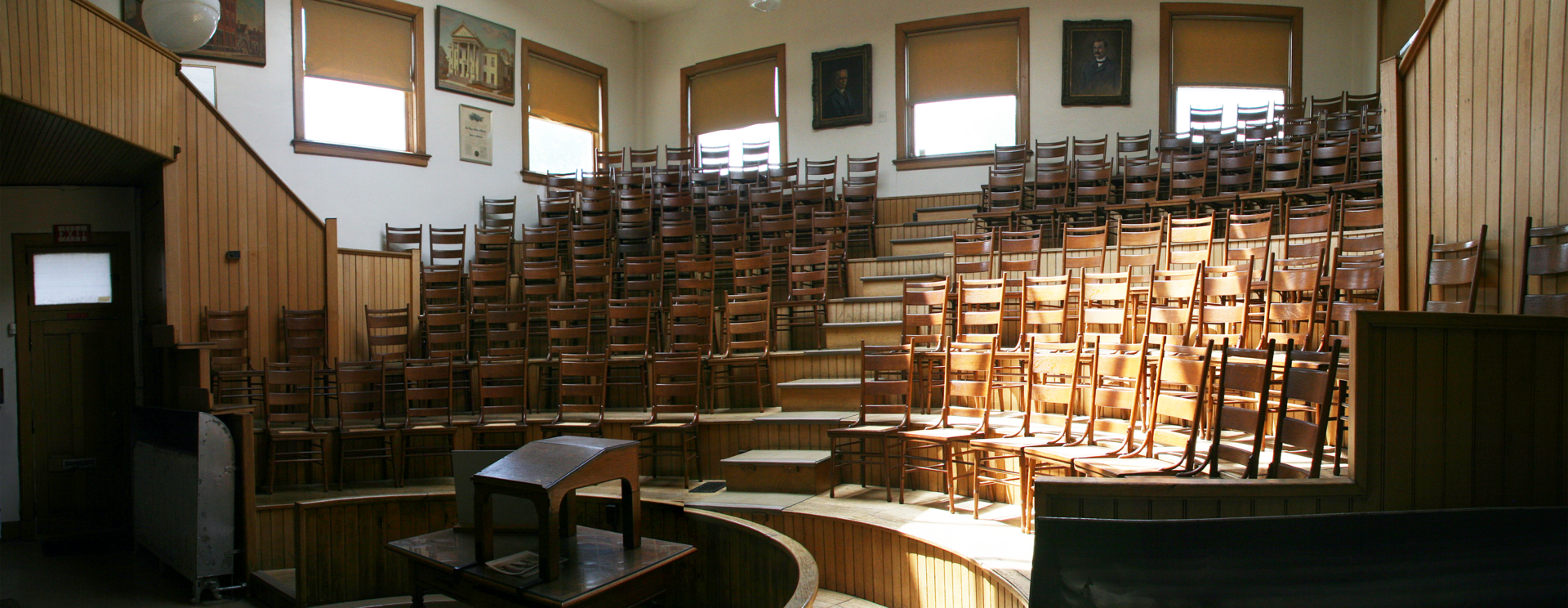
The auditorium photograph records that educational setting. Its arrangement directs attention toward a demonstration area, making the relationship between teacher, observer and patient evidence visible.
A guided visit can explain what each room was designed to do. It can also show how medical language and expectations have changed since the building opened.
Why the hospital closed
According to the museum’s institutional history, Central State’s population peaked at about 2,500 around 1950. New medications and a shift toward community care contributed to a later decline.
The museum also identifies abuse scandals in the period before the 1994 closure. It would be misleading to explain the ending solely as a building becoming old.
Treatment systems, public oversight and expectations of patient rights were changing. The end of the institution was part of that larger history.
Closure did not mean that patients no longer needed support. It meant that care had to be arranged elsewhere.
The museum’s account also notes that the nineteenth-century men’s and women’s wards were demolished decades before the final closure. Even while the hospital operated, its physical form was changing.
What survives today?
The museum is the clearest visitor destination connected with the former hospital. Its Old Pathology Building preserves rooms, equipment and records that help make the past understandable.
The wider former campus should not be imagined as a complete nineteenth-century asylum waiting behind a gate. Old maps and photographs record buildings that have disappeared.
Comparing an archival plan with the surviving laboratory can be revealing. A building that once played a supporting role has become central to public memory.
That reversal is common in historic preservation. The largest or most famous structure does not always survive; sometimes a smaller specialized building carries the story forward.
Plan a museum visit
The official visitor page requires an appointment for a guided tour. Standard tours last about an hour, with limited group sizes.
Check the museum’s directions as well as its schedule. It warns that some navigation services direct visitors toward a closed Vermont Street entrance, and provides approaches using Kirkbride Way.
Ask in advance about stairs, accessibility and the suitability of specimen displays for your group. A medical-history collection can be educational and emotionally demanding at the same time.
Allow enough time to read labels and listen to the guide. The value lies in the explanation, not simply in photographing old instruments.
Central State’s surviving laboratory invites a lasting question: how should a society learn from an institution whose hopes and failures were so closely connected?
Frequently asked questions
Is this the Central State Hospital in Georgia?
No. This article covers the former hospital in Indianapolis, Indiana.
When did Indiana’s Central State Hospital close?
It closed in 1994 after operating since 1848.
What can visitors see?
The Indiana Medical History Museum occupies the surviving Old Pathology Building and offers guided interpretation.
Do you need a reservation?
Yes. The museum currently operates public tours by appointment. Check its official visitor page before traveling.
Image credits
Featured image: Mlzoiss, Public domain. Body image: Huw Williams (Huwmanbeing), Public domain. Images via Wikimedia Commons.

