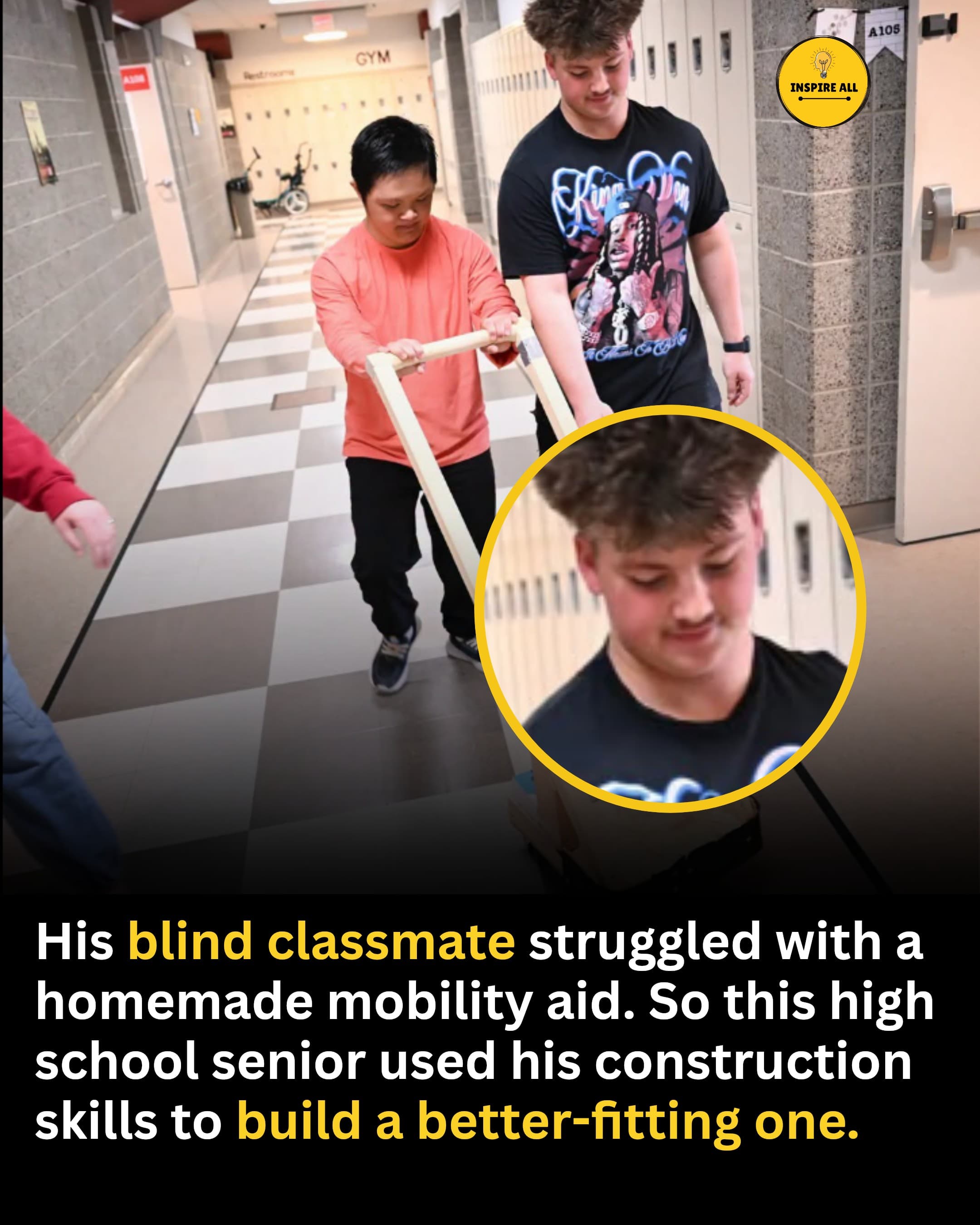
Camren Breeden noticed something during his senior year at University High School in Spokane Valley, Washington: a classmate’s homemade sensory aid was difficult to maneuver.
Daniel, who is blind, had been using a frame made from PVC pipe and scooter wheels. Breeden thought he could help improve it, using skills from his construction class.
The project was documented in April 2026, when local reporters spoke with Breeden and the teachers involved.
A school project with a particular user in mind
The Spokesman-Review’s April 24 report described a wooden replacement with a square base, three swiveling wheels and handles fitted to Daniel’s height.
Breeden drew inspiration from a familiar object: a lawnmower. His construction teacher bought the wheels and helped support the work.
Daniel’s teacher, Heidi Downey, emphasized the importance of greater autonomy as he moved through school.
Making changes was part of the work
In FOX 28 Spokane’s April 30 coverage, Breeden explained that the design required attention to weight distribution and comfortable hand placement.
Construction took a couple of days, followed by adaptations. Downey praised his willingness to listen to suggestions and change what he had made.
That openness was a practical part of the project. An idea in a workshop still has to fit the person using it.
A design still being refined
The earlier newspaper report described the aid as being in a beta phase. Breeden and his teacher were already considering changes to the wheels and another version.
Teachers reported improvement in Daniel’s movement around school. Those observations do not establish a universal safety guarantee or make this particular device suitable for everyone.
The achievement was specific: a student noticed an access problem, brought his skills to it and worked with others on a response.
For another example of student feedback shaping a design, read about Lingampalli Himaja’s Braille printer project. Also see Shubham Banerjee’s LEGO-based Braille printer.