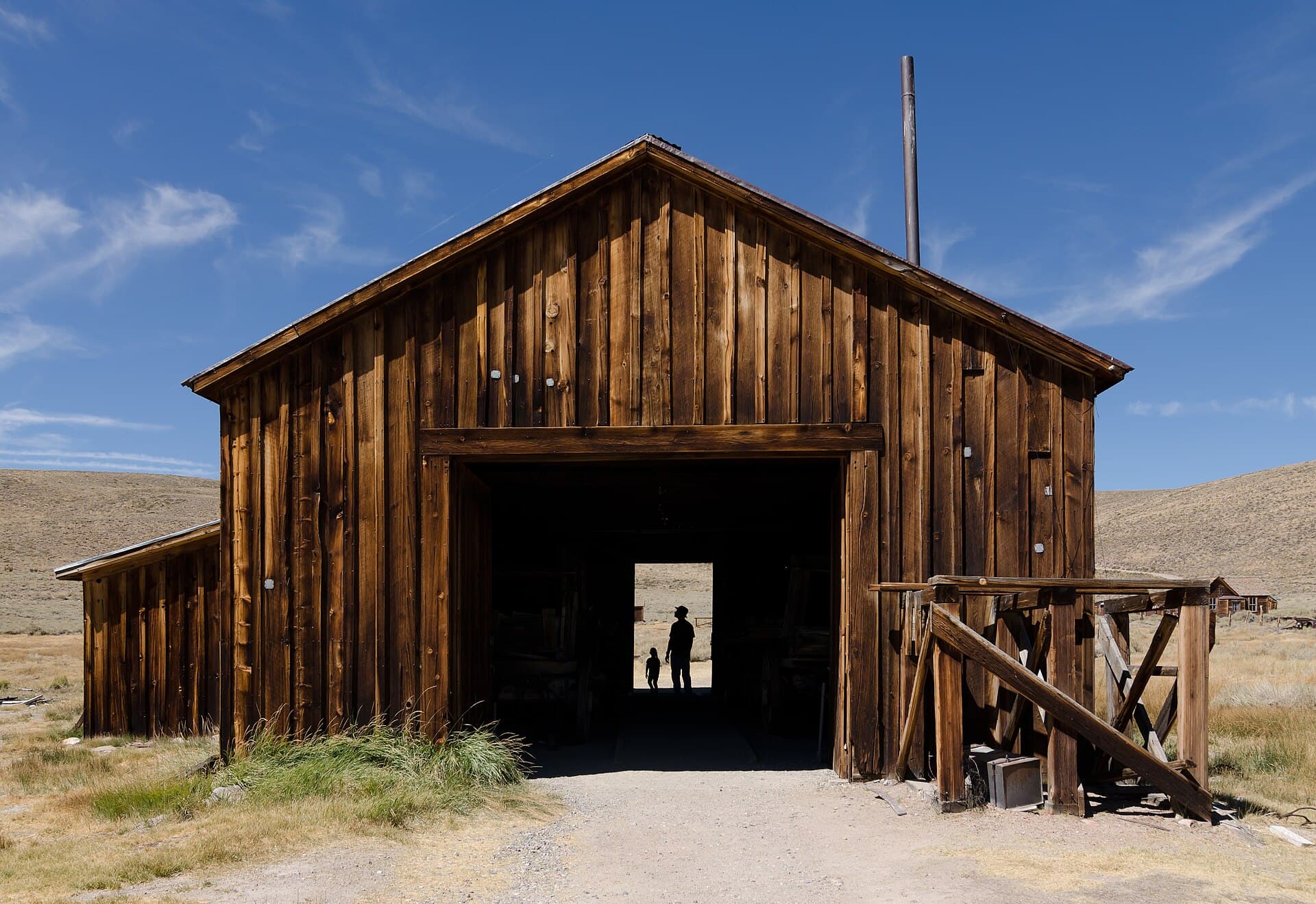
A schoolroom, a church, and empty homes still face the wind where thousands once chased gold.
Bodie ghost town is a former gold-mining community in Mono County, California, now protected as Bodie State Historic Park. Its mining economy faded over decades, and a major fire destroyed much of the town in 1932. What survives offers an unusually close look at a place people gradually left behind.
The surprise is how ordinary some of it feels. Beyond the famous mining history are rooms, storefronts, and household objects that make the distance between then and now seem smaller.
How Bodie ghost town began
Gold was found in the area in 1859, with prospector W. S. Bodey among those associated with the discovery. He died during the following winter, before the settlement that adopted a version of his name became famous.
Early growth was slow. Bodie’s great surge came in the later 1870s, when rich ore discoveries brought investment and workers. The Bodie Consolidated Mining Company collection chronology places its peak production between 1877 and 1882.
Population estimates vary, so a precise peak count deserves caution. The archive describes more than 6,000 residents and possibly over 10,000. Either way, this was a substantial community in a difficult place to build one.
That is the first thing worth remembering while looking at the empty streets: the isolation visitors admire today once complicated nearly every part of daily life.
Gold created more than a mining camp
The hills did not simply draw lone prospectors with pans. Bodie developed into an industrial mining town, with equipment, buildings, and work organized around extracting and processing ore.
A National Park Service historic survey reproduced by Bodie.com describes the importance of the Bodie and Standard mines to the late-1870s boom. Their discoveries changed the scale of the settlement.
The surviving stamp mill gives that industrial story a physical shape. It helps explain why an isolated collection of streets could once support so much activity.
Look beyond the romantic idea of striking it rich. A school, businesses, and homes represent people making longer commitments. Families needed more than a promising claim. They needed supplies, shelter, lessons, and a reason to believe next year would be worth staying for.
Why did people leave Bodie?
Bodie did not empty in one dramatic night. Mines began closing as the boom weakened, and residents followed opportunities elsewhere.
The California State Capitol Museum’s history records the devastating 1932 fire and the end of mining in 1942. These were separate events in a much longer decline.
That distinction matters. A photograph of a furnished room can suggest an abrupt escape, but appearances are not a complete historical timeline. Bodie’s quieter years stretched across generations.
The fire also shaped what visitors see. Today’s surviving buildings are only part of the former settlement, not a complete town preserved at its busiest moment.
Its empty spaces deserve attention alongside its standing structures. They mark the difference between the busy place described in records and the smaller physical remains that escaped destruction.
What “arrested decay” actually means
California State Parks preserves Bodie in what it calls “arrested decay.” The aim is to maintain its surviving historic character rather than rebuild an entire gold-rush town.
According to the park’s trip-planning guidance, the agreement that brought Bodie into the state park system in 1962 called for its contents to remain as received.
That makes a visit different from walking through a newly furnished replica. Yet preservation still takes work. Old buildings do not maintain themselves simply because people stop using them.
Notice the relationship between small objects and large spaces. A room’s contents can make the past feel personal, while the exposed landscape explains why keeping that room standing is a continuing responsibility.
Stories about curses or ghosts sometimes accompany Bodie’s reputation. They are folklore, not explanations for its economic decline. The documented history is compelling without presenting supernatural claims as fact.
Visiting Bodie responsibly
The official park page is the place to check current hours, fees, and advisories. As checked on November 2, 2026, winter hours are 9 a.m. to 4 p.m. Weather can still affect access.
For the usual approach, California State Parks recommends State Route 270 from U.S. 395. Its visitor FAQ describes ten paved miles followed by three miles of dirt road.
Bring water, food, layers, and enough fuel for the return journey. Plan around mountain conditions rather than assuming that a marked road is always passable.
Follow building restrictions, leave every artifact in place, and check seasonal tour availability before planning around the stamp mill. A photograph is a better souvenir than anything removed from the ground.
Bodie’s strongest impression is the life its buildings still suggest. The town’s future now depends on people arriving with a different purpose from the miners: keeping something valuable where it belongs.
Frequently asked questions
Is Bodie a real ghost town?
Yes. It is an authentic former mining town preserved within Bodie State Historic Park, with surviving historic buildings and objects.
Why was Bodie abandoned?
Declining mining activity drove a long population loss. Fire in 1932 and the end of mining in 1942 were important later events.
Can you visit Bodie in winter?
The park lists winter hours, but snow and road conditions can restrict access. Check official advisories before traveling.
Can visitors take objects from Bodie?
No. Leave artifacts where they are and follow park rules so the site remains intact for future visitors.
Featured photograph: King of Hearts. Original image and details. CC BY-SA 4.0. Photograph predates this article; it is not a real-time view.
