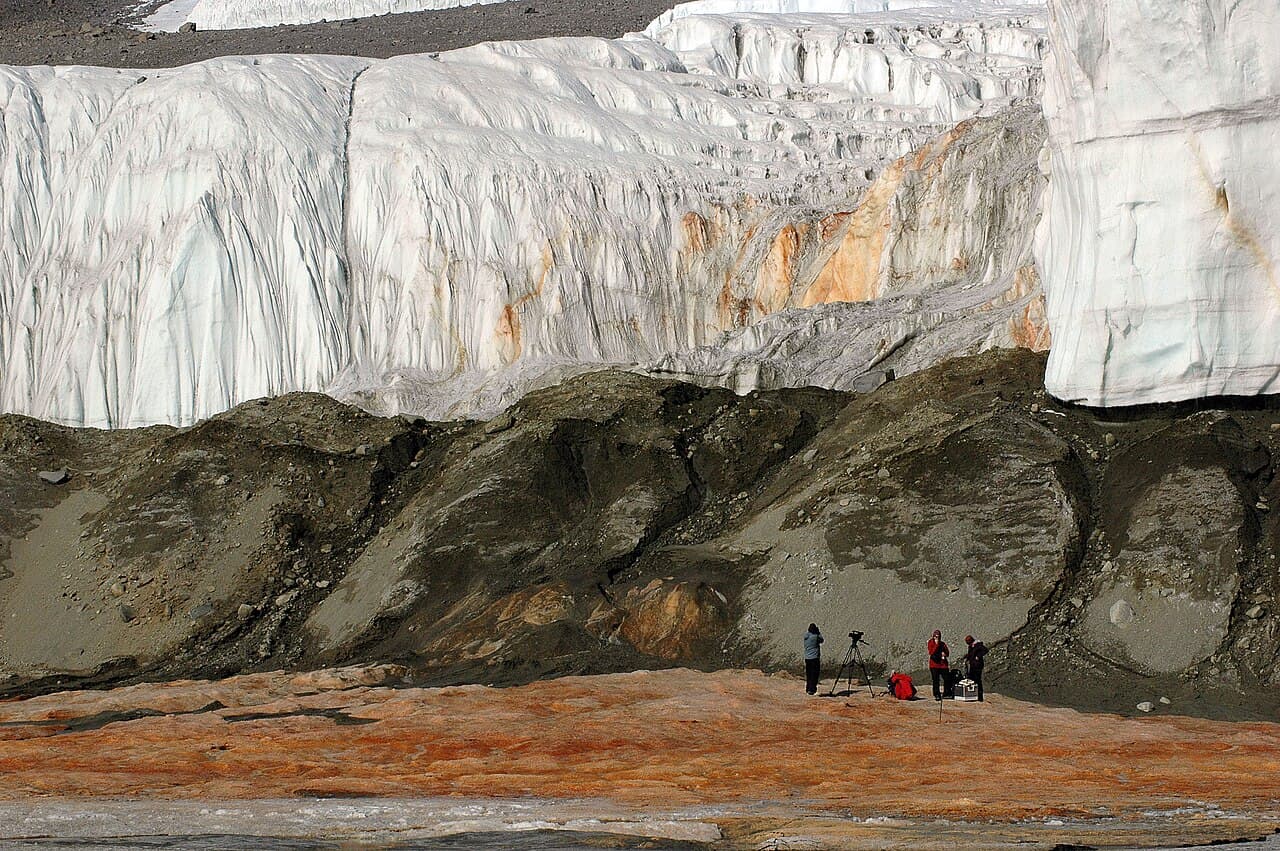
Red water emerging from an Antarctic glacier can look like a wound in the ice. At Blood Falls, the color comes from iron-rich brine, not blood.
This strange outflow gives scientists a rare opportunity to investigate water and life associated with the world beneath a glacier.
A stain at Taylor Glacier
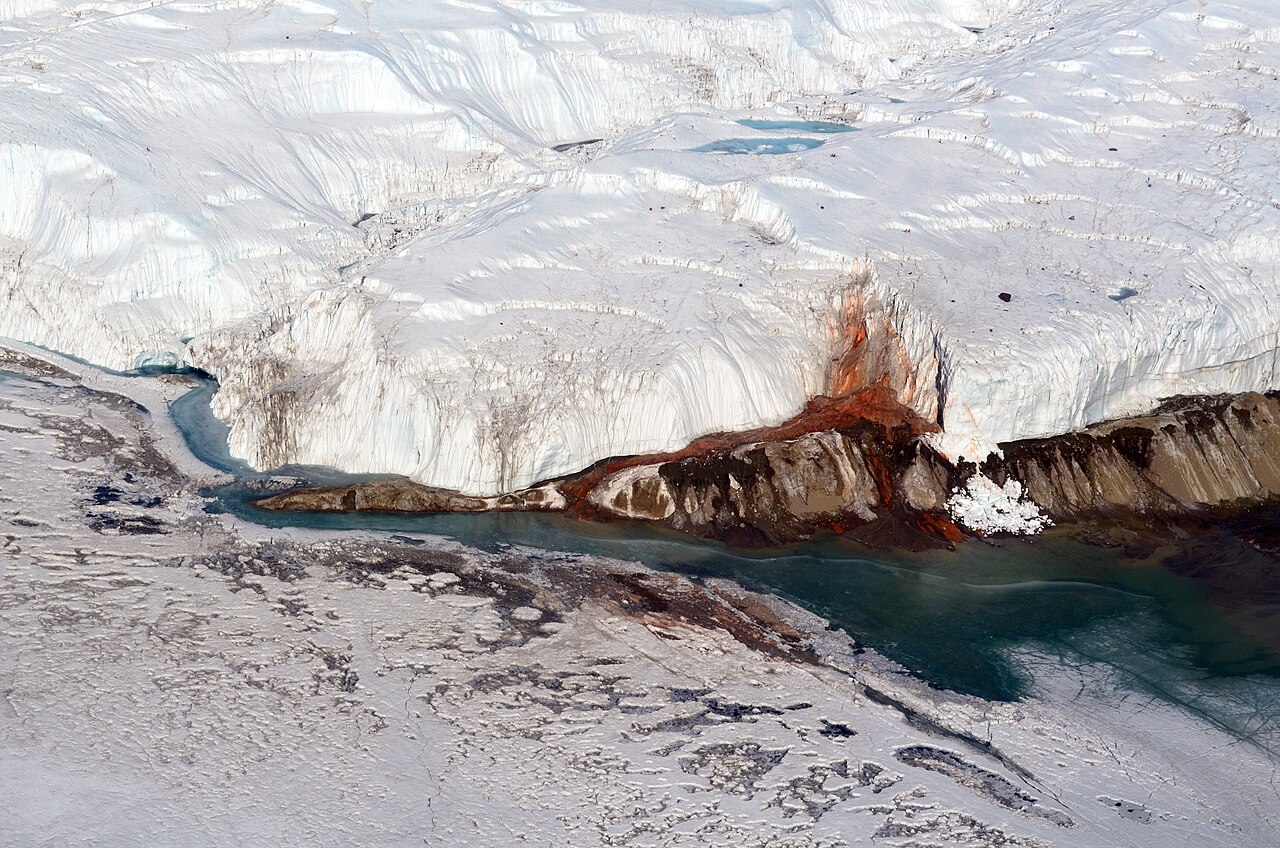
Blood Falls lies at the end of Taylor Glacier in the McMurdo Dry Valleys. Salty water emerges and leaves red-colored material against the pale ice and surrounding ground.
The Scripps Institution of Oceanography describes the iron-rich outflow and research into its origins.
The falls are not a broad, continuously roaring waterfall. Their appearance depends on discharge and the conditions captured in a photograph.
Tiny particles make a big impression
Iron changes as the brine encounters surface conditions. A Johns Hopkins research account describes tiny iron-rich nanospheres found in samples.
These particles helped explain the red material. Their small size and noncrystalline structure also showed why some earlier analytical approaches had missed important details.
The dramatic color can therefore arise from structures far too small for us to see individually.
What came from beneath the ice?
Researchers study both chemistry and microorganisms to understand the brine's history. Work described by Scripps in 2026 added evidence consistent with an ancient marine contribution.
That is a research conclusion about the water's possible origins, not a final answer to every question about when or how it became trapped.
The hidden system is difficult to sample, making each line of evidence valuable.
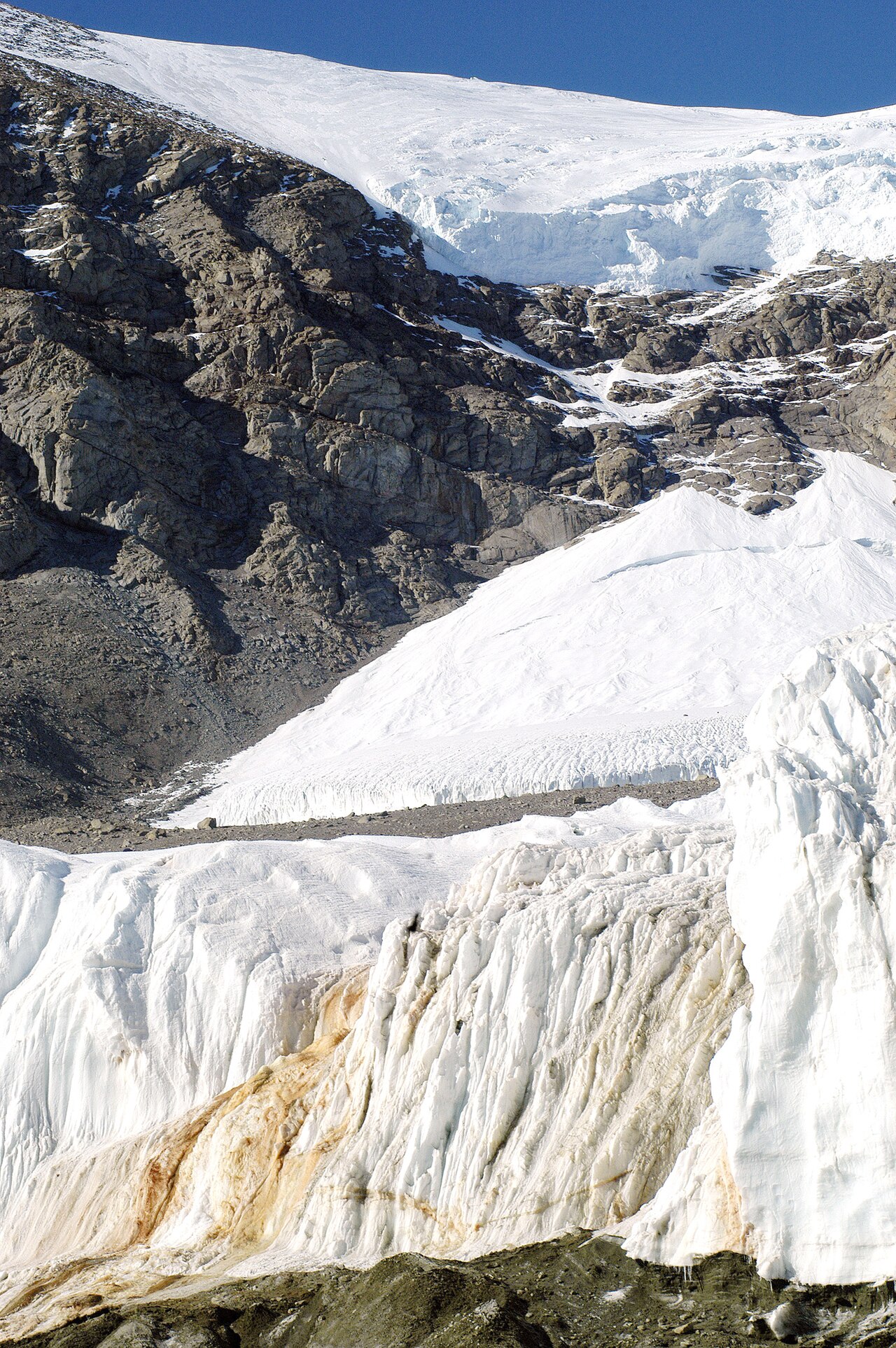
A red window into an unseen world
Antarctic research sites need careful protection from disturbance and contamination. Their scientific value depends partly on preserving the conditions scientists are trying to understand.
Blood Falls is memorable at any scale: red against white from a distance, iron-rich particles under a microscope, and clues to a buried environment. The real story is stranger—and more revealing—than its frightening name.
Photo credits
Featured image: Peter Rejcek, NSF; Wikimedia Commons source; Public domain. Resized for web display.

Body image 1: Peter Rejcek, NSF; Wikimedia Commons source; Public domain. Resized for web display.

Body image 2: National Science Foundation/Peter West; Wikimedia Commons source; Public domain. Resized for web display.
