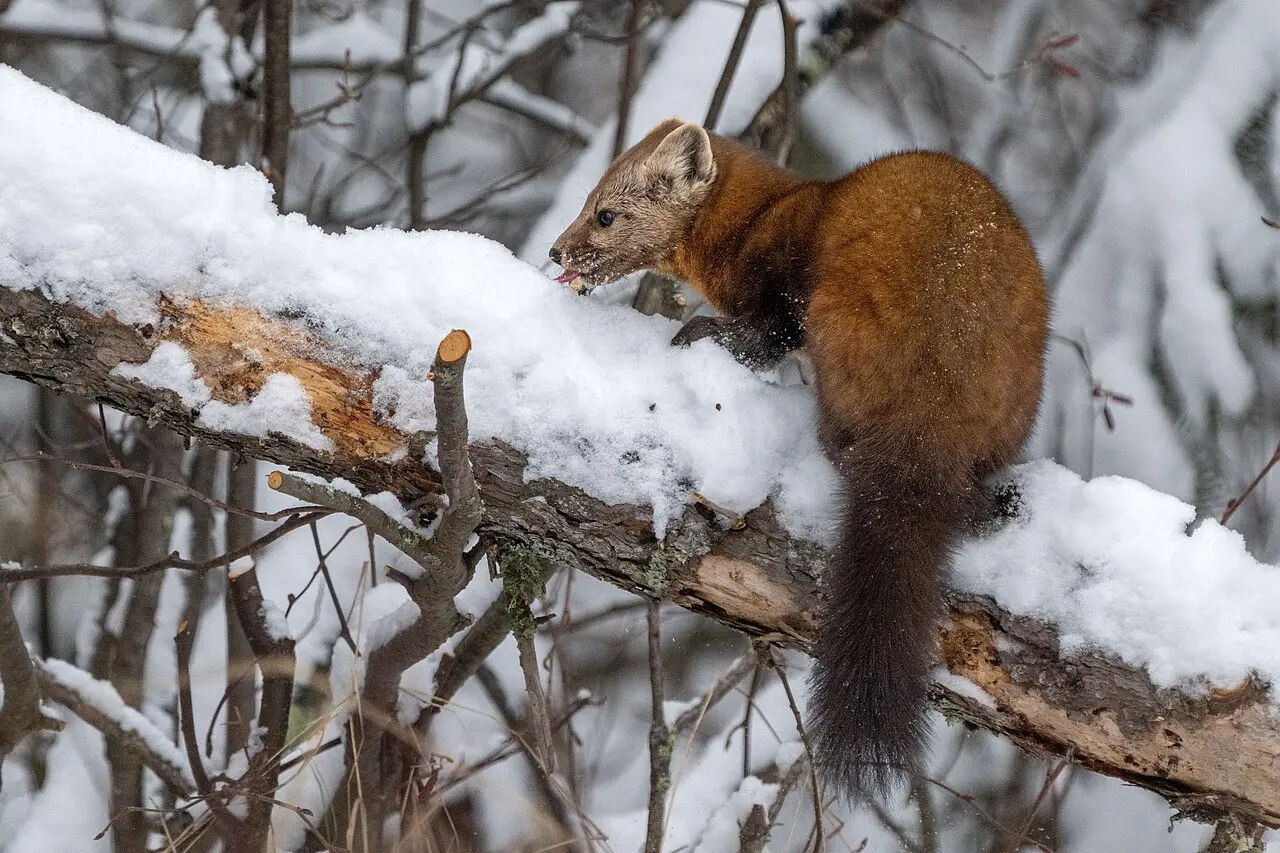
When winter settles into the forest, the American marten keeps hunting. It does not hibernate, even when snow changes the landscape around it.
Martes americana is a member of the weasel family with rounded ears, a long body, and a bushy tail. Its soft-looking coat can disguise the purposeful movements of a skilled predator.
At home in the trees—and below them
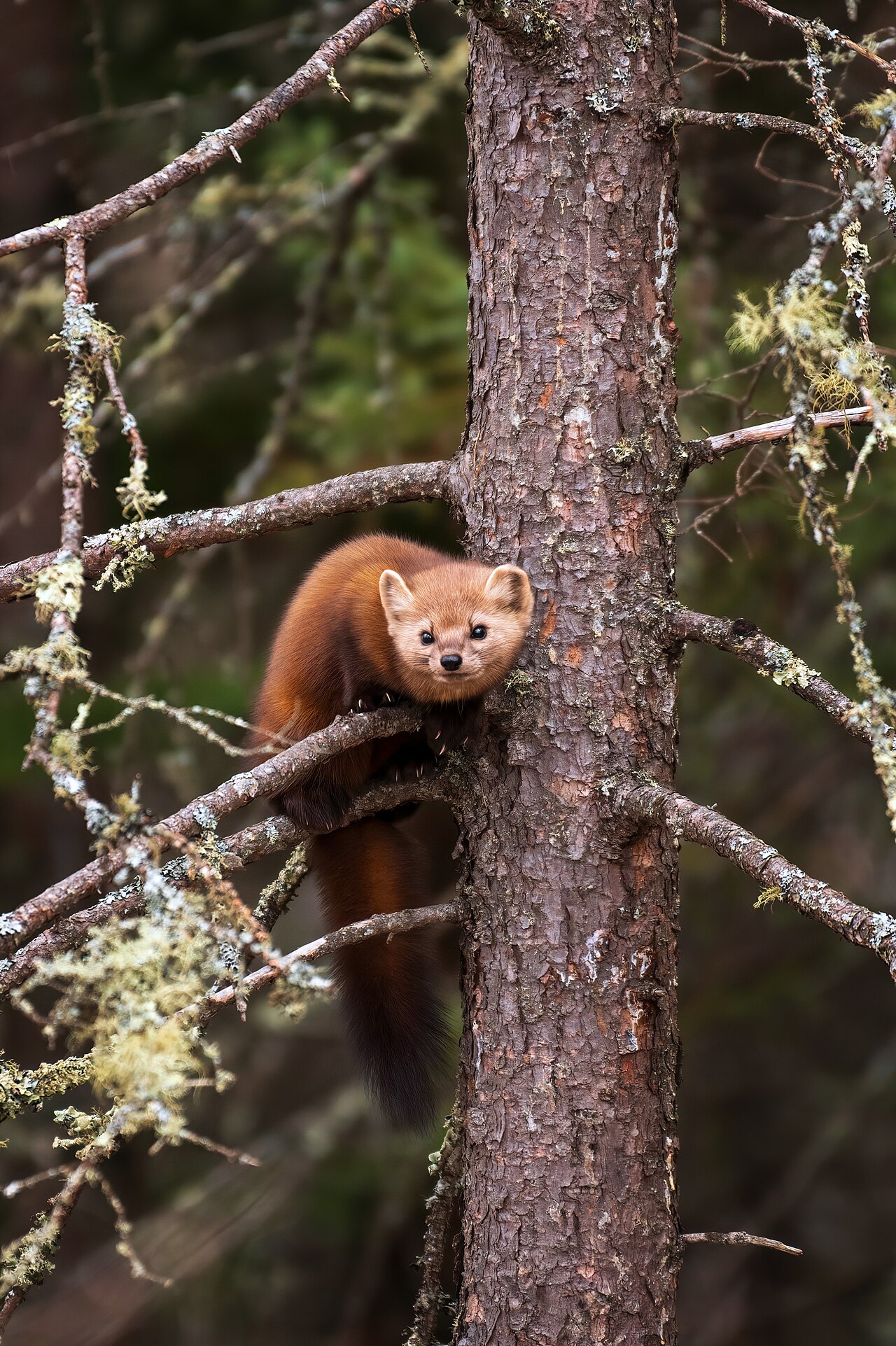
Animal Diversity Web describes an agile climber that moves easily through branches. Much of its hunting, however, takes place on the ground.
Small mammals make up an important part of its food. Birds, insects, fruit, and nuts may also appear on the menu. Flexibility helps when a forest’s food supply changes.
A solitary trail through the woods
American martens usually spend their time alone. Scent marks help them communicate along routes through their home ranges.
It is tempting to judge the forest by what we see in a brief visit. A marten’s scent-marked pathways remind us that many of its important connections remain invisible to human eyes.

A future tied to forest cover
Loss of coniferous forest habitat and trapping have reduced populations in parts of the range. Local conditions matter even when a species remains widespread overall.
Keeping suitable forests connected helps preserve the space these animals need for shelter and feeding.
A marten bounding past a trunk is a fleeting sight. Behind that quick movement lies a full winter life of finding food, following routes, and staying alert.
Photo credits
Featured image: American pine marten Sax-Zim Bog.jpg — Lorie Shaull; CC BY 2.0.

Body photograph: American marten (53440964807).jpg — Grayson Smith/USFWS; Public domain.

Body photograph: Newfoundland Pine Marten.jpg — Bailey Parsons; CC BY-SA 3.0.

Photographs resized for web display where available. Existing crops are identified in their source filenames.