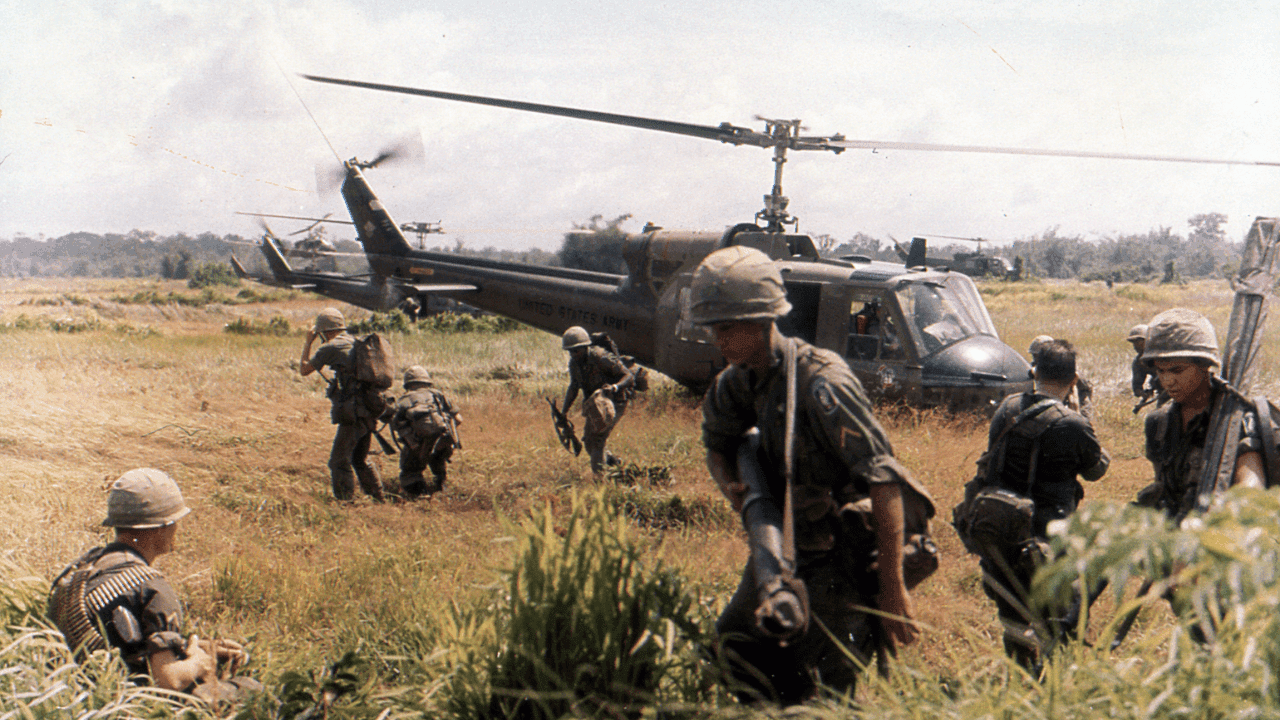
The Vietnam War was a pivotal period that reshaped American society in profound ways. The passage of the War Powers Resolution, for one, emphasized congressional authority in military engagements. Meanwhile, college campuses became hotbeds of activism. Fifty years after the fall of Saigon, the war’s legacy continues to resonate.
Among those deeply affected is Jeanie Jacobs Huffman. Her father, Navy Cdr. Edward J. Jacobs Jr., went missing over the Gulf of Tonkin in 1967. Huffman has committed her life to recovering his remains, highlighting the enduring void felt by families of MIA soldiers. She’s also active in Mission: POW-MIA, an organization focused on locating unaccounted-for Americans. For Huffman, the pain of absence and hope for closure keeps the spirit of remembrance alive.

This photo provided by Jeanie Jacobs Huffman shows her on the beach in June 2024, two miles away from where her father’s plane and crew were discovered in 70 feet of water, in Thanh Hoa Province, Vietnam. (Dave Huffman/Jeanie Jacobs Huffman via AP)
The Vietnam War also holds a significant place in the memory of many who lived through its turbulent impact on American soil. Anti-war activists recall historic demonstrations, such as the Kent State University protest in 1970, where Ohio’s National Guard fatally shot four students. These events marked a period of intensified public dissent and forever altered perceptions of military policy. Severe societal divisions and the struggle with post-war adjustments remain deeply etched in American consciousness, affecting veterans, families, and activists alike. The aftermath of the Vietnam War still shapes the lives of these individuals and serves as a reminder of the complex nature of war and its long-lasting effects on innocence lost, political activism, and healing through acknowledgment.
Fifty years after Saigon’s fall, the Vietnam War’s shadow looms large over many lives. For some families, closure remains elusive, with loved ones yet accounted for, and personal battles continue in the halls of academia and diplomacy, marking a legacy of both grief and resolve.