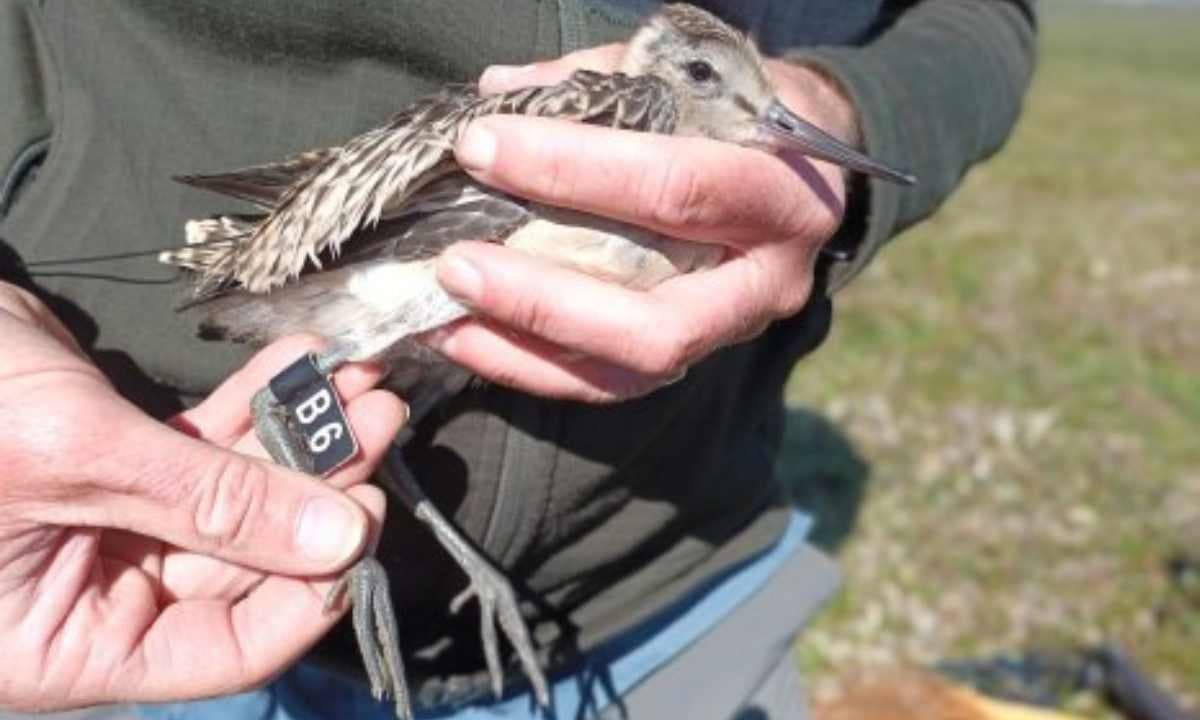
A juvenile bar-tailed godwit set a fascinating world record. Tracked by satellite tag number 234684, it flew 13,575 kilometers (8,435 miles) non-stop from Alaska to Tasmania, Australia. This young bird, only five months old, completed the journey in 11 days and one hour. The feat was not only impressive but also significant for our understanding of bird endurance and migration patterns. Let’s have a closer look at its journey and previous records of the longest flight.
The Record-Breaking Flight of a Young Bar-Tailed Godwit
The journey began on October 13, when this juvenile bar-tailed godwit took off from Alaska. Without pausing to rest, the bird flew continuously over the Pacific Ocean, ultimately reaching Tasmania, an Australian island state south of the mainland, on October 25. This incredible non-stop journey of 11 days and one hour (265 hours) set a new record for the longest continuous bird flight, beating the previous record held by another bar-tailed godwit, an adult male tagged as 4BBRW. In 2021, 4BBRW flew 13,000 kilometers (8,100 miles) from Alaska to New South Wales, Australia, breaking its previous record of 12,000 kilometers (7,500 miles) from Alaska to New Zealand in 2020.
This achievement is notable in migration studies and reveals the extraordinary endurance of young godwits. As Sean Dooley of BirdLife Australia expressed, “The most amazing thing is that juveniles migrate separately to the adults.” This suggests that even with less experience, juvenile birds are capable of completing these incredible journeys.
How Scientists Track Long-Distance Migratory Birds
Tracking birds across thousands of kilometers requires advanced technology. Scientists rely on a 5G satellite tag attached to the godwit’s lower back to monitor its movements. This technology, combined with data from the Max Planck Institute for Ornithology’s bird tracking project, allowed scientists to follow the young bird’s flight in real-time. The godwit’s route took it west of Hawaii, over the small Pacific island nation of Kiribati on October 19. Two days later, the bird flew over Vanuatu. It then traveled between Australia’s east coast and New Zealand, passing 620 kilometers east of Sydney. On October 23, it made a sharp westward turn, arriving in Tasmania on October 25.
Each stop along this route tells a story of the bird’s resilience and navigational skill. Tracking devices like these provide insights into the paths these birds take and the challenges they face.

The Unique Migration Patterns of Juvenile Godwits
Juvenile godwits have unique migration patterns, flying separately from adult godwits, who typically leave the Arctic weeks earlier. During these weeks, juvenile godwits prepare for their journey by eating enough to build up energy stores. Sean Dooley noted, “That bird is likely to have been in a flock. This record is for continuous flying, and it’s just incredible.” Interestingly, godwits are known to shrink certain internal organs before migration to create extra space for fat stores. This adaptation helps them survive their marathon flights without stopping.
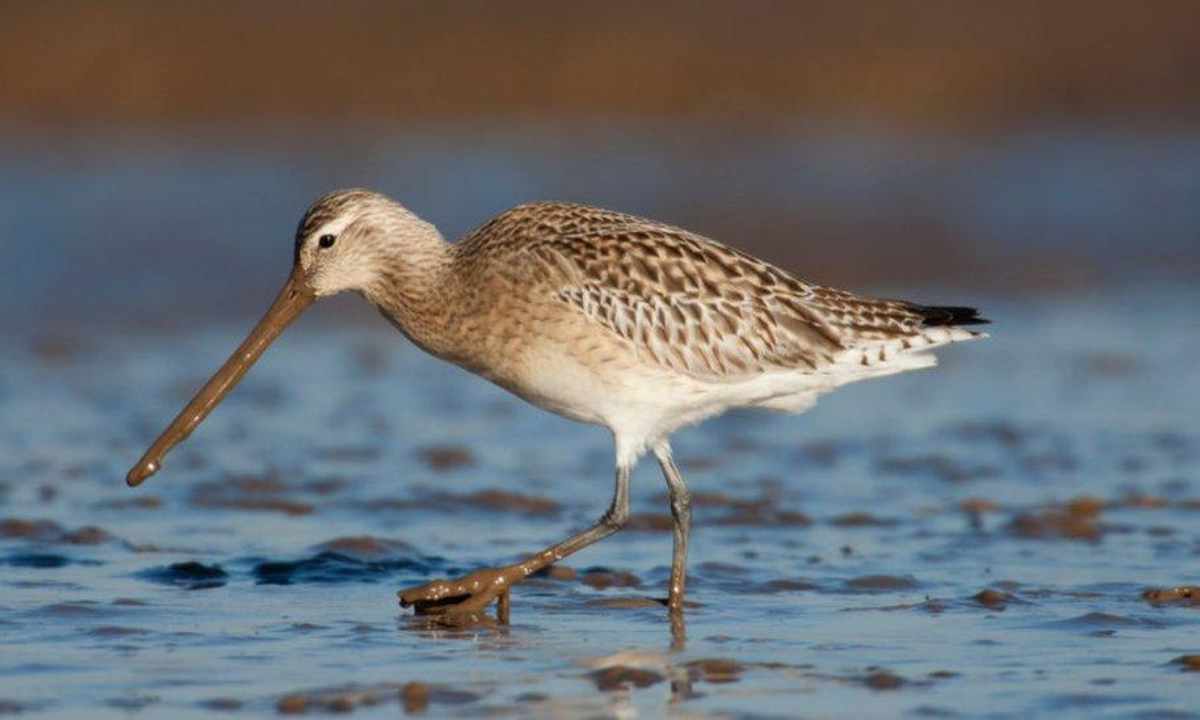
This recent record-breaking journey sheds light on how juvenile birds manage such endurance and highlights their ability to complete long migrations without prior experience. Observing this record flight also adds to our understanding of how migratory species adapt to environmental conditions, as climate change and habitat shifts can significantly impact their journeys.
The Pūkorokoro Miranda Shorebird Centre in New Zealand, which monitors migratory bird activity, celebrated this record-breaking flight. Previously, they had produced souvenir tea towels for the adult godwit 4BBRW when it set its own record. Now, they’re considering creating new souvenirs to honor this young bird’s remarkable journey.
Conclusion
The journey of this young godwit stands as an impressive milestone in the study of migratory birds,. It shows the physical capabilities and endurance these birds possess. The story of this juvenile bar-tailed godwit, flying for over 13,500 kilometers without rest, continues to inspire both scientists and nature enthusiasts. Its journey sheds light on how animals adapt to long-distance travel and the environmental challenges they face.
As scientists look to uncover more about migratory species like the godwit, each discovery offers an opportunity to learn about the resilience and adaptability of nature’s travelers. Stories like these fuel ongoing efforts in bird conservation and remind us of the broader goal of preserving our natural world for generations to come.
Also read,