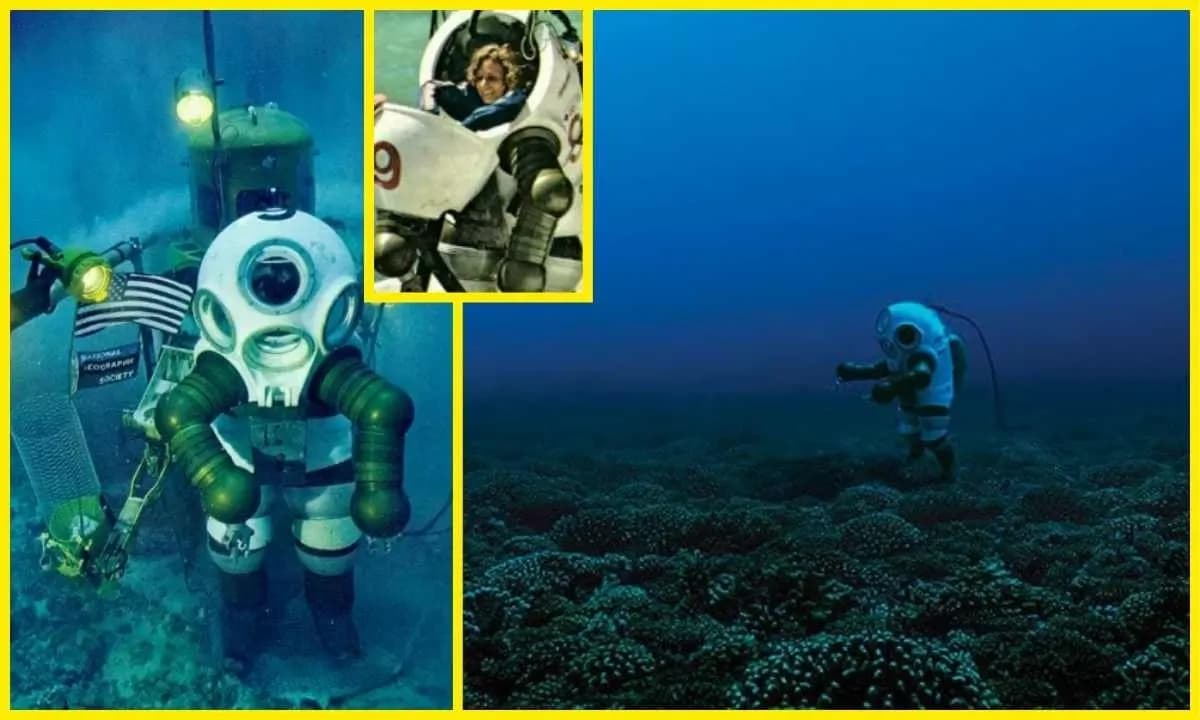
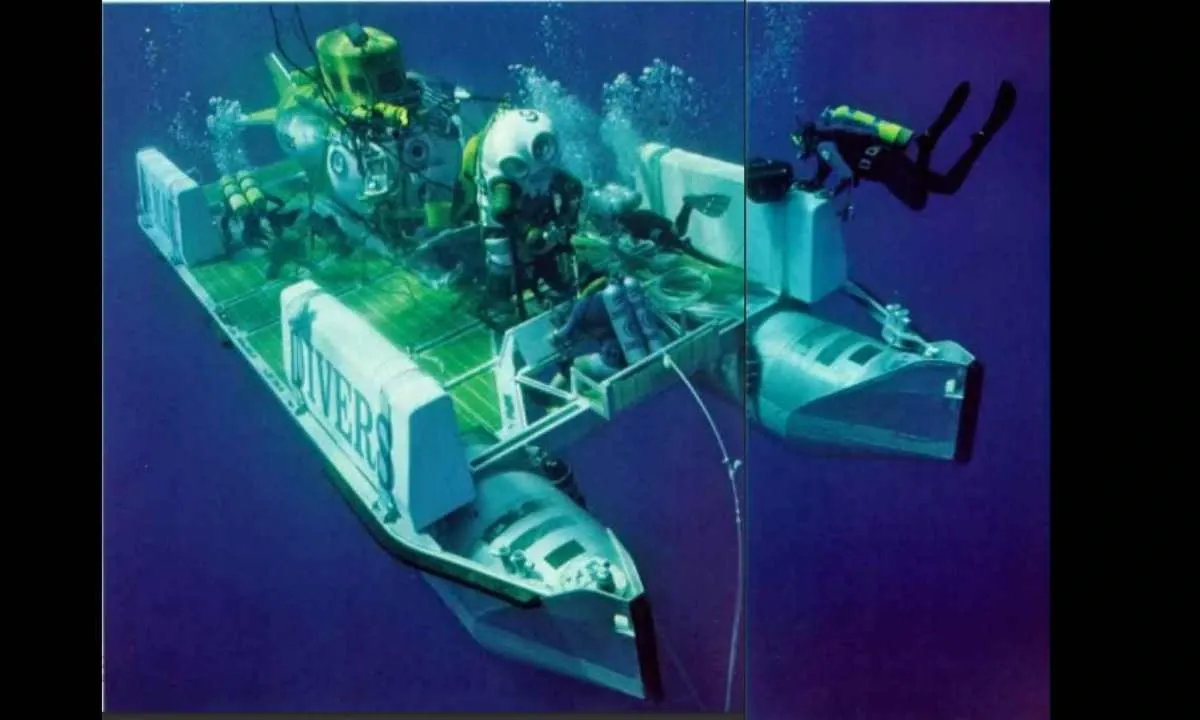
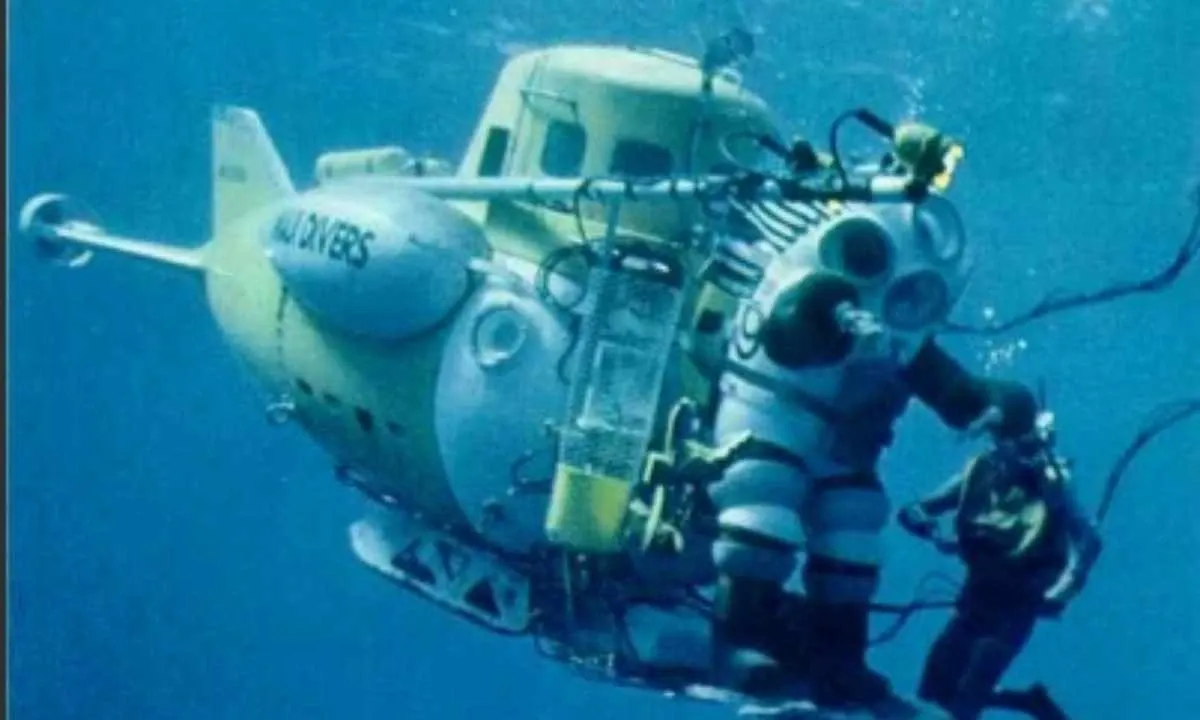
In the vast, silent depths of the ocean, where sunlight dares not venture, Sylvia Earle—a woman of unyielding spirit—descended. Known reverently as “Her Deepness,” she stepped into a realm untouched. As a pioneer in marine biology and deep-sea exploration, she embarked on a journey no woman had taken before. In 1979, clad in the armor of a JIM suit, she walked, untethered, along the sea floor at a depth of 1,250 feet. Her accomplishment as the first woman to take the deepest walk on the sea floor quickly caught public attention. The feat was even featured in the National Geographic magazine in May 1980. This act of courage and curiosity broke barriers and revealed the wonders hidden within our ocean’s blue heart.
The Historic Dive: Sylvia Earle’s Record-Breaking Sea Walk
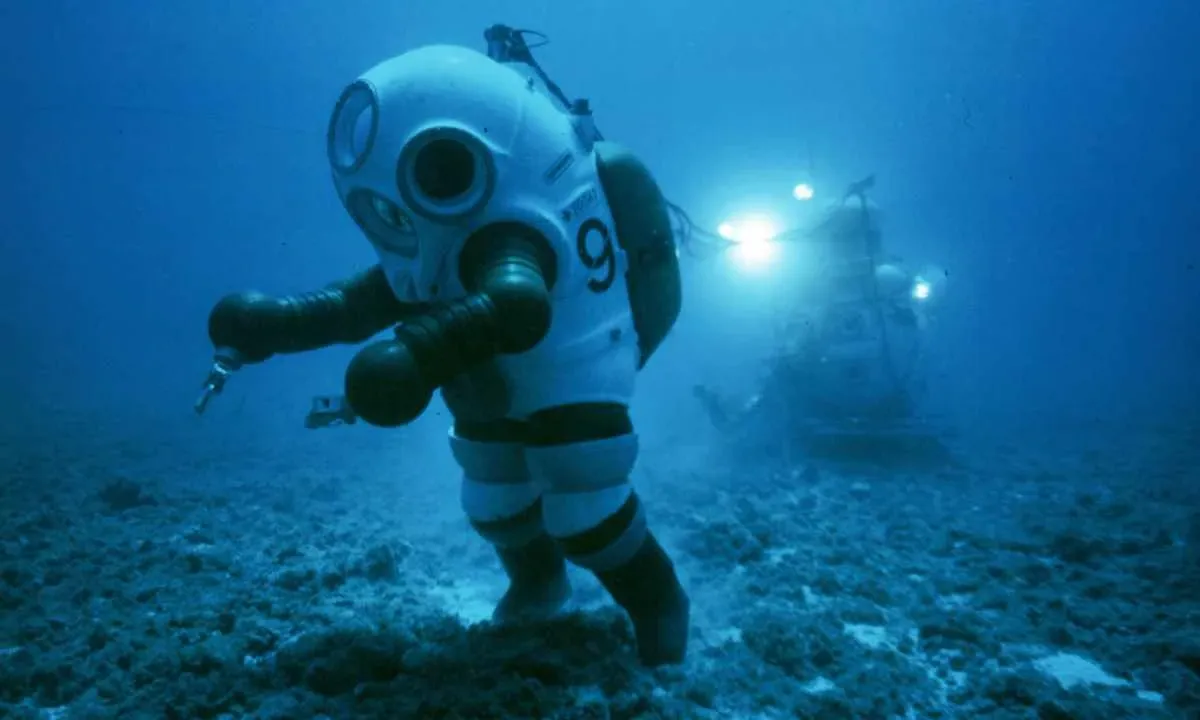
That fateful day off the coast of Oahu, Hawaii, was one marked by quiet reverence and palpable risk. The specialized JIM suit—protected her from the crushing depths, and allowed her to tread lightly on the ocean floor. Here, in a realm beyond light, Earle moved slowly, observing a world few had ever seen. The preparation was grueling; the pressure was immense.
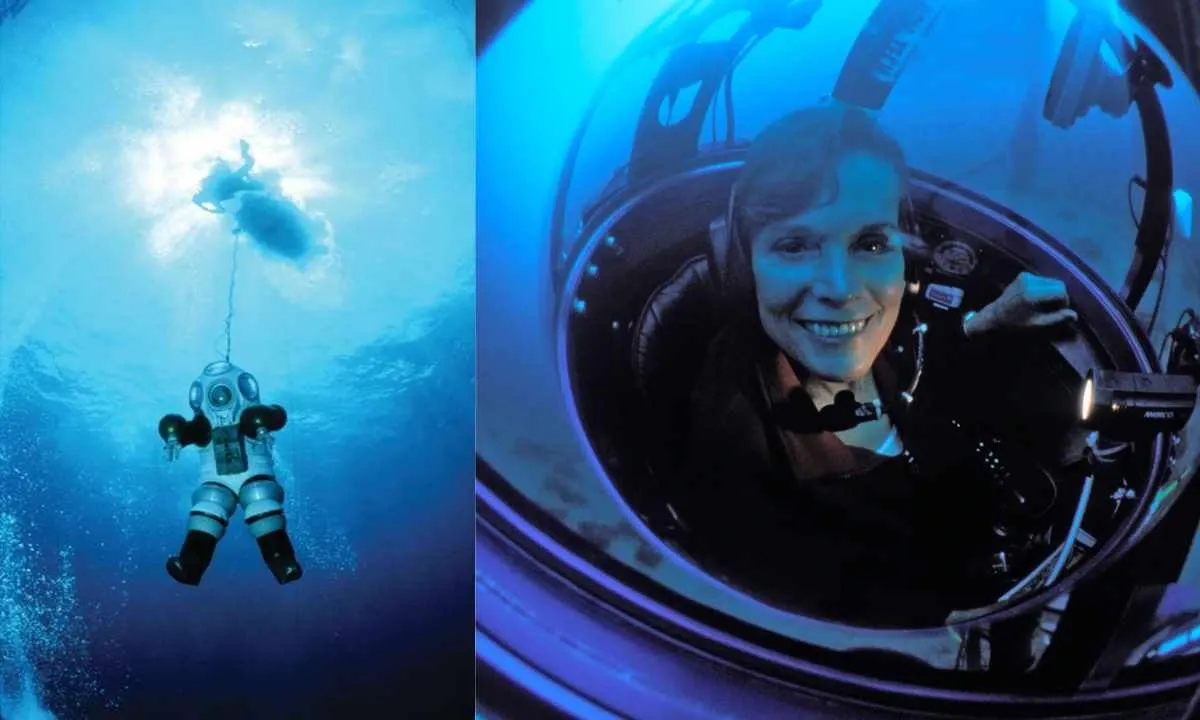
This suit was uniquely designed to handle the immense pressure found at extreme ocean depths. Descending to 1,250 feet below the ocean’s surface, Earle conducted her untethered walk along the sea floor. It set a record that remains unmatched.
To reach such depths, Earle had to undergo intense physical and mental preparation. The dive presented numerous risks, including potential equipment failure and physical stress from the pressure. The JIM suit, however, allowed Earle to move freely and safely at those depths. She observed the wonders of marine life and gathered scientific data. This dive solidified her status as a trailblazer in marine exploration.
Early Life and Career: First Woman To Lead NOAA!
Sylvia Earle’s journey began far from these depths, in the sunlit shores of Florida. From a young age, she felt an innate pull to the sea’s shimmering expanse. Her academic journey started at St. Petersburg Jr. College. It later took her to Florida State University, where she earned a Bachelor’s degree in botany. She continued her studies at Duke University, where she received both a Master’s and a Doctorate in phycology (the study of algae).
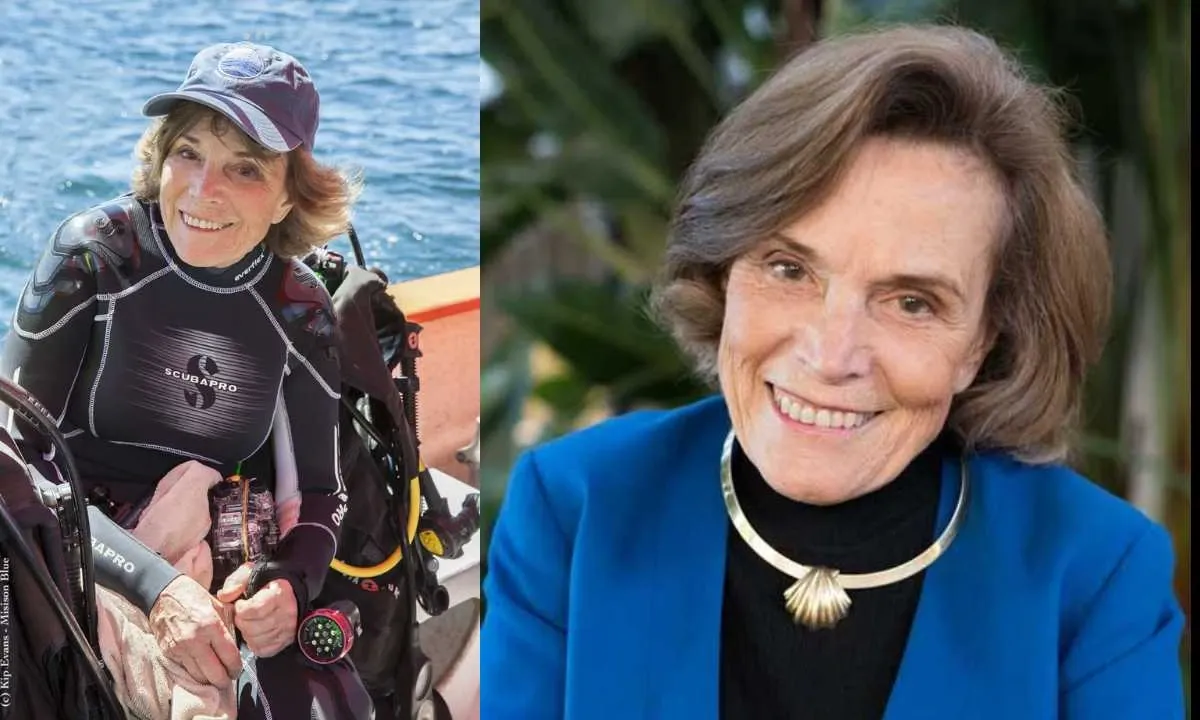
As her career unfolded, she emerged not only as a marine biologist. But also as a beacon of what women could achieve in the science of the sea. In 1970, Sylvia led an all-female team for the Tektite II project. She and her colleagues submerged for two weeks in an underwater habitat, studying marine life intimately. It was a profound accomplishment, placing Earle at the forefront of marine exploration, and inspiring countless others to follow the trail she blazed.
Earle’s early career was marked by her groundbreaking research on algae in the Gulf of Mexico and her leadership in marine projects. She also made her mark as the first female chief scientist of the U.S. National Oceanic and Atmospheric Administration (NOAA). In 1970, she led the all-female Tektite II project. She and her team lived underwater for two weeks to study marine habitats. This was a major milestone. It showcased her leadership skills and commitment to marine research in a field traditionally dominated by men.
Sylvia Earle’s Contributions to Ocean Conservation
Sylvia Earle’s influence transcends her record-breaking dives. She became a steadfast advocate for the preservation of our “blue heart.” Blue heart is a term she often uses to describe the ocean’s role in sustaining life on Earth. Through her initiative, Mission Blue, launched in 2009, she introduced “Hope Spots”—vital, protected areas within the ocean, akin to the beating chambers of this great heart. Her vision is audacious yet urgent: protect 30% of the ocean by 2030.
Earle has also been an active voice in the United Nations, promoting the “30×30” initiative. The initiative aims to protect 30% of the ocean by the end of the decade. She has supported the introduction of “ecocide” as an international crime, which would recognize the large-scale destruction of ecosystems as a punishable offense. She believes, “There is a real case to be made for recognizing ecocide in the International Criminal Court right along with genocide. Our existence is on the line.” Through her activism, Earle has worked tirelessly to build a global network dedicated to ocean preservation.
Lasting Impact and Continuing Legacy
Throughout her lifetime, Earle has shared her wisdom through books, films, and countless addresses to captivated audiences. Works like Sea Change and The World Is Blue resonate deeply, offering not just knowledge but a poetic reminder of the interconnectedness between our fate and that of the ocean. Her influence extends through accolades, from the TED Prize, and the UN Global 500 Laureate to her title as National Geographic’s Explorer-in-Residence.
In 2024, her work brought her to the Philippines, where she dived into the Verde Island Passage, a Hope Spot and marine sanctuary. There, she continued her life’s work, exploring coral reefs and endangered species, advocating for a future where these underwater wonders remain protected.
Conclusion
Sylvia Earle’s life is a story told in depths—depths of the ocean, depths of courage, and depths of wisdom. Her exploration has transformed our understanding of the ocean and revealed its delicate balance, its fragility, and its resilience. She has shown us that the ocean is not a limitless resource but a living entity, a vast blue heart that pulses in harmony with our own survival.
For all who look to the sea with wonder and hope, Earle’s legacy stands as a beacon, urging us to protect this precious world beneath the waves. In her words and her actions, she reminds us that the ocean’s fate is our own, and in safeguarding it, we safeguard the future of all life on Earth.
Also read,