Yellow Creek was built for a future that never arrived, then prepared for another that also changed.
The Yellow Creek Nuclear Plant near Iuka, Mississippi, was a Tennessee Valley Authority project canceled before it began generating electricity. NASA later selected the site for rocket-motor manufacturing, but that program also ended. The broader property subsequently became part of an industrial reuse story.
It is not the remains of a nuclear accident, and it is not a public abandoned-plant attraction. Its history is about changing plans, costly infrastructure and the search for a lasting use.
A nuclear project beside Pickwick Lake
Yellow Creek occupied a site in northeastern Mississippi beside an embayment of Pickwick Lake. The location connected with the Tennessee River system and the Tennessee-Tombigbee Waterway.
NASA’s environmental documentation describes the partially built TVA plant, including its two planned units, existing buildings, rail access and a barge dock. It records the official cancellation in 1984. NASA’s Yellow Creek site description
That document helps explain why the land retained value after the nuclear plan ended. Roads, utilities and heavy transport connections were already present.
Why the plant never operated
Construction stopped before the reactors entered service. Historical summaries connect the cancellation with rising construction costs and lower electricity demand than had been expected. Yellow Creek project history
There is no operating chapter to recreate here. Yellow Creek never developed the long record of fuel use, routine generation and eventual retirement associated with a completed nuclear station.
That difference is important when interpreting photographs. Unfinished structures should not be turned into evidence of a disaster that did not occur.
What the photograph actually shows
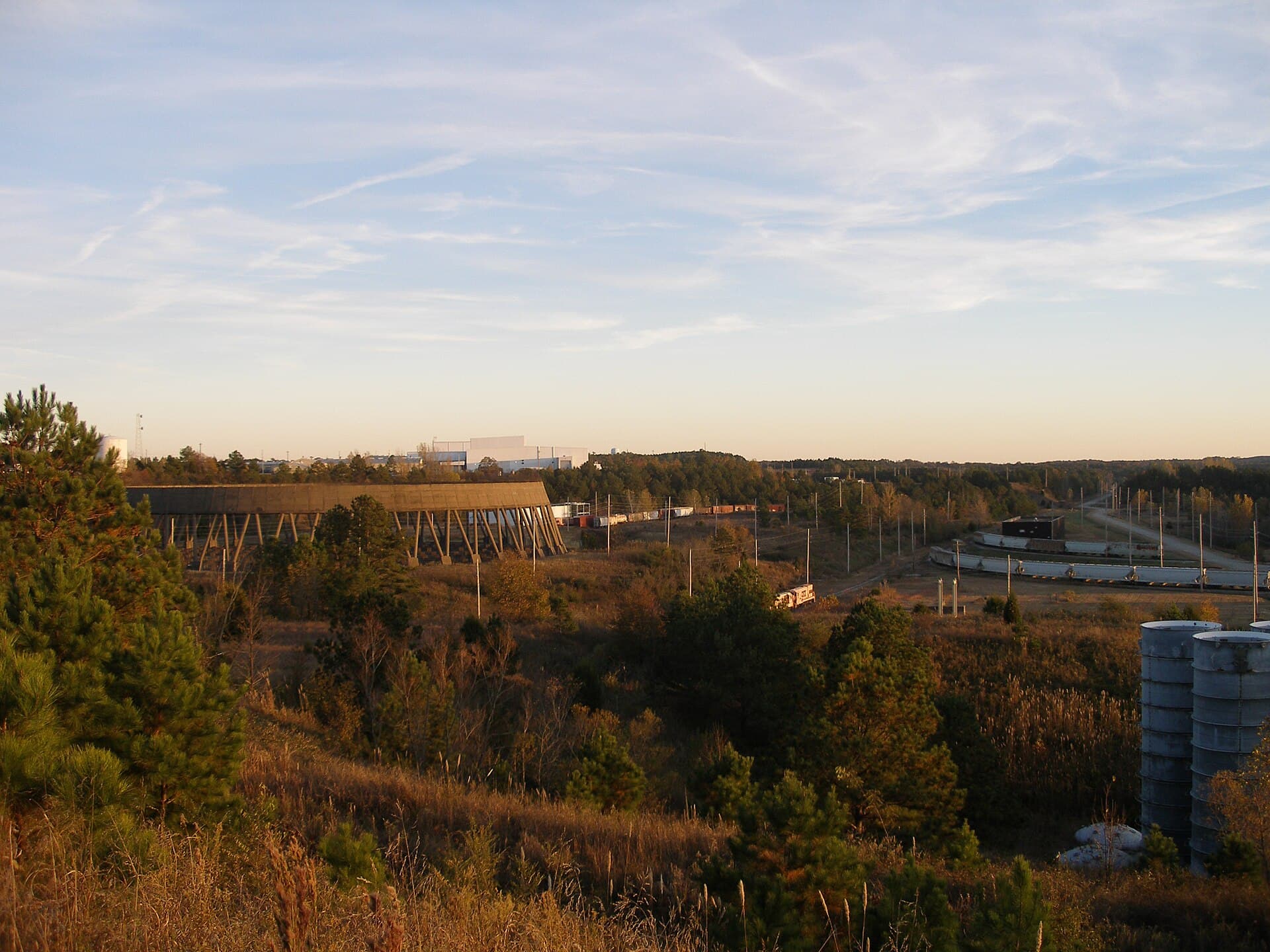
The featured image was taken in November 2010. It records industrial buildings, rail infrastructure and unfinished elements within the former project area.
It is a dated view, not a survey of present occupancy or an invitation to enter.
The most revealing feature is the mixture. Large-scale construction exists beside open ground and later industrial activity, suggesting that the place has passed through several plans rather than one simple abandonment.
NASA proposes a second future
NASA later chose Yellow Creek for manufacturing associated with the Advanced Solid Rocket Motor program, intended for the Space Shuttle.
The agency’s engineering history records the Lockheed-Aerojet team and the proposed government-owned, contractor-operated facility near Iuka. NASA’s Space Transportation System history
The planned work was different from producing electricity. Yet the existing industrial setting, large buildings and transport connections offered reasons to consider reuse.
This is the surprising turn in Yellow Creek’s story: land prepared for a nuclear station became tied to the future of spaceflight.
The connection was real, but it should not be exaggerated into a claim that the site became a long-running source of operational shuttle motors.
Another program ends
The Advanced Solid Rocket Motor program was canceled. A subsequent effort involving nozzles for the Redesigned Solid Rocket Motor also ended.
A congressional report records NASA’s termination of the Yellow Creek nozzle-production effort in May 1995 and discusses transferring the facility to Mississippi. Congressional record of the transition
These were separate decisions. The nuclear cancellation, the end of the advanced motor program and the later nozzle decision should not be collapsed into one event.
For the surrounding community, repeated changes meant that a major investment still needed a stable economic purpose.
Why the waterway matters
The separate body image shows Pickwick Landing Lock and Dam in Tennessee. It is regional context, not a photograph of Yellow Creek Nuclear Plant.
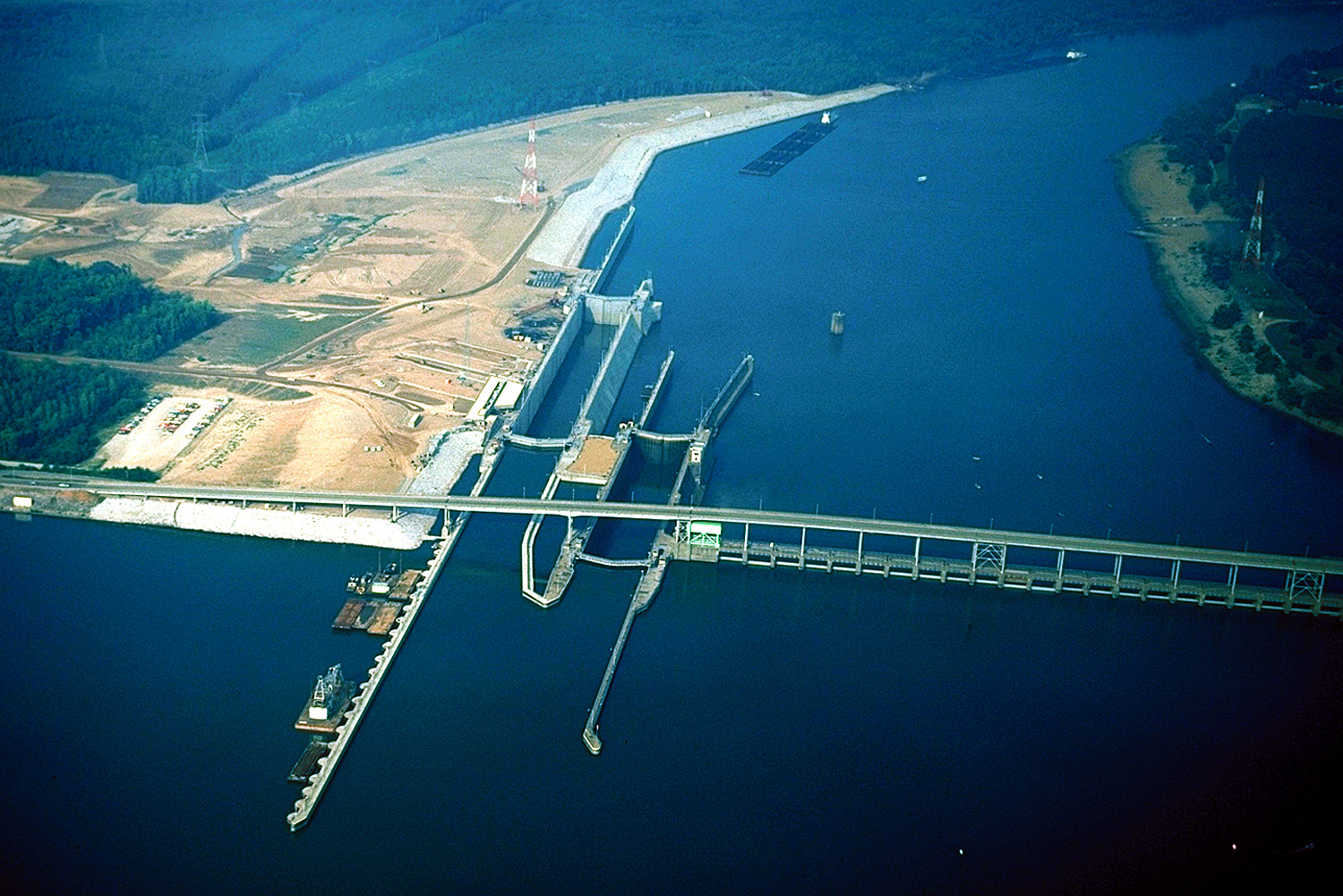
The dam impounds Pickwick Lake, whose Yellow Creek embayment provided the Mississippi site with its waterfront setting.
That geography helps explain the continued industrial interest. Large components can require transport options that ordinary roads alone cannot provide.
Looking at the regional water system makes the plant’s location less mysterious. It was connected to routes reaching well beyond the local shoreline.
Industrial reuse today
Tishomingo County’s 2025 Tri-State Commerce Park brochure describes an industrial complex developed from TVA and NASA infrastructure. It lists occupied facilities, available buildings, rail connections and a secured perimeter.
The brochure identifies manufacturing and aerospace-related tenants, alongside buildings such as a turbine building and former laboratory facilities. Tri-State Commerce Park information
Mississippi’s environmental records also preserve the sequence of names associated with the property, including NASA’s Yellow Creek facility and Tri-State Commerce Park. Mississippi facility record
Together, these sources show why describing the whole area as deserted is misleading. Remnants of canceled projects can coexist with active industrial use.
Can you visit the former plant?
No general public exploration program is established by the sources reviewed as of November 2026. The commerce park is a working, secured industrial property.
Do not enter based on old exploration videos or assume that unused structures lie outside an operating business’s boundaries.
The history is accessible through NASA documents, archives and regional development records. Those sources reveal something more interesting than a generic ruin: a place repeatedly asked to serve a new national ambition.
Frequently asked questions
Did Yellow Creek ever generate nuclear electricity?
No. The planned reactors were canceled before operation.
When was the TVA project canceled?
NASA’s site documentation records its official cancellation in 1984.
What was NASA planning there?
Manufacturing for the Advanced Solid Rocket Motor program, followed by a separate nozzle-production effort.
Is the whole site abandoned today?
No. The broader property includes industrial reuse associated with Tri-State Commerce Park.
Image credits
Featured image: Darksider415 / Wikimedia Commons, CC BY-SA 3.0. The former Yellow Creek nuclear-project site in November 2010; this is an archival view.

Body image: George Green, U.S. Army Corps of Engineers / Wikimedia Commons, Public domain.
