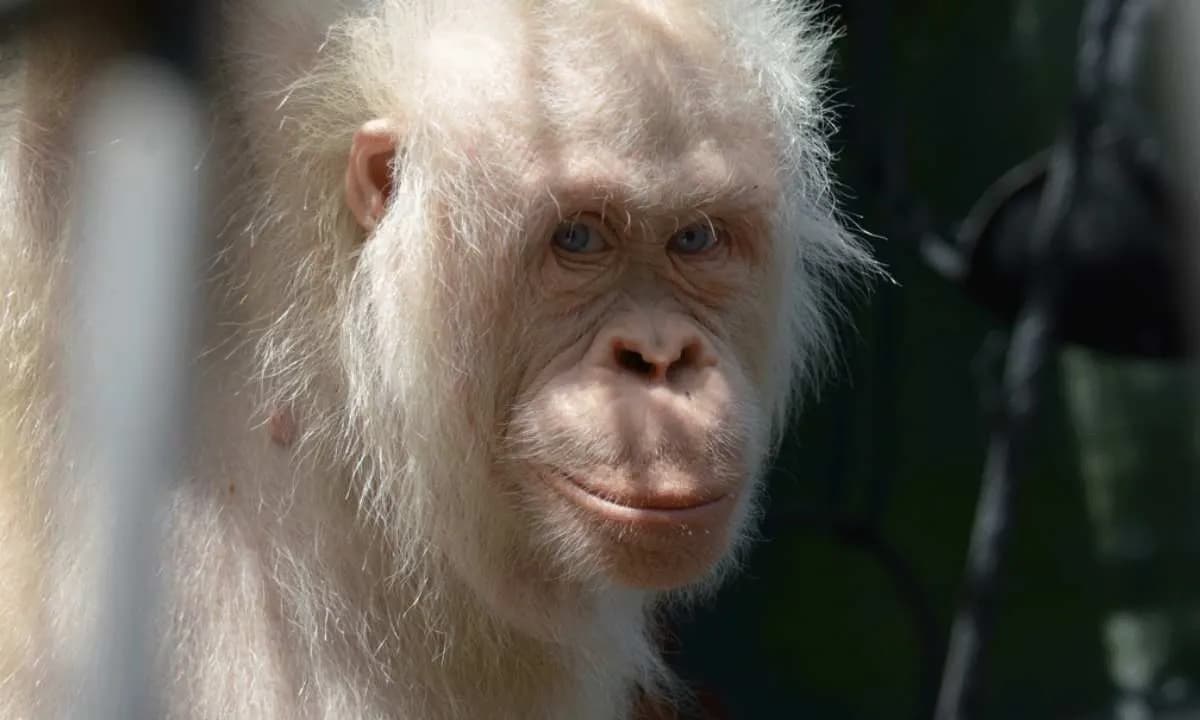
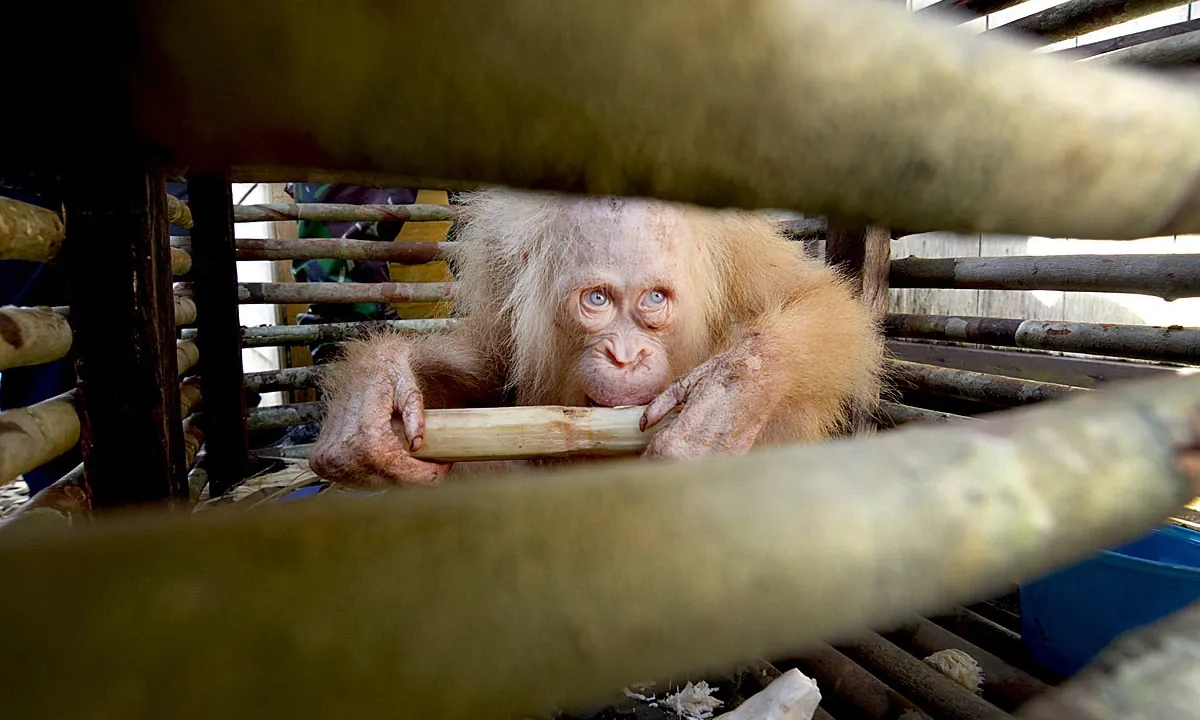
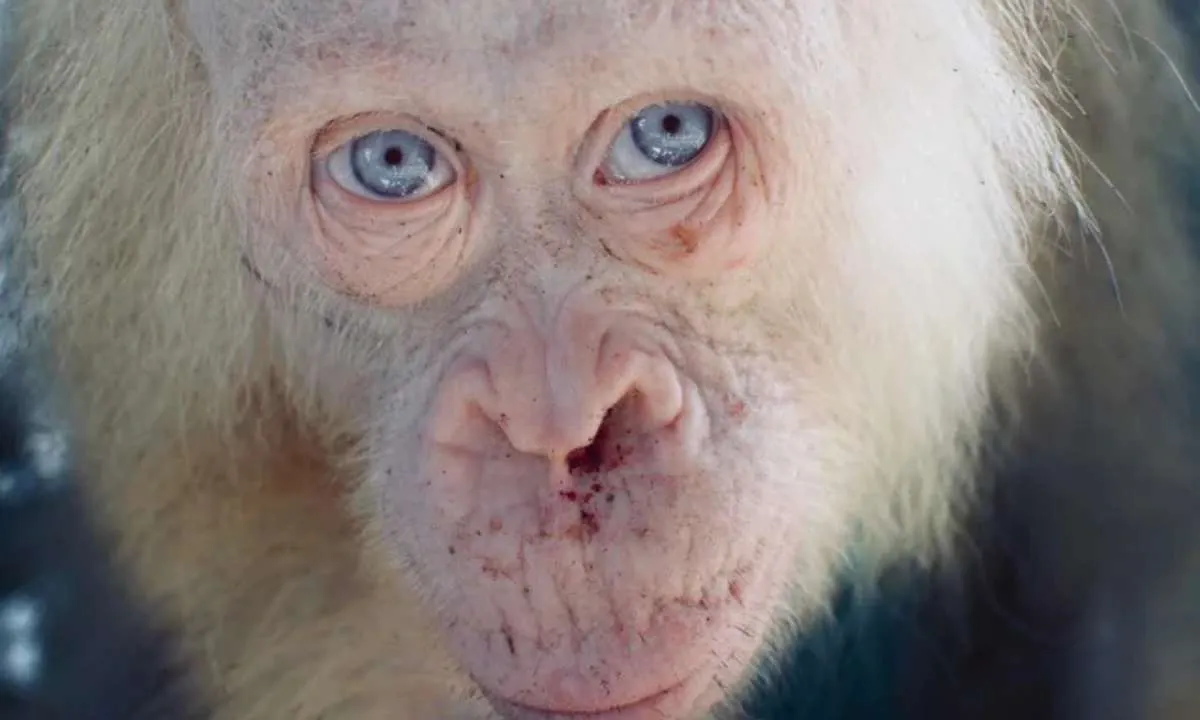
In April 2017, villagers in the Kapuas district of Indonesian Borneo made a shocking discovery. Trapped inside a tiny cage was a young female orangutan, thin, dehydrated, and visibly distressed. She was about five years old, and at first glance, she looked unlike any orangutan anyone had ever seen before. Her fur was pale white, and her eyes shone a striking blue.
Turn Your Story Into Headlines
A powerful rescue deserves a powerful reach. Share news that matters and get it seen by journalists, bloggers, and readers worldwide.
Publish Your Press Release Now → Trusted distribution. Fast results.The Borneo Orangutan Survival (BOS) Foundation was called to the scene. When they arrived, they realized they were looking at something the world had never documented before — the first known albino orangutan. They later named her Alba, meaning “white” in Latin.
Alba was quickly taken to the Nyaru Menteng Orangutan Rescue and Rehabilitation Center in Central Kalimantan, run by the BOS Foundation. Her condition was fragile. Years of living in the wild had not prepared her for life in captivity, and she was weak and frightened.
Vets began treating her immediately, but they also knew her albinism would bring unique challenges. Just like in humans, albinism in animals can cause poor eyesight, reduced hearing, and make them more sensitive to sunlight. On top of that, Alba’s pale appearance made her stand out in the rainforest, leaving her vulnerable to hunters and poachers.
Despite these risks, Alba showed resilience. Over two years of care, she began to regain her strength. Caretakers observed her climbing abilities and social skills, and slowly, the decision was made to give her another chance at freedom.
In December 2018, Alba and another rehabilitated orangutan named Kika were released into the Bukit Baka Bukit Raya National Park, a protected rainforest area. The journey was long and difficult — more than 16 hours of travel, including a four-hour boat ride — but it was worth it. For the first time in years, Alba would live in her natural habitat, surrounded by the forest that she was meant to call home.
Her release didn’t mean the challenges were over. Orangutans are already critically endangered, found only on the island of Borneo, and their population has been declining rapidly. Research suggests that between 2,000 to 3,000 orangutans are killed each year on the Indonesian side of the island. Over the last 40 years, this has wiped out more than half of their original population. Alba, with her rare condition, was considered especially at risk.
Because of this, the BOS team and the national park authorities kept a close eye on her. They monitored her movements, her foraging, and her ability to build nests. In 2020, two years after her release, the park authority gave an encouraging update: Alba was thriving. She was exploring large areas, building strong nests, finding food, and even socializing with other orangutans. She was adapting to life in the forest far better than many had feared.
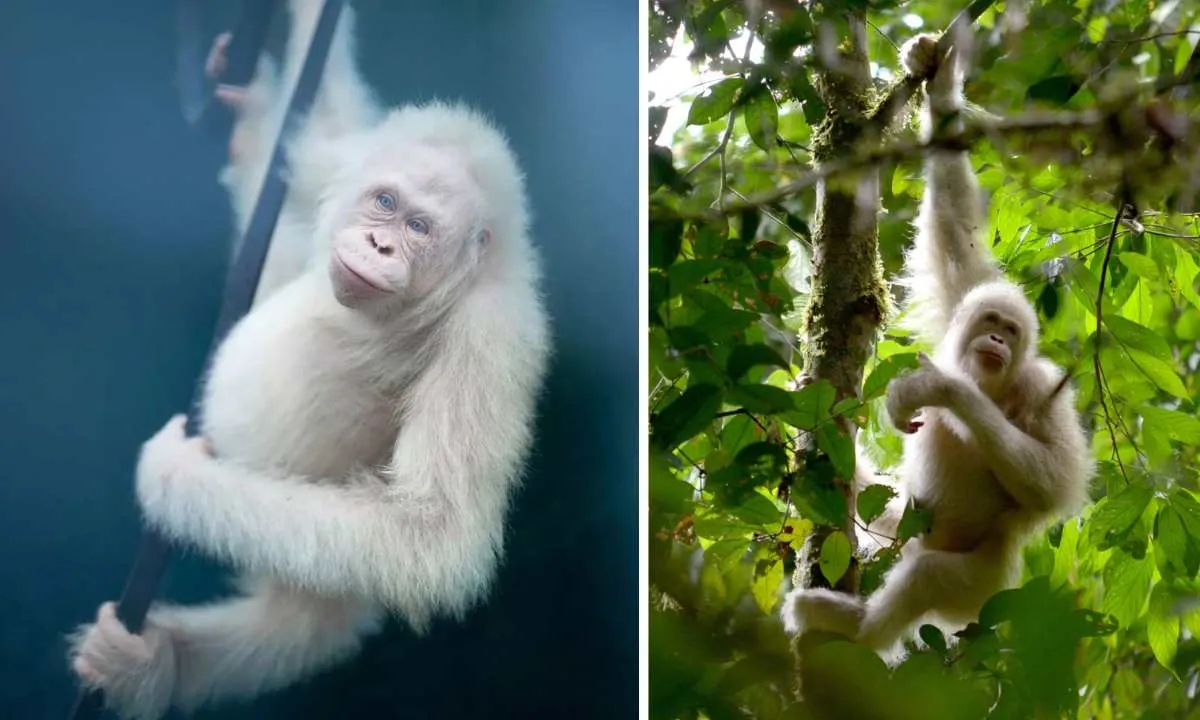
Today, Alba remains a living symbol of hope for orangutans and wildlife conservation. Every year, the BOS Foundation marks her rescue anniversary with updates, and so far, the reports have been positive — she is still doing well in her forest home. Her story is not just about one rare albino orangutan surviving against the odds. It also highlights the broader struggle of her species, the threats they face, and the ongoing efforts to protect them.
Alba’s pale fur and blue eyes may set her apart, but her survival reminds us of something universal: every creature deserves a chance to live free in its natural home.
Disclosure: We may earn a commission when you make a purchase through the ads.