R. Basavaraju probably thought it would be the perfect moment—a once-in-a-lifetime selfie with a wild elephant. But what happened next turned into a painful lesson in why rules at wildlife reserves exist in the first place.
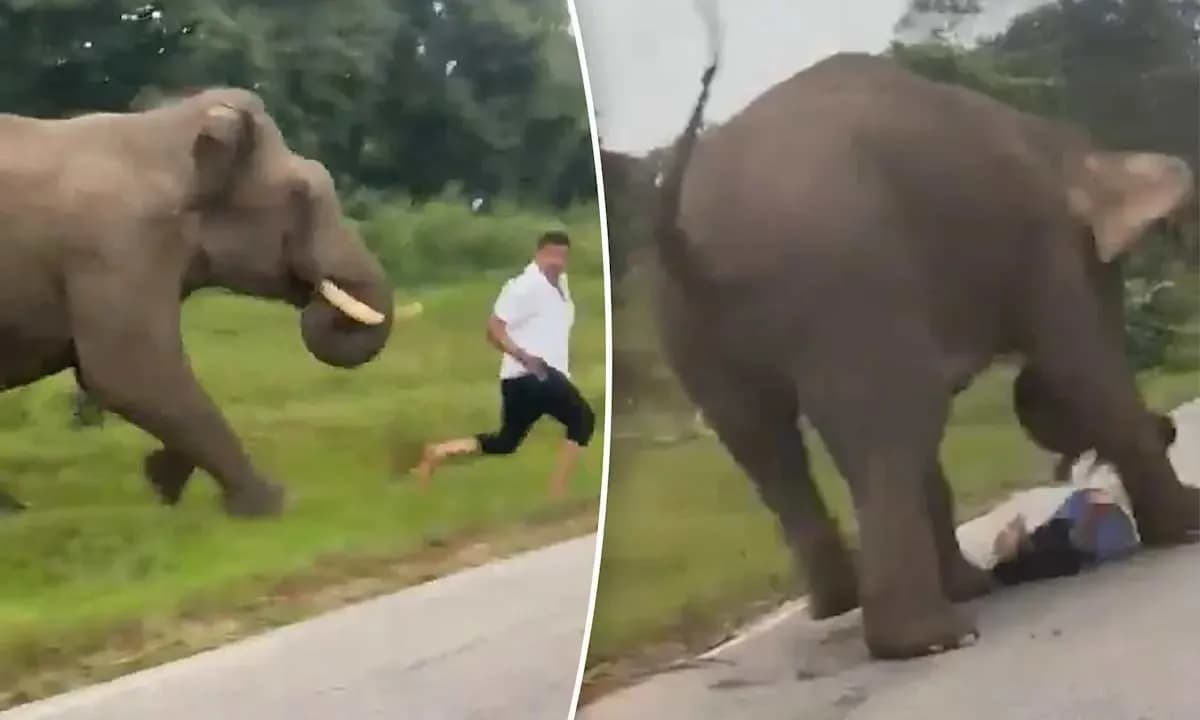
On Sunday, near a temple in Karnataka, India, Basavaraju reportedly crossed into a restricted forest area. There, he spotted an elephant by the roadside, calmly eating carrots. Ignoring the warnings meant to protect both people and animals, he approached, phone in hand, trying to get close enough for the perfect shot.
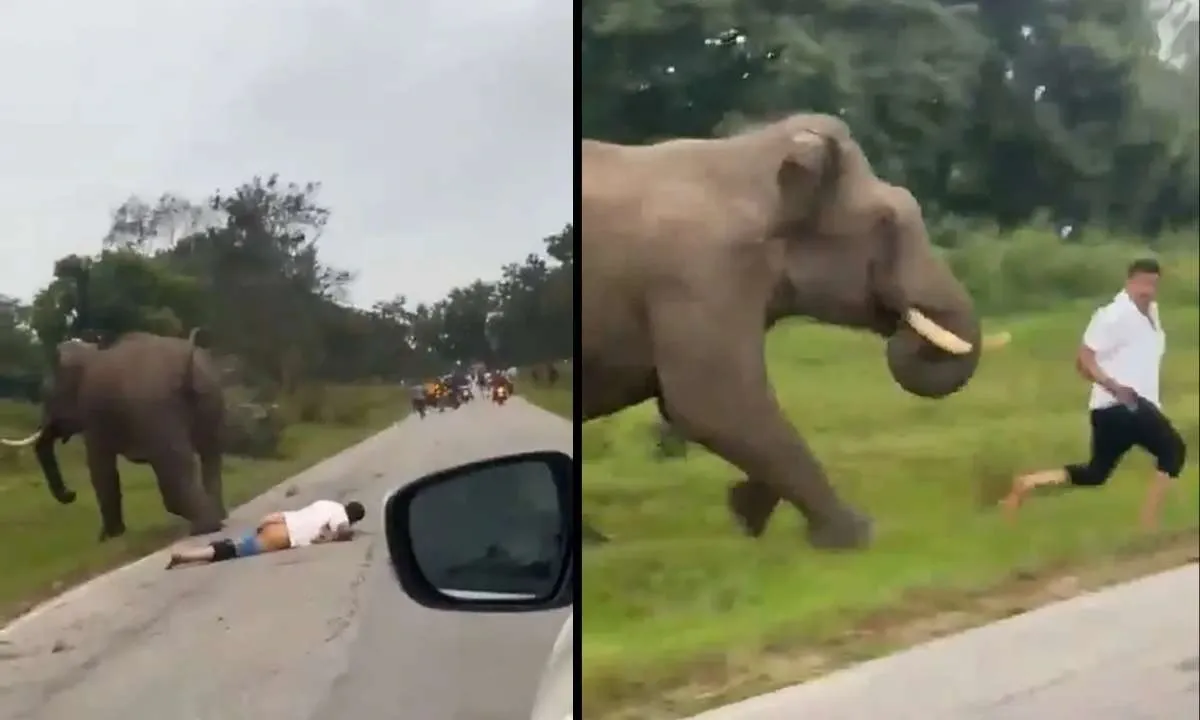
Witnesses say it was the sudden camera flash that changed everything. Daniel Osorio, one of the bystanders, recalled seeing the elephant suddenly raise its trunk and shift from peaceful to agitated in an instant. The animal charged, sprinting across the road so fast it startled drivers.
Basavaraju tried to run. But within seconds, he tripped and landed face-first on the tarmac. The elephant caught up, stomping him repeatedly. The attack was so forceful it tore off his trousers and underwear, leaving him badly injured and exposed on the busy road.
For a brief moment, the elephant stood over him, then turned and disappeared back into the forest. Basavaraju survived, but the injuries were serious enough to require urgent hospital care.
The incident didn’t end at the hospital doors. Local forest authorities fined him 25,000 rupees—about $285—for trespassing and provoking wildlife. They also required him to record a video confession, admitting that he didn’t understand the rules and safety guidelines for being around wild animals.
Keep Your Pets Safe and Happy
Nature is beautiful, but it can be unpredictable. Equip your pets with gear that keeps them safe, visible, and comfortable on every outing.
Shop Pet Safety Gear →Officials condemned his actions, saying stunts like these not only endanger human lives but also provoke unpredictable and dangerous behavior in animals. Osorio summed it up:
“This is a strong reminder to follow the rules of the wildlife reserves and let trained authorities, not people on foot, handle situations like this.”
India is home to over 30,000 wild elephants, roughly 60% of the world’s Asian elephant population. As tourism expands, so do human-animal conflicts—often because visitors ignore the boundaries that keep both sides safe. This isn’t the first such case. Last year, in Jaipur, a Russian woman was slammed to the ground by an elephant named Gouri at Amer Fort, an animal that had also injured a local shopkeeper just months before.
Wildlife experts stress that elephants are typically gentle. But fear, provocation, or mistreatment—especially in areas where they are used for rides or close-up interactions—can make them react violently.
The video of Basavaraju’s encounter has gone viral, reigniting debate in India about whether provoking wild animals should be treated as a criminal offense. Many argue for harsher penalties for tourists who risk not only their own safety but also the welfare of the animals—all for the sake of a viral moment.
Disclosure: We may earn a commission when you make a purchase through the ads.