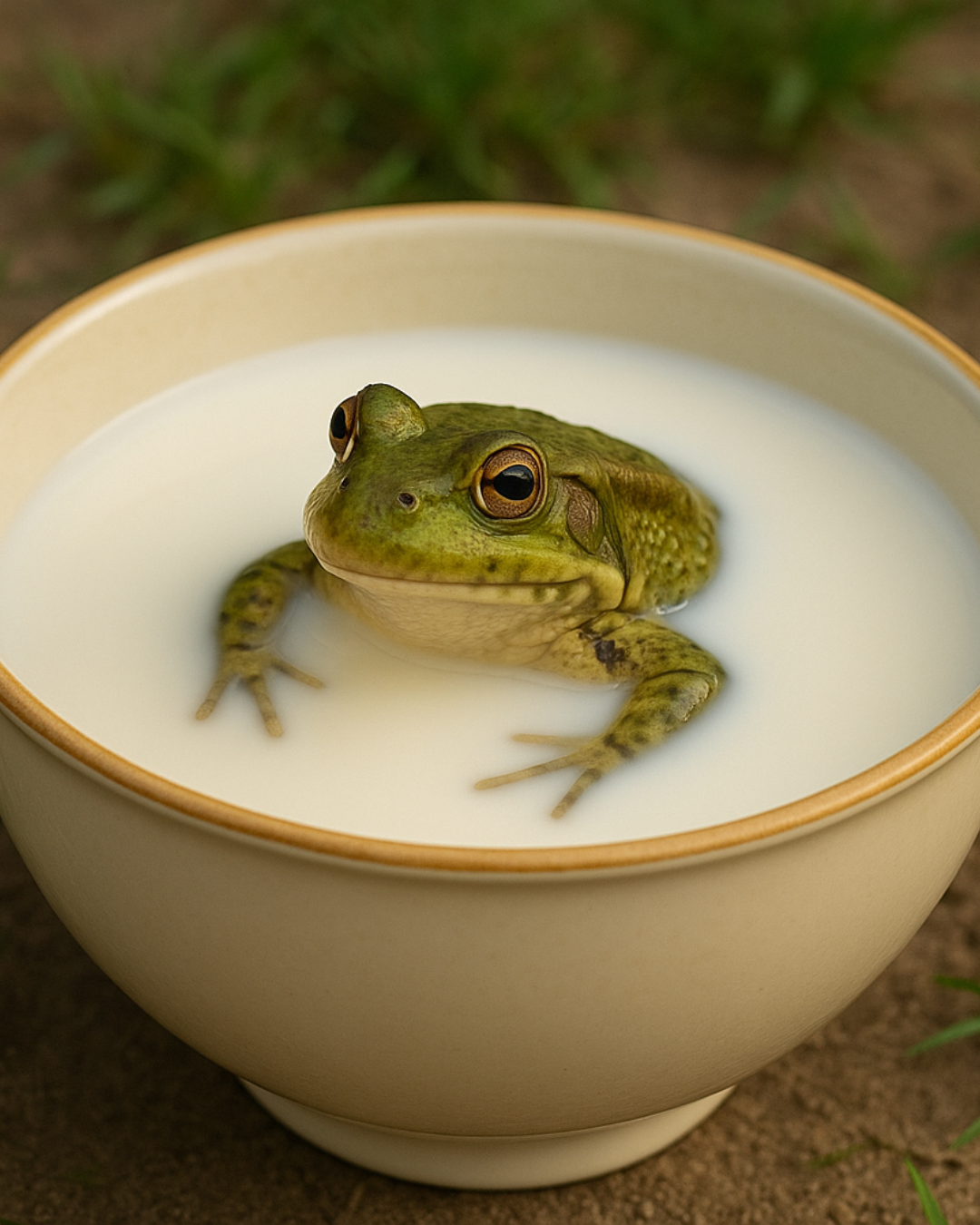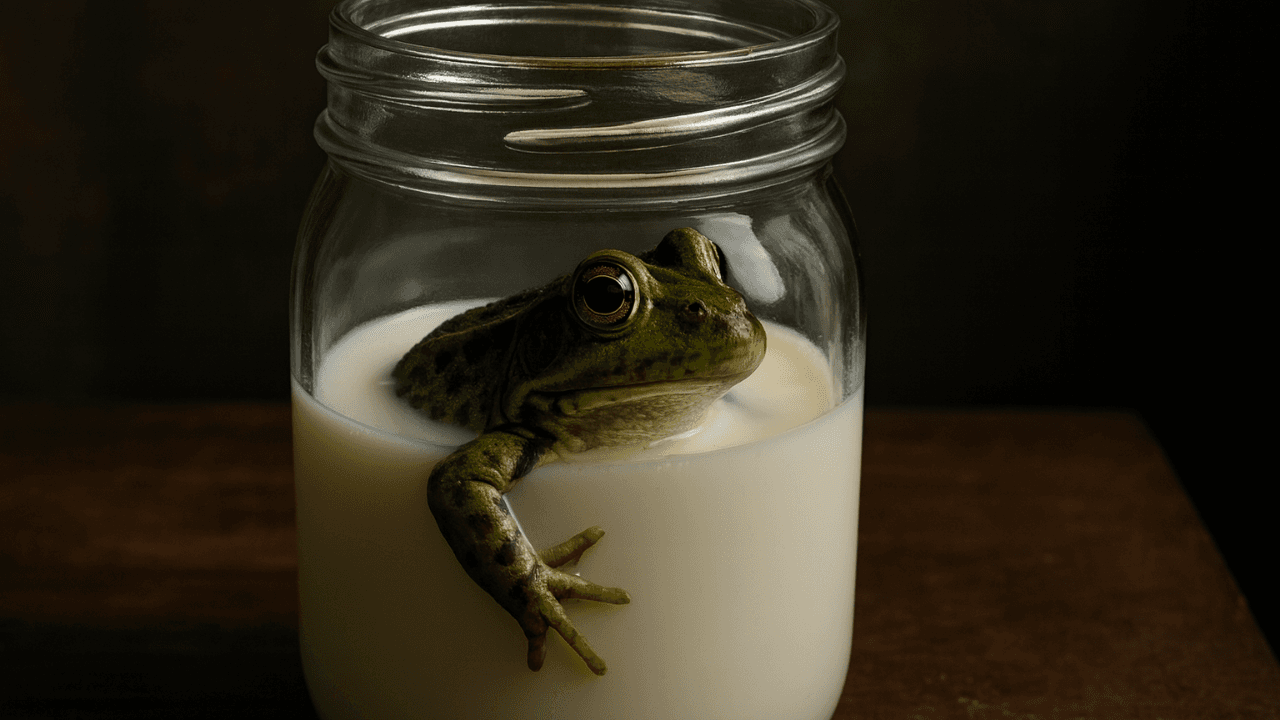
In rural Russia and Finland, people had a wild method for keeping milk fresh: they’d toss in a live frog. This peculiar tradition, one that sounds like folklore to modern ears, held a deeper scientific truth. Generations before refrigeration, folks depended on this bizarre practice without knowing the real reason behind it.

They observed that milk lasted longer when a frog was present, but why? The answer lay beneath the frog’s slimy skin. You see, certain species like the common brown frog secrete powerful antimicrobial peptides. These small proteins fend off bacteria, keeping dairy fresh during hotter months when spoilage often reigned.

Fast forward to today, researchers have uncovered this age-old wisdom. What many dismissed as a rural myth was, in fact, an early understanding of biochemistry. It’s bizarre to think that people relied on a creature that typically hops around ponds to extend milk’s shelf life!
One of the active compounds in frog skin, Brevinin-1, exhibits potent antibacterial properties, effectively combating notorious culprits like Salmonella and E. coli. It’s as if the frog was unknowingly performing a noble duty, serving as nature’s very own preservative.
View this post on Instagram
When scientists finally dug into the frog-milk connection, the findings were eye-opening. Frogs have developed these natural defenses over millions of years in response to their moist, bacteria-rich environments. This ancient technique, once thought to be pure folklore, is now fueling cutting-edge research into new antibiotics.
So what happened to this surprising practice? As modern conveniences like refrigeration took over, the tradition faded from memory. Yet, the compelling combination of folklore and scientific discovery reminds us that nature holds secrets beyond our imagination. In today’s world, with growing concerns over antibiotic resistance, the potential of frog-derived peptides is once again in the spotlight.
Imagine walking into a rural kitchen 100 years ago, where a frog bobbed calmly in a bucket of milk. What’s your initial reaction? Today, people might be incredulous, or worse, think it’s cruel. But for those who lived through it, this was just the way of life. They’d likely chuckle and argue it kept their families healthy.
This peculiar practice challenges our ideas about nature, survival, and what ecological wisdom hidden in folklore might still be waiting to be discovered. Are there other rural practices we dismiss as silly that could hold scientific truths? The frog’s story makes you wonder, doesn’t it?
So, next time you see a frog, consider its remarkable contributions to science and our history. What other bizarre connections to the natural world might be lurking just out of sight?
Disclosure: We may earn a commission when you make a purchase through the ads.