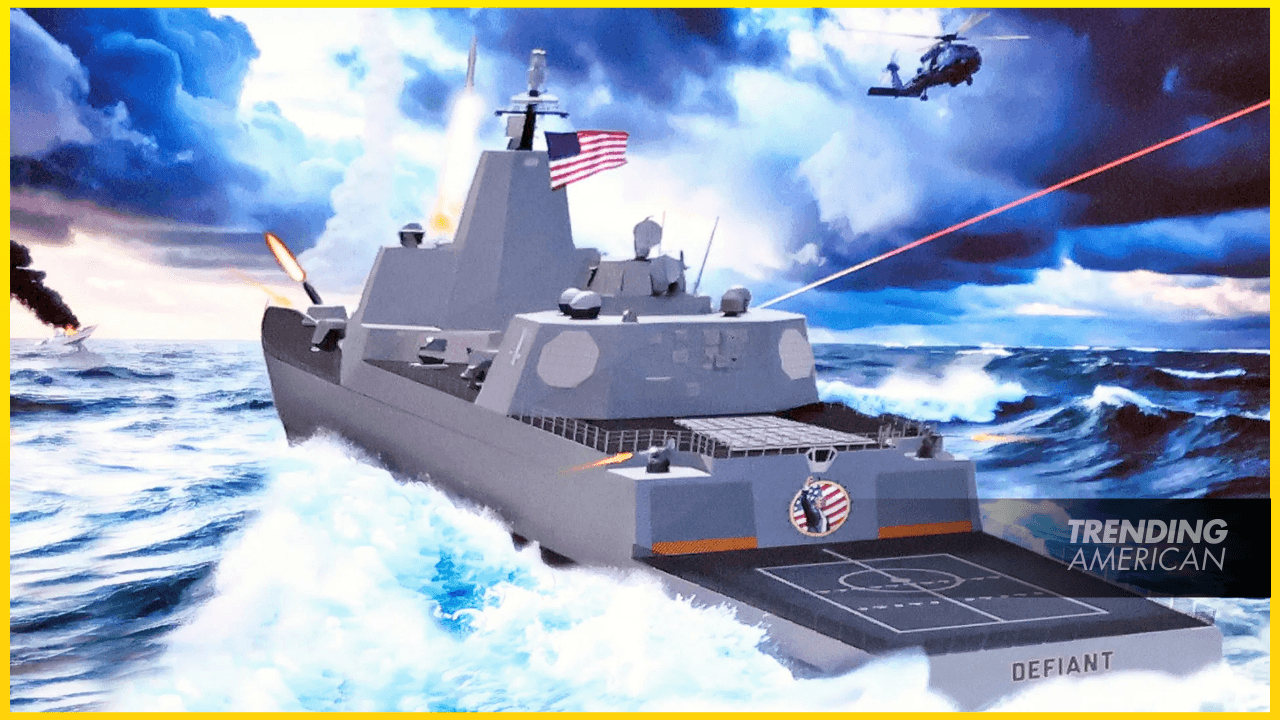
On December 22, 2025, at Mar-a-Lago in Florida, President Donald Trump announced a bold naval program: the Trump-class battleships, led by the lead vessel USS Defiant (BBG-1). The ships are described as nuclear-armed and heavily armed with guns, missiles, hypersonic weapons, railguns, and high-powered lasers, with an initial goal of 20 to 25 ships. The Navy will lead the design, and Trump says these vessels embody “peace through strength.”
The Trump-class program, announced by Trump and then-Navy officials, envisions ships that are significantly larger than today’s destroyers—roughly in the 30,000- to 40,000-ton range—and capable of deploying a diverse mix of future weapons, including electromagnetic railguns and hypersonic munitions, as well as a nuclear-armed sea-launched cruise missile. Navy Secretary John Phelan said the class would be the centerpiece of what the administration calls the Golden Fleet, a broader effort to modernize the fleet with both high-end surface combatants and smaller, unmanned vessels.
The lead ship, USS Defiant (BBG-1), is framed as the first of a new class that would deliver dominant firepower and a decisive advantage by integrating the most advanced deep-strike weapons with anticipated future systems. Trump claimed the ships would be the fastest, biggest, and 100 times more powerful than any battleship ever built, while stressing that the missions are not aimed at a single adversary—an argument echoed by officials who described a broad deterrence rather than a targeted threat.
The rationale, as described by Trump and defense leaders, centers on deterrence through strength and modernization. He said the Navy would aim to begin construction quickly, with a longer-range plan to grow the fleet to 20–25 ships over time. The plan would see the Navy launch a competitive procurement for builders, potentially pitting major U.S. shipyards such as HII and General Dynamics against one another, a decision tied to cost, industrial capacity, and the ability to bring ships to you faster.
Analysts, however, have raised questions about affordability and strategic rationale. While supporters emphasize modernization and deterrence, critics highlight the financial demands of a 20–25-ship program and the risk of diverting funding from current needs in the carrier and submarine fleets. Coverage of the announcement included NBC News reporting by Zoë Richards and a Navy press release; other outlets, including Breaking Defense and USNI News, debated the feasibility and timeline, with estimates ranging from a first ship procurement around 2030 to readiness in the early part of the next decade.
Context around the event includes ongoing branding moves associated with Trump’s presidency, from the naming of cultural and public institutions to the branding of national symbols. While Trump asserted that the new ships are not meant to deter any one country, the broader symbolism and the scale of the project drew scrutiny about affordability, industrial base implications, and strategic value in an era of evolving naval warfare.
Looking ahead, the Navy would lead the design and development work, with the expectation that the first Trump-class vessel could come online by the early 2030s, followed by a broader fleet buildout if the program remains funded and technically feasible. The detailed cost estimates, procurement approach, and the exact timeline will likely be the subject of intense congressional, industrial, and strategic review in the months ahead.
Disclosure: We may earn a commission when you make a purchase through the ads.