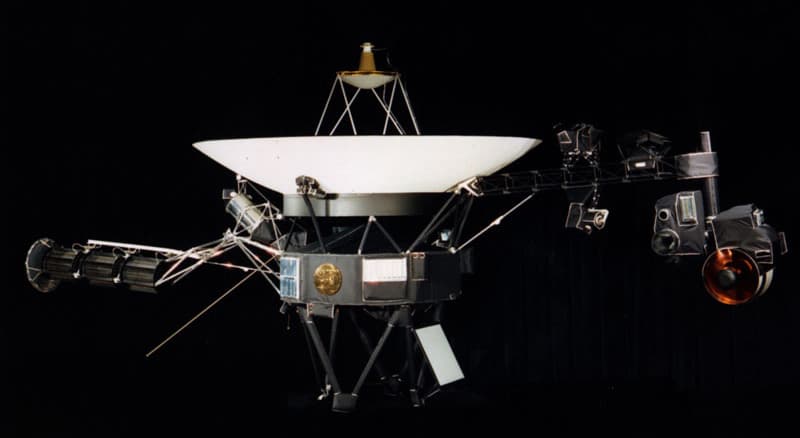
A message to humanity's most distant spacecraft will soon need a full day just to get there.
On November 18, 2026, NASA expects Voyager 1 to become the first human-made object to reach a distance of one light-day from Earth. That is roughly 25.9 billion kilometers, or 16.1 billion miles.
The spacecraft has been traveling since 1977. Its next milestone offers a striking way to understand both its extraordinary endurance and the size of the space beyond our planet.
What does one light-day mean?
A light-day measures distance: how far light travels in 24 hours.
NASA's milestone explainer places the crossing at about 10:16 a.m. UTC on November 18. That is 5:16 a.m. Eastern Standard Time, or 3:46 p.m. in Sri Lanka.
The measurement is from Earth. It should not be confused with a distance measured from the Sun.
For comparison, sunlight takes about eight minutes and 20 seconds to reach Earth. A full light-day is a far larger gap.
Why a reply takes roughly two days
Voyager communicates using radio waves, which travel at the speed of light.
At a separation of one light-day, a radio message needs approximately 24 hours to cross the gap in one direction. A return transmission needs about another 24 hours.
That makes the round-trip signal travel time roughly 48 hours. It is not a guarantee that every command will receive a reply exactly two days later: spacecraft operations and the timing of communications can add further delays.
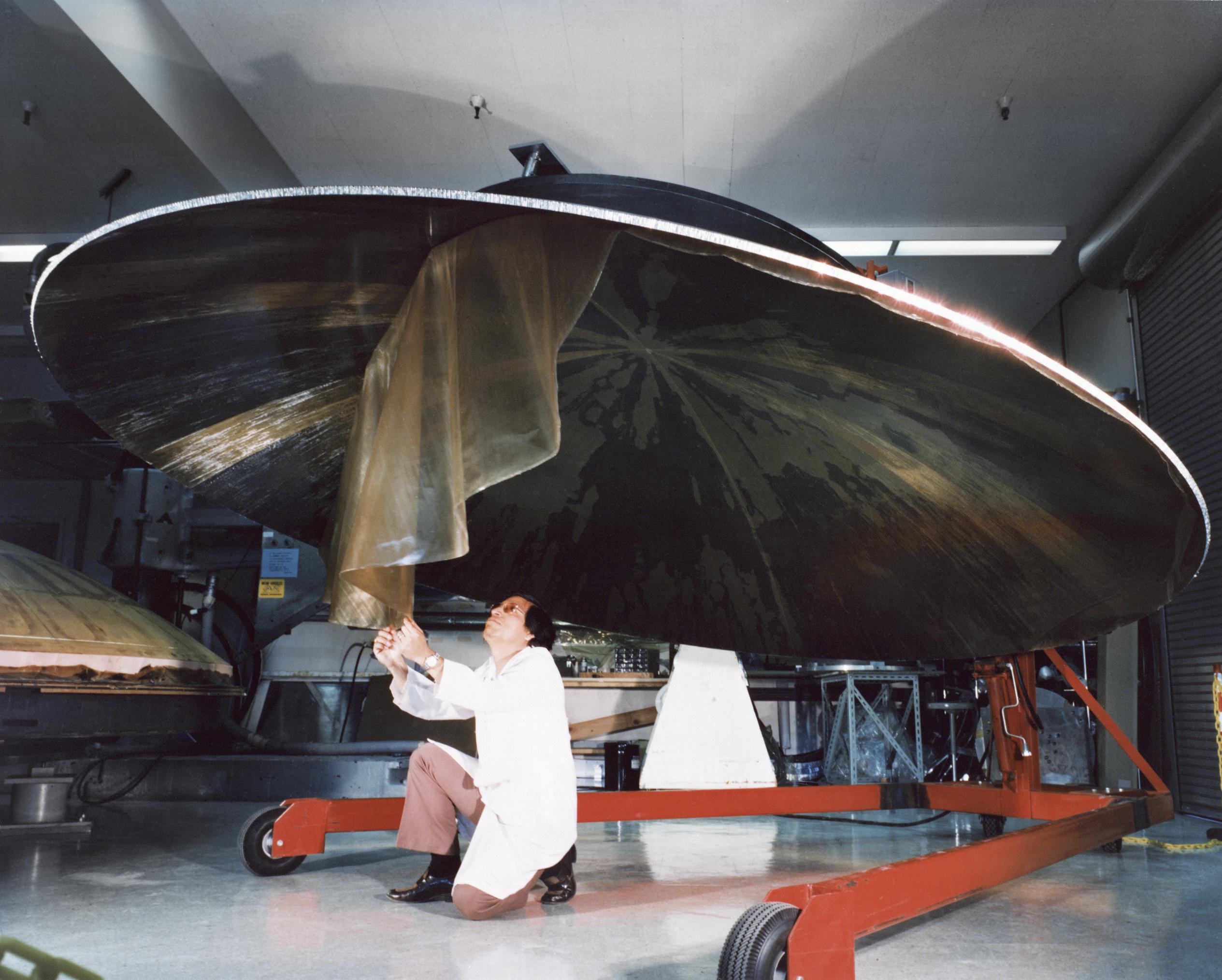
NASA's Jet Propulsion Laboratory uses the two-day exchange to explain the challenge of working with such a distant spacecraft.
A journey that began in 1977
Voyager 1 launched on September 5, 1977. It explored Jupiter and Saturn before continuing outward, according to NASA's Voyager 1 mission overview.
In August 2012, it entered interstellar space after crossing the heliopause, the outer boundary of the Sun's bubble of particles and magnetic fields.
That bubble is called the heliosphere. Crossing its boundary was a physical change in the environment around the probe.
The coming light-day milestone is different: it marks a distance. JPL says the spacecraft will not detect a new environmental boundary or undergo an onboard change simply because it passes that marker.
Keeping an aging explorer working
Reaching this distance is only part of Voyager's achievement. Engineers also have to keep decades-old systems operating with a shrinking power supply.
In a recent mission update, JPL described power-saving work and a brief communications interruption in October. Contact was restored, while engineers continued investigating the event.
Those challenges give the distance milestone another meaning. Voyager's journey depends on patient work across a gap so large that even confirmation of a command cannot come quickly.
A human achievement on a cosmic scale
Nearly five decades of flight will have carried Voyager 1 a distance that light covers in one day.
Both facts are astonishing. One shows how far human exploration has reached; the other shows how much farther space extends.
On November 18, the milestone will not be a finish line. It will be another measure of a journey that began on Earth and continues beyond the Sun's protective bubble.